
Why New Alloys Matter
The automotive industry is in a lightweighting revolution. As average aluminum usage per vehicle approaches 200 kg, and electric vehicles demand even greater weight savings to offset battery mass, die casting has become a critical enabler for automotive manufacturers.
New alloy development is driving this transformation. Advanced formulations are making giga-casting viable, enabling structural applications previously reserved for forged or stamped components, and supporting next-generation EV platforms. While traditional alloys like A380 and AZ91D continue to dominate, specialized formulations are now supplementing, and in some cases replacing, these conventional choices.
The competitive advantage belongs to die casters who master these emerging materials. Understanding their properties, limitations, and processing requirements will define who thrives in this new era of automotive design.
Heat-Treatment-Free Aluminum Alloys
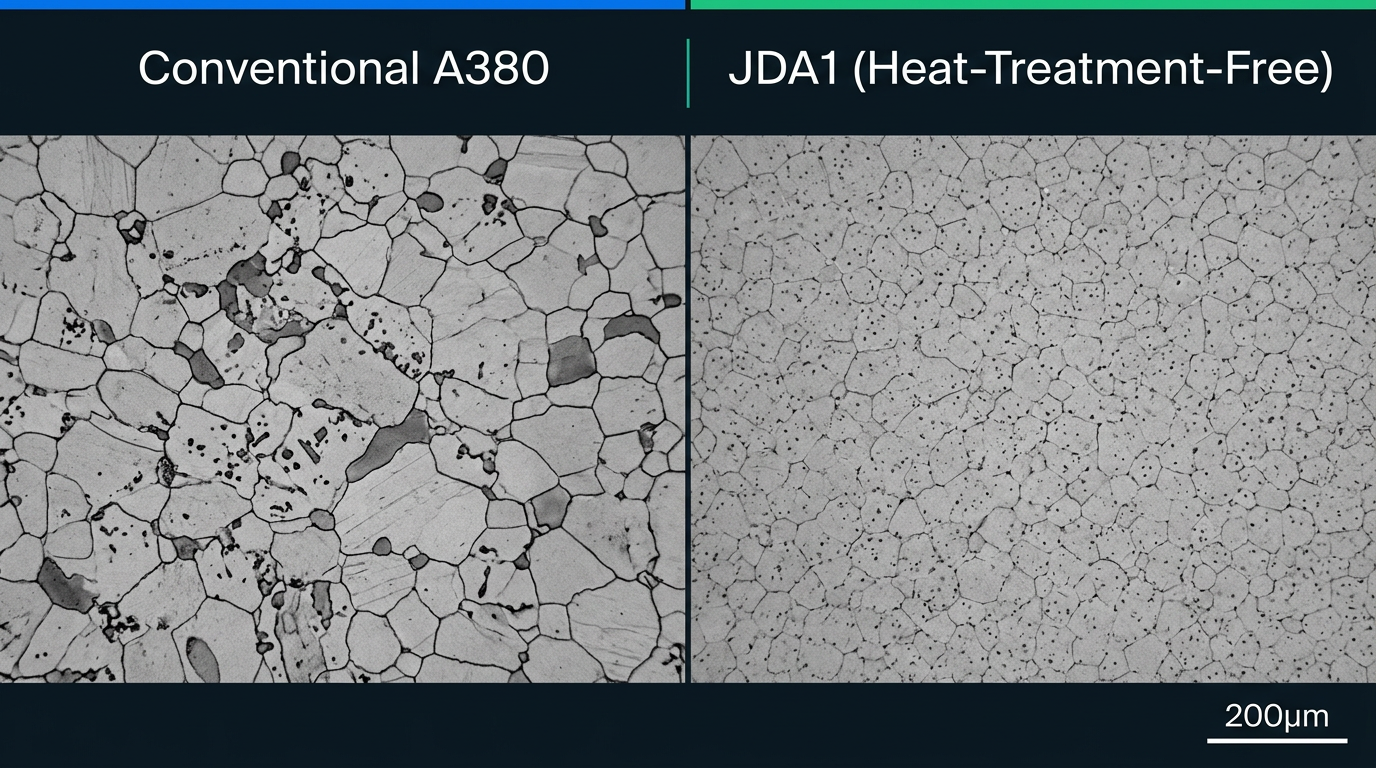
Shanghai Jiao Tong University has developed two breakthrough aluminum formulations: JDA1 (Al-Si-Mn-Mg-RE) and JDA2 (Al-Mg-Si-Mn). What makes these alloys revolutionary is what they do NOT require: high-temperature solution treatment and artificial aging.
This breakthrough eliminates one of the most costly and time-consuming steps in die casting. Heat treatment is energy-intensive, requires specialized equipment, and takes days to complete. For massive structural castings used in giga-casting, heating a multi-ton component to 500+C and holding it for hours is impractical and expensive.
The Heat Treatment Advantage
JDA1 and JDA2 achieve target mechanical properties in the as-cast condition, slashing production timelines and energy consumption. This is a game-changer for mega-casting operations where traditional heat treatment simply isn't feasible.
Tesla and Chinese OEMs are actively pursuing similar no-heat-treat formulations for their next-generation platforms. These alloys promise faster cycle times, reduced energy costs, and the ability to cast ever-larger structural components, exactly what the EV industry needs.
Self-Extinguishing Magnesium: MgCarbonit91
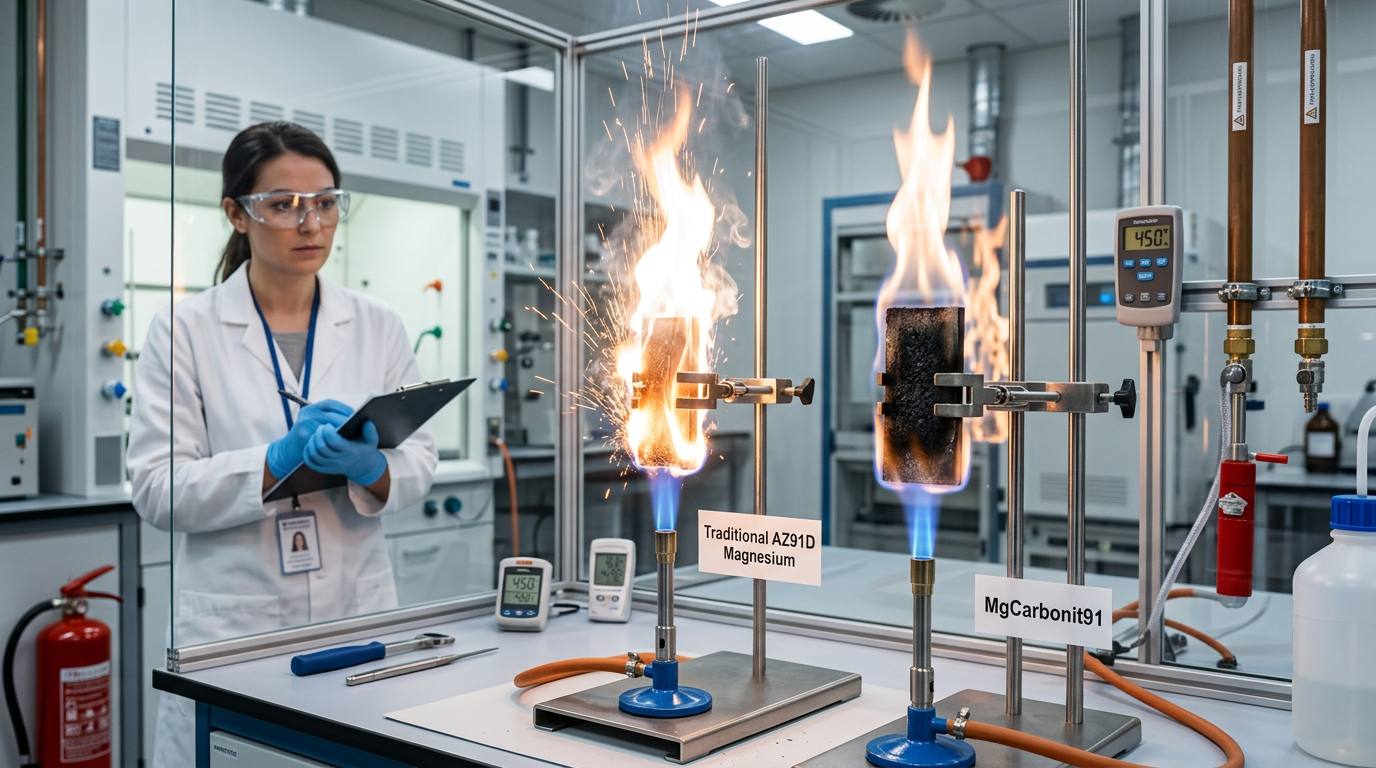
For decades, the biggest barrier to magnesium adoption has been fire risk. Traditional magnesium ignites at approximately 470 degrees Celsius, creating serious hazards in crash scenarios and during manufacturing. MgCarbonit91 changes everything.
This newly developed self-extinguishing magnesium alloy combines excellent castability with significantly improved mechanical properties over conventional flame-resistant formulations. By addressing the core safety concern, MgCarbonit91 opens doors for automotive structural applications where magnesium was previously considered too risky.
Traditional Mg Alloys
- Ignition Temp: ~470C
- Fire Risk: High in crashes
- Mechanical: Good but limited
- Applications: Non-structural
MgCarbonit91
- Self-Extinguishes: Yes
- Fire Risk: Significantly reduced
- Mechanical: Excellent properties
- Applications: Structural components
The implications are profound. Magnesium at 33% lighter than aluminum becomes viable for engine cradles, suspension components, and even chassis structures. Medical devices, electronics, and defense applications are already expanding their use of magnesium die castings, and automotive OEMs are watching closely.
High-Strength Aluminum for Mega-Casting
Mega-casting presents unique challenges that demand specialized alloy compositions. A single casting operation can now produce what previously required assembly of dozens of stamped and welded parts. This puts extreme demands on material properties.
Alloys must possess high fluidity to fill massive mold cavities cleanly. They must have low iron content to prevent die sticking and premature wear. They need good ductility without heat treatment, and excellent weldability if joining cast sections is required.
Mega-Casting Alloy Requirements
New Al-Si formulations with added silicon for fluidity and copper for strength, combined with magnesium additions for improved strength-to-weight and rare earth elements for grain refinement, are enabling the next generation of structural castings.
These specialized compositions are engineered through advanced computational metallurgy. Every element, from primary alloying constituents down to trace impurities, is optimized for the specific casting process and final application requirements.
Magnesium Die Casting Renaissance
Magnesium is 33% lighter than aluminum and 75% lighter than steel. These weight advantages have always made magnesium attractive for weight-critical applications. What is changing is the breadth of applications where magnesium is now technically and economically viable.
AZ91D remains the highest-strength commercial magnesium die casting alloy. AM50 and AM60 are preferred where applications need good elongation, toughness, and impact resistance, critical for crash-relevant components. Dynacast, a global leader in magnesium die casting, has pioneered proprietary multi-slide technology that enables complex part geometries with tight tolerances.
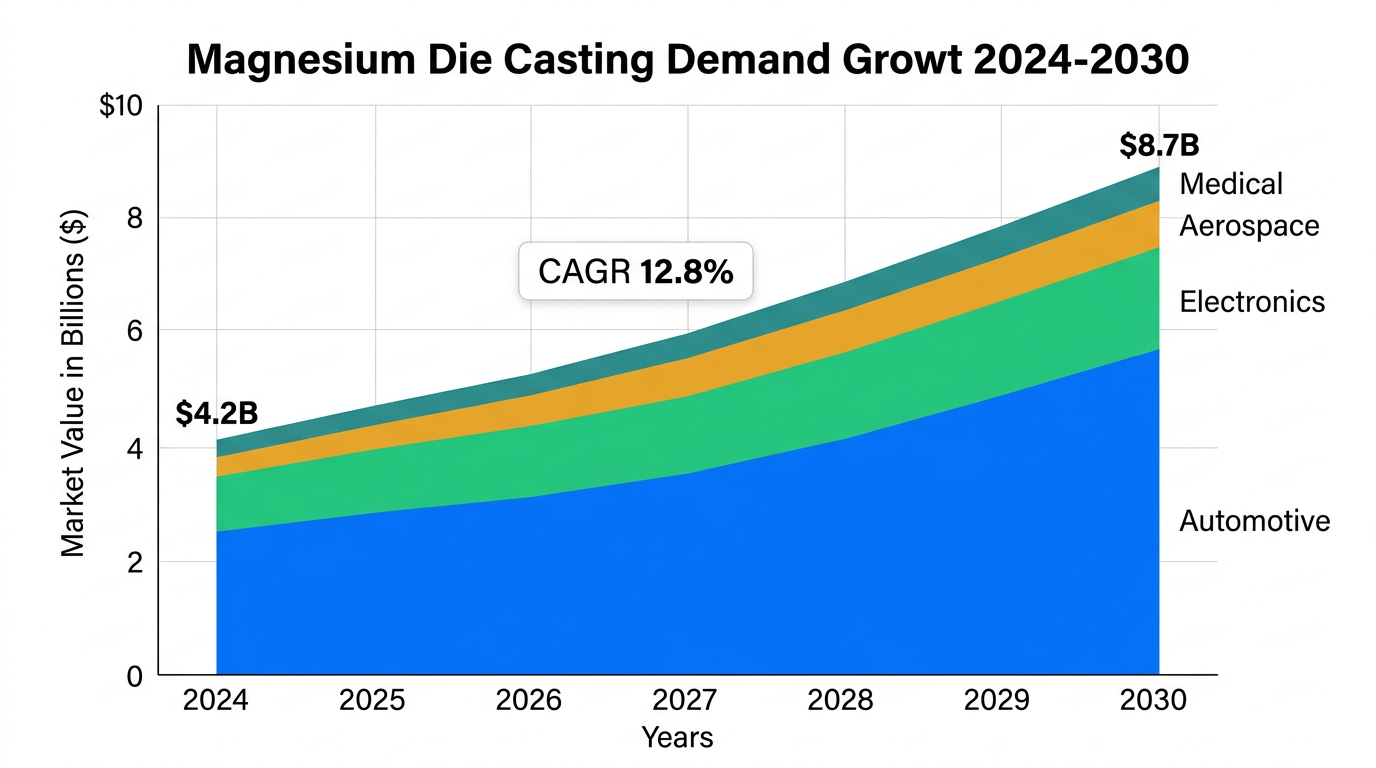
Medical devices, consumer electronics, defense systems, and aerospace applications are all experiencing growth in magnesium usage. The combination of light weight, excellent machinability, and superior thermal conductivity makes magnesium uniquely suited to emerging requirements.
For automotive OEMs targeting aggressive weight targets, whether for EV range or traditional fuel efficiency, magnesium die castings represent a mature, proven solution that can deliver multi-kilogram savings per vehicle.
What Die Casters Should Watch
The materials landscape for die casting is evolving rapidly. Here are the trends that will shape the industry over the next 2-3 years:
Strategic Focus Areas
- Heat-Treatment-Free Development: Continued innovation in no-heat-treat aluminum alloys driven by giga-casting needs will dominate R&D budgets at major producers.
- Magnesium Safety: More self-extinguishing magnesium formulations are in development, unlocking structural applications previously considered too risky.
- Recycled Content: Alloys optimized for high recycled content will gain market share as sustainability becomes non-negotiable for automotive OEMs.
- AI-Driven Development: Computational metallurgy and machine learning will accelerate alloy discovery, reducing time from conception to commercialization.
- Sector Growth: EV and aerospace demands will drive alloy innovation faster than traditional automotive applications.
Die casters who invest in understanding these emerging alloys, and building process expertise around their unique requirements, will capture disproportionate share of growth opportunities in the years ahead. The competitive advantage belongs to those who move first.