
1. Market Overview & Size
The global die casting market has demonstrated resilience and growth momentum despite macroeconomic headwinds. Valued at approximately $82.5 billion in 2024, the market is on a trajectory to reach $112 billion by 2034, representing a compound annual growth rate (CAGR) of 3.75% over the decade. However, these aggregate figures mask significant variation across segments and geographies.
The high-pressure die casting (HPDC) segment, which dominates the industry, is experiencing accelerated growth. In 2026 alone, HPDC represented $42.5 billion in market value, with projections reaching $57.4 billion by 2031—a remarkable 6.19% CAGR. This outpacing of the broader industry average reflects the critical role die casting plays in next-generation automotive manufacturing, particularly in electric vehicle platforms.
Global Market
2024 Market Size: $82.5 billion
2034 Projection: $112 billion
CAGR (10-year): 3.75%
HPDC Segment
2026 Market Value: $42.5 billion
2031 Projection: $57.4 billion
CAGR (5-year): 6.19%
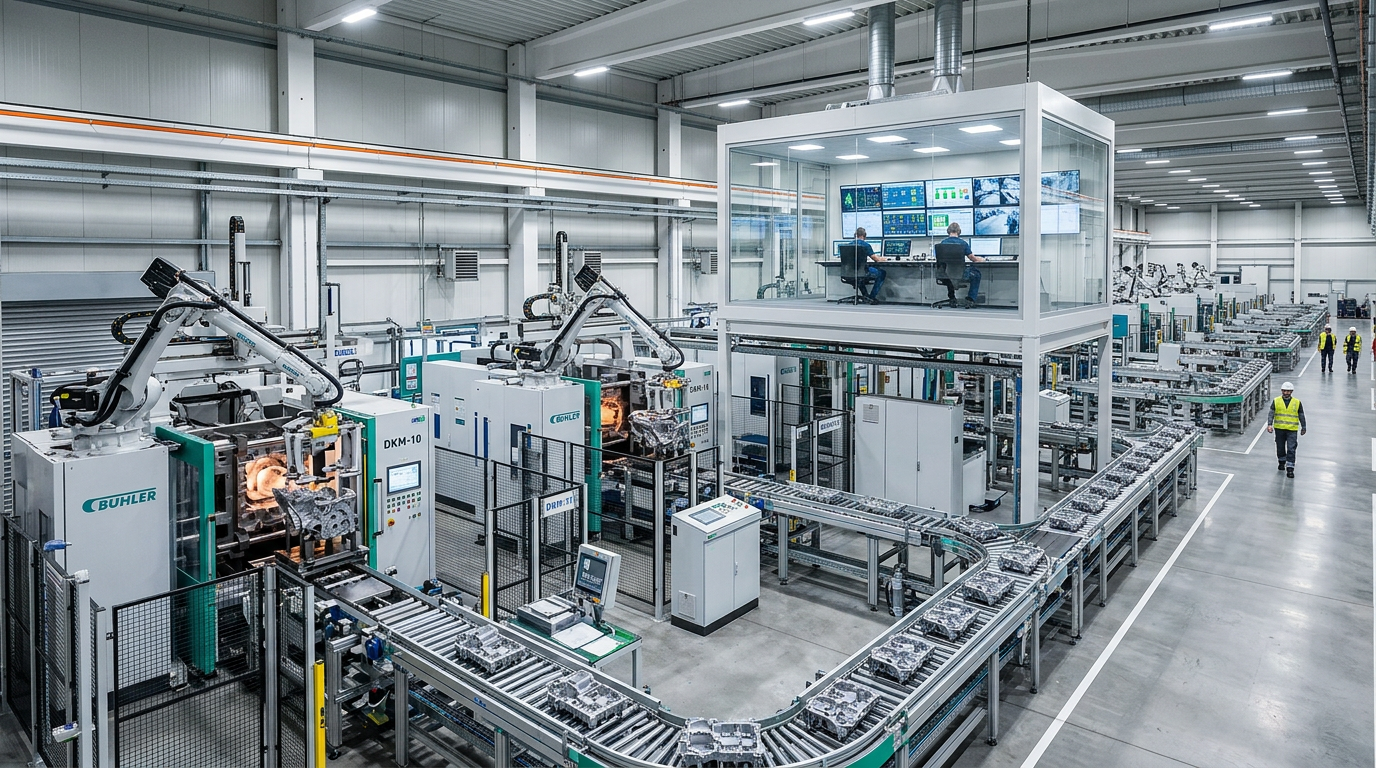
Regional dynamics reveal important patterns. Asia-Pacific continues to dominate, commanding 60% or more of global production capacity. China, in particular, has cemented its position as the world's largest die casting manufacturer and exporter, with sophisticated supply chains supporting both domestic EV makers and global OEMs. Conversely, North America and Europe are experiencing a modest shift in capacity allocation—from commodity casting toward specialized, high-precision components in aerospace, defense, and medical device sectors.
Market fragmentation remains high, with the top 10 global die casters controlling approximately 30-35% of capacity. This fragmentation creates opportunities for specialized regional players to capture niche markets, particularly those serving electrification and lightweight engineering demands.
2. The EV Revolution Is Reshaping Die Casting
The transition from internal combustion engines to battery electric vehicles represents the most significant demand driver for die casting in decades. The fundamental physics of EV design creates unprecedented casting requirements. While traditional ICE vehicles weigh approximately 1,500 kg, an equivalent EV must reach comparable curb weight despite carrying heavy battery packs. This weight equation fundamentally changes material selection and manufacturing approaches.
Electric vehicles use 25-27% more aluminum by weight than comparable ICE vehicles, translating to approximately 250 kg of aluminum per unit. When battery pack components—which add 400-700 kg depending on energy density targets—are included, the demand for lightweight structural and thermal management components becomes critical. Thin-wall aluminum die castings and magnesium components offer 30-50% weight savings compared to traditional stamped steel parts, making them indispensable for achieving range targets and performance benchmarks.
ICE Vehicle
Curb Weight: ~1,500 kg
Aluminum Usage: Baseline
Primary Material: Stamped steel, cast iron
Casting Demand: Traditional volume
EV Vehicle
Curb Weight: ~1,500 kg (same)
Aluminum Usage: 25-27% more
Battery Pack: 400-700 kg (lightweight required)
Casting Demand: Thermal management, structural
Beyond simple volume increases, EV architecture demands new casting types. Battery thermal management housings, electric motor enclosures, structural suspension nodes, and integrated body-frame components are pushing the boundaries of conventional die casting design. OEM specifications now frequently demand casting tolerances of ±0.5 mm over 300 mm spans, with porosity levels below 3% to ensure structural integrity and thermal reliability.
The EV adoption curve varies by geography. European and Chinese OEMs are at 50%+ EV penetration in their new vehicle portfolios; North American and Japanese manufacturers are at 25-35%. This variation creates a multi-speed demand environment where die casters must balance EV component investments with continuing ICE component production. By 2030, however, the transition accelerates globally, suggesting that die casting capacity additions from 2026-2028 will face utilization challenges post-2030 without continuous technology evolution.
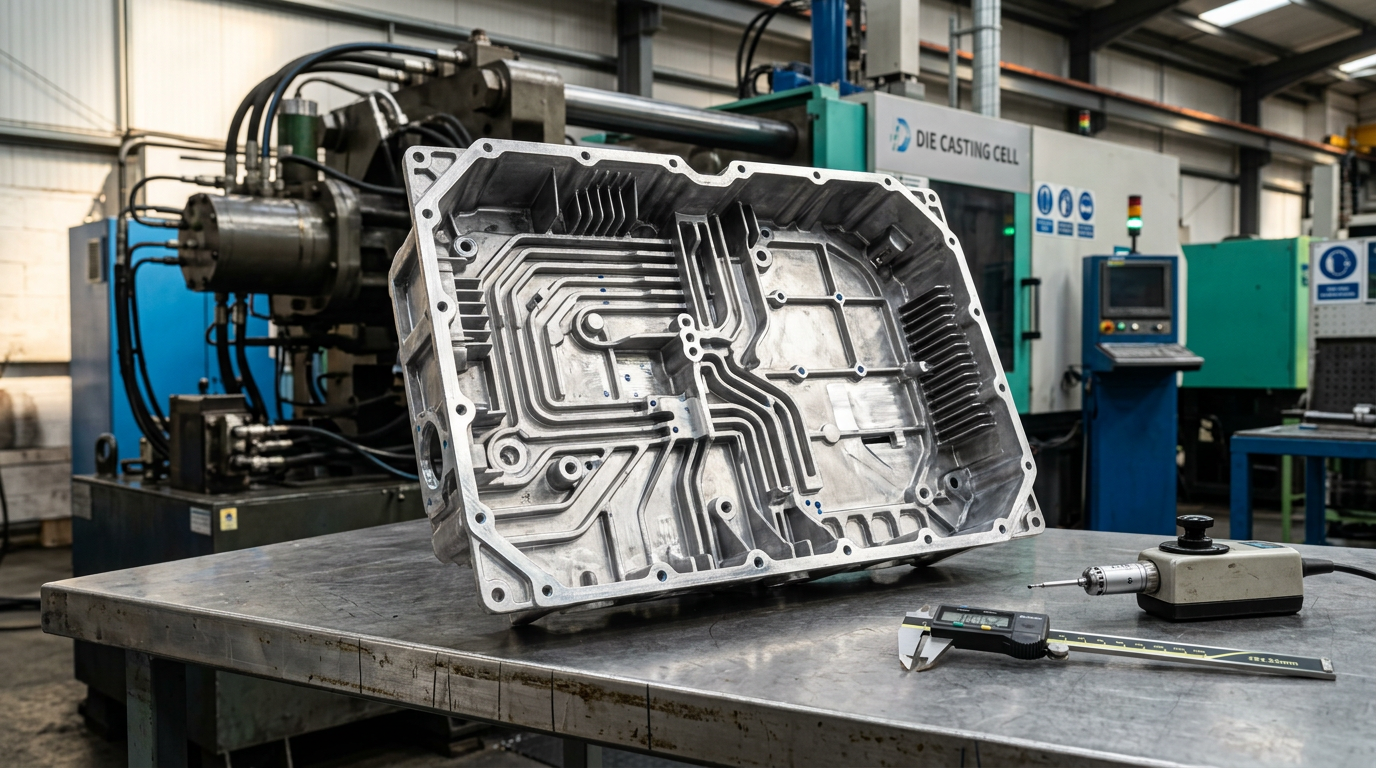
Tip: Manufacturers preparing for the EV surge should prioritize investments in aluminum thermal management components and thin-wall structural castings. These segments will command premium pricing through 2030 as OEM validation and supply security concerns limit capacity. Early investment in simulation software (thermal FEA, mold flow analysis) and process documentation will create competitive advantages in design partnerships with OEMs.
3. Mega-Casting and Giga-Press Adoption
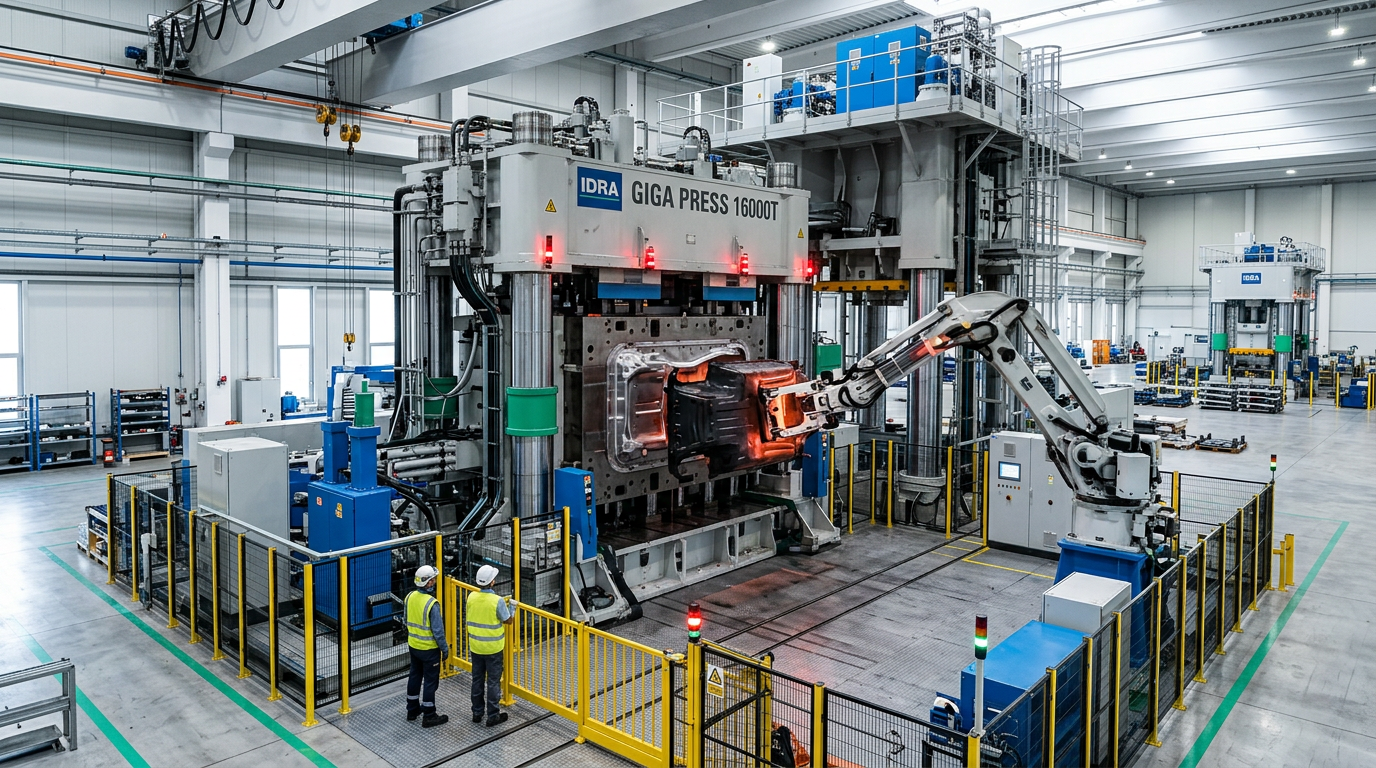
Mega-casting represents the most revolutionary manufacturing shift in automotive die casting since high-pressure die casting itself was commercialized a century ago. The technology centers on giga-presses—hydraulic or mechanical presses with 6,000 to 8,000 ton capacity—capable of casting complex underbody and structural assemblies in a single shot. What previously required 170-220 individual stampings, rivets, spot welds, and fasteners can now be consolidated into 3-5 integrated structural castings.
Tesla pioneered mega-casting with the Model 3's rear underbody structure, reducing assembly complexity by 40% and labor content by 20-25%. BYD and NIO rapidly followed with full-platform adoptions. In Europe, Volvo announced aggressive mega-casting integration across its EV lineup. By 2026, at least 15 major OEMs have mega-casting programs either in production or advanced development, collectively planning deployment across 20+ vehicle platforms by 2030.
The manufacturing benefits extend beyond assembly efficiency. Mega-cast structures exhibit superior structural stiffness with equivalent mass compared to welded assemblies, reducing unsprung weight and improving suspension tuning. Thermal pathways for battery cooling are integrated directly into castings, eliminating separate heat pipe routing and reducing component count by 30-40%. Scrap rates decrease because fewer fasteners and secondary fastening operations mean fewer assembly defects.
However, mega-casting imposes stringent capital and technical requirements. A single giga-press system, including mold development, costs $80-150 million. Mold life in the harsh mega-casting environment is 800,000-1.2 million cycles, compared to 2-3 million cycles for traditional die casting molds. Casting wall thickness variation drives porosity challenges; successful mega-casting operators employ real-time monitoring systems that cost $3-8 million per press. This capital intensity creates a natural consolidation trend favoring large, well-capitalized casting suppliers.
Traditional Multi-Part Assembly
- 170-220 individual stampings
- 50+ fastening operations
- 10-15 production steps
- Assembly time: 4-6 hours per vehicle
- 10-15% scrap rate including assembly defects
- Multiple suppliers, complex logistics
Mega-Cast Single-Piece Approach
- 3-5 integrated castings
- 5-8 fastening points
- 2-3 production steps
- Assembly time: 30-45 minutes per vehicle
- 2-4% scrap rate, superior quality
- Single integrated supplier, supply certainty
From a competitive standpoint, mega-casting creates winner-take-most dynamics. OEMs show strong preference for consolidating casting supply with single megasuppliers rather than coordinating multiple traditional casters. This consolidation pressure is accelerating M&A activity, with strategic investors targeting mega-casting capable suppliers at premium valuations (15-18x EBITDA vs. 10-12x for traditional die casters).
4. Reshoring and Supply Chain Shifts
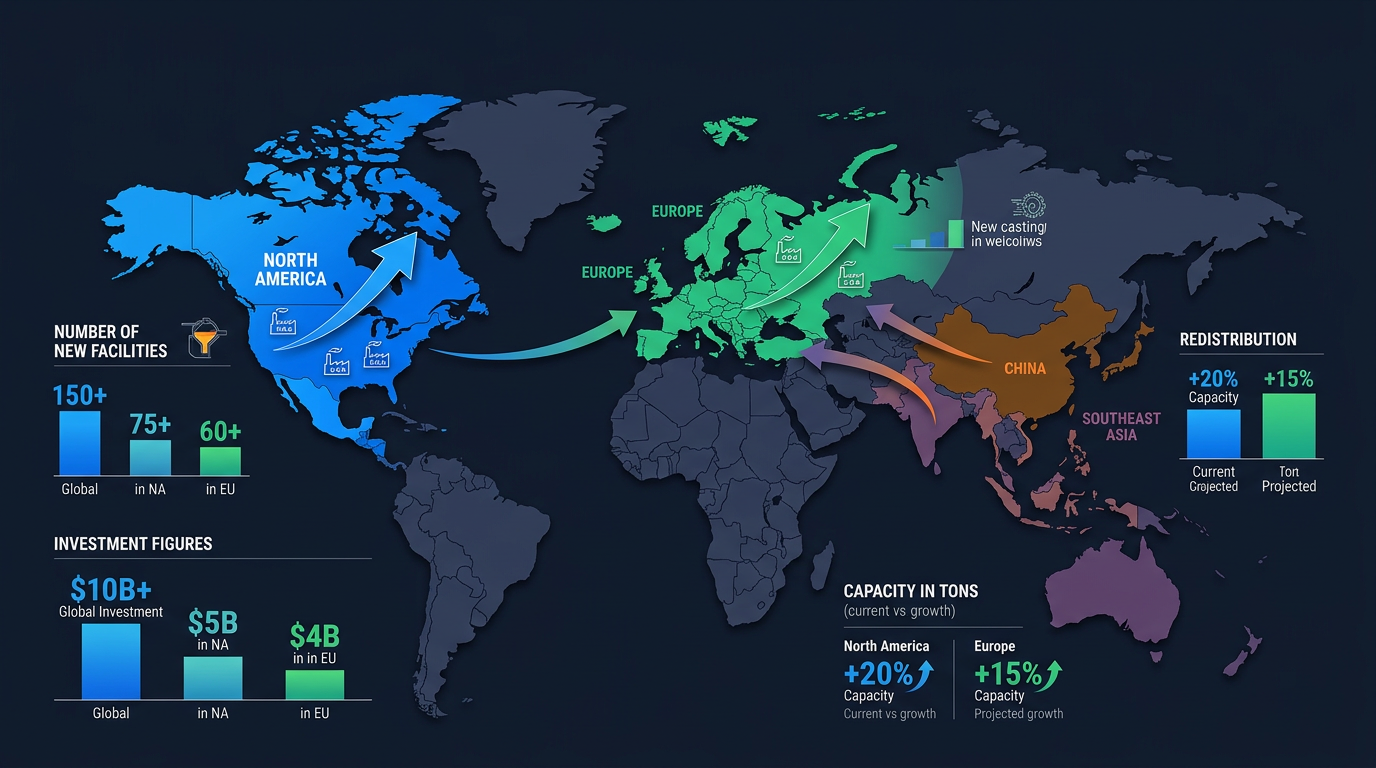
After two decades of offshore consolidation favoring low-cost Asian capacity, die casting manufacturing is undergoing a subtle but meaningful shift back to North America and Europe. This reshoring trend is not universal—commodity aluminum and zinc casting remains predominantly offshore—but is pronounced in high-margin, technology-intensive segments.
Several factors drive this shift. First, geopolitical fragmentation creates supply chain risk. OEM strategies increasingly emphasize geographic diversification of critical component suppliers, particularly for structural automotive components. Second, labor economics have partially reversed; automation levels in mature casting facilities have compressed labor cost differentials. A highly automated die casting facility in Mexico or the Southern U.S. may cost only 5-10% more per ton than equivalent Chinese capacity, while eliminating 6-8 weeks of transportation and inventory carrying costs.
Third, and most strategically, proximity to EV assembly enables tighter integration with OEM production plans. Tesla's Nevada Gigafactory explicitly requires suppliers to co-locate or establish North American facilities to support just-in-time delivery and design iteration cycles. This OEM pull-forward has triggered substantial capital investment. Xusheng International Holdings announced a $350 million investment in a North American automotive casting facility, expected to produce 300,000+ units annually beginning in 2027. Similarly, Westmoreland Resource Recovery in Pennsylvania received $125 million in capital commitments for expanded aluminum die casting capacity.
Key Reshoring Investments
Xusheng International: $350 million North American facility (300,000+ units annually by 2027)
Westmoreland Resource Recovery: $125 million Pennsylvania expansion for aluminum die casting
North American die casters are strategically repositioning toward high-value segments where reshoring offers competitive advantages. Precision medical device components, aerospace structural parts, and specialty automotive applications command 40-60% gross margins, compared to 18-25% for commodity high-pressure die casting. These markets tolerate proximity premiums and prefer domestic supply chains for regulatory compliance and IP protection. By 2026, North American capacity additions focused on these segments have increased 22% year-over-year, while traditional automotive capacity remains flat.
Asia-Pacific, particularly China, maintains commanding advantage in high-volume commodity casting and increasingly dominates mega-casting infrastructure. However, China's own EV supply chains are vertically integrated; opportunities for traditional Western OEM suppliers are narrowing. This creates a bifurcated global market: Asia for volume and cost leadership, North America and Europe for specialization and innovation.
5. Sustainability and Carbon Border Pressures
Environmental regulation is fundamentally reshaping manufacturing economics for die casters competing in European and increasingly global markets. The European Union's Carbon Border Adjustment Mechanism (CBAM), which began transitional enforcement in 2026, imposes implicit carbon tariffs on imports of aluminum, steel, and other carbon-intensive materials. Initial rates of 5-10% are scheduled to escalate to 20-25% by 2030, creating substantial competitive pressure for non-EU manufacturers.
The CBAM mechanism works by requiring importers of covered goods to surrender carbon allowances equivalent to the emissions embedded in imported products. EU manufacturers subject to the EU Emissions Trading System (ETS) must also surrender allowances, creating competitive parity, but at significantly higher costs than producers in jurisdictions without carbon pricing. For die casters, this creates a 15-30% cost advantage for EU-based producers by 2030, assuming current CBAM escalation schedules.
Non-EU Producer
Embedded Emissions: 8-12 ton CO2e/ton
Carbon Tariff (2030): $150-500/ton
Grid Carbon Intensity: High (coal/mixed)
Process Efficiency: Standard optimization
EU-Based Producer
Embedded Emissions: 2-4 ton CO2e/ton
Carbon Cost Advantage: 15-30% by 2030
Grid Carbon Intensity: Low (renewables)
Process Efficiency: Optimized, renewable-powered
OEMs sourcing parts for European markets must now factor in carbon cost differentials when evaluating supplier locations. A casting sourced from China or India may have 8-12 ton CO2e per ton of casting due to electricity grid carbon intensity and process inefficiency. The same casting sourced from a European supplier powered by renewable energy and optimized processes might emit 2-4 ton CO2e per ton. The carbon tariff difference—potentially $150-500 per ton of casting by 2030—forces OEM recalculation of total cost of ownership for global suppliers.
This regulatory pressure is accelerating technology investment in sustainable die casting. Water-based release agents, replacing solvent-based chemistry, reduce VOC emissions by 60-80%. Vacuum-assisted die casting reduces porosity, requiring 5-10% less material for equivalent parts. Induction furnace heating with renewable energy can reduce per-ton energy costs while eliminating 30% of casting CO2 emissions. Noise and recycled content policies are driving aluminum suppliers to increase recycled content in casting alloys from 20% to 40%+ current levels.
Financial markets are accelerating these trends. ESG-focused investors are demanding portfolio companies demonstrate carbon reduction roadmaps; die casting suppliers face pressure to achieve 30-40% carbon reduction by 2030 or lose institutional investment access. Similarly, OEM procurement policies increasingly penalize high-carbon suppliers through scoring adjustments equivalent to 10-15% cost premiums for equivalent capability.
Warning: Alloy price volatility remains the die casting industry's most unpredictable input cost. Aluminum prices fluctuated 45% in 2024-2025 alone, driven by energy costs, inventory dynamics, and macroeconomic cycles. Manufacturers must implement robust hedging strategies and build long-term supply agreements with fixed price escalation clauses. Failure to manage alloy price exposure can compress margins by 200-400 basis points within a single quarter.
For manufacturers, the sustainability imperative creates both risk and opportunity. Risk emerges from capital intensity; a modern, emissions-optimized die casting facility requires 15-20% more capital investment than traditional plants. Opportunity emerges for first-movers to establish premium positioning with OEMs seeking carbon-compliant suppliers. The pricing premium for low-carbon castings has risen from 2-3% in 2024 to 5-8% in 2026, with trajectory toward 10-15% by 2030 as CBAM enforcement intensifies.
6. Technology Trends: Automation & Industry 4.0
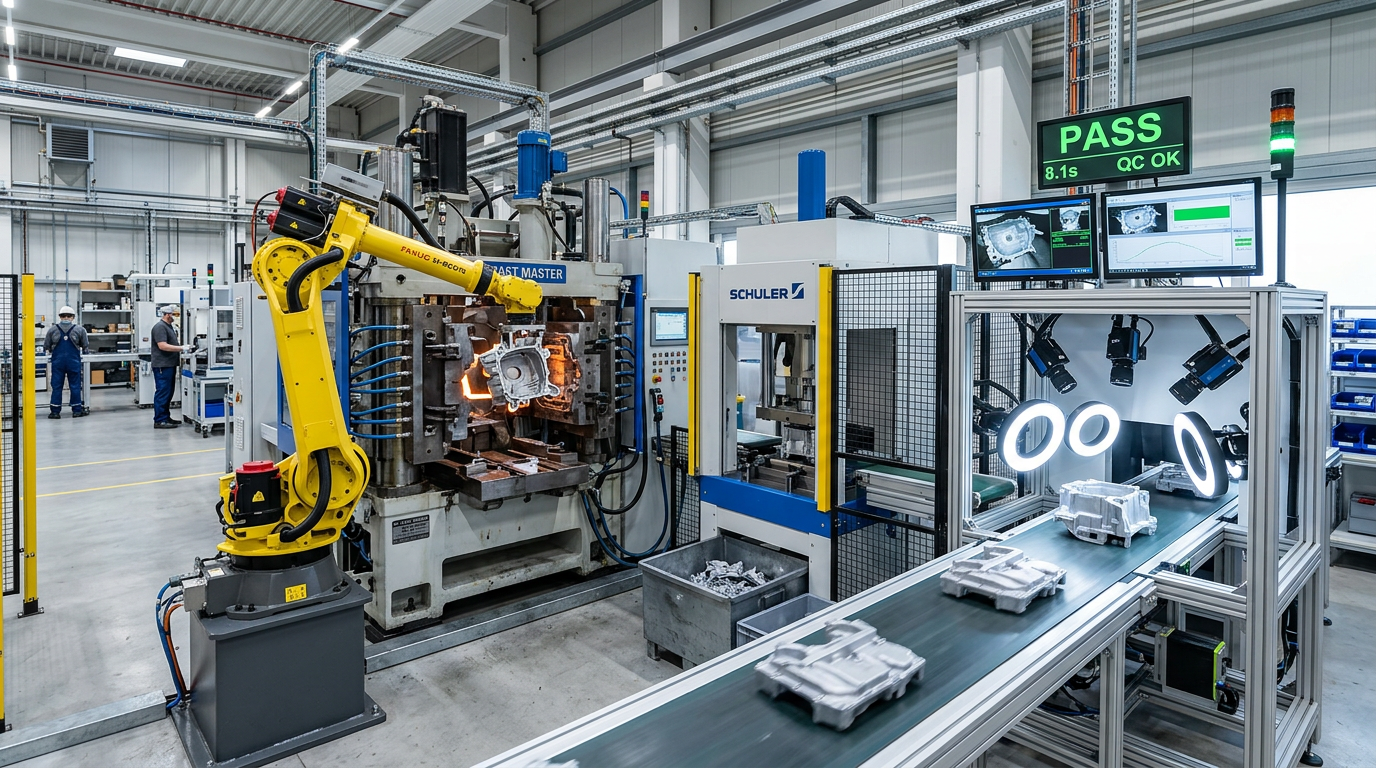
The digitalization of die casting represents a fundamental productivity opportunity for the industry. Modern die casting facilities employ real-time monitoring systems capturing 50-200 data points per casting cycle, enabling predictive maintenance and quality optimization at unprecedented scale. Machine learning algorithms analyze thermal profiles, pressure curves, and acoustic signatures to predict defects 20-30 cycles before scrap-producing failure—enabling preventive intervention rather than reactive scrap management.
Robotic integration in die casting is approaching 50% penetration for cavity inspection and secondary operations, but primary casting operations remain labor-intensive. Advanced automation—including articulated robots for mold handling, integrated vision systems for real-time dimensional verification, and automated finishing systems—can reduce labor per casting by 30-40%. However, the capital investment ($50-100 million for a fully automated 50-press facility) requires utilization rates exceeding 75% to achieve payback within 5-7 years.
Automation ROI Metrics
Labor Reduction: 30-40% per casting
Capital Investment: $50-100 million (50-press facility)
Required Utilization: 75%+ for payback
Payback Period: 5-7 years
Simulation technology is enabling dramatic improvements in first-time yields and design optimization. Thermal and flow simulation can predict die temperature profiles, alloy temperature evolution, and turbulence patterns with 95%+ accuracy, reducing physical trial mold iterations from 5-10 down to 1-2. This compression of engineering cycles accelerates OEM time-to-market and reduces total development cost by 20-30%. Software platforms like Magmasoft, PAM-CAST, and FLOW-3D are becoming competitive prerequisites for OEMs selecting casting suppliers.
Supply chain digitalization is creating transparency and resilience advantages. Blockchain-based tracking of alloy provenance, process parameters, and test results enables rapid supplier verification and supports carbon accounting. IoT integration across multiple facilities enables OEMs and suppliers to implement digital twins of production systems, simulating the impact of design changes before physical implementation. These capabilities command pricing premiums of 8-12% among premium automotive and aerospace customers.
Additive manufacturing is emerging as a complementary technology for mold design and prototype validation. 3D-printed conformal cooling channels in casting molds can reduce cycle times by 10-15% by improving thermal control. While mold production costs remain 15-20% higher for additive-manufactured components versus traditional machining, the performance benefits justify adoption for high-volume applications (500,000+ annual castings) with extended production runs.
7. What This Means for Die Casting Manufacturers
The convergence of EV adoption, mega-casting, reshoring, and sustainability regulation creates a bifurcated competitive environment with fundamentally different winning strategies for different manufacturer segments.
Large Tier-1 Suppliers
(>$1B Annual Revenue)
Strategic imperatives focus on mega-casting capability and global footprint optimization. Must commit $200-500 million in capital to establish giga-press operations in key automotive regions (North America, Europe, China) by 2028. The mega-casting market will absorb 60-70% of new foundry capacity investment through 2030, making this capability non-negotiable for OEM partnership continuity. Additionally, must establish technology leadership in digital transformation and carbon reduction, positioning sustainability as a procurement decision differentiator rather than regulatory cost.
Mid-Market Specialists
($100-750M Revenue)
Focus on technology and geography specialization rather than attempting mega-casting leadership. Strategic positions include: (1) geographic niche mastery—becoming the premier precision caster in a specific region (e.g., medical/aerospace in North America); (2) material specialization—developing competency in magnesium, titanium alloys, or aluminum-silicon composites; (3) process innovation—pioneering low-porosity casting or automation integration. Can capture 25-35% better margins through specialization.
Regional & Local Manufacturers
(<$100M Revenue)
Consolidation pressure is intense, but opportunities exist in niche end-markets. Strategic options include: (1) supply chain integration—becoming a dedicated supplier to regional automotive clusters; (2) application specialization—capturing 50%+ of supply for high-margin applications (agricultural equipment, industrial pumps, consumer electronics); (3) merger pathway—positioning for acquisition by larger regional consolidators.
Capital & M&A
Industry Consolidation
Estimated 15-20% of facilities globally will exit market through 2030, while total capacity remains flat. Companies with strong balance sheets will acquire distressed capacity at 40-50% discounts. Cross-border M&A accelerating with Asian conglomerates acquiring North American and European specialists. Private equity increasingly active in mid-market platform acquisitions and roll-up consolidation strategies.
Talent and Skills Requirements
The shift toward technology-intensive manufacturing is creating acute talent shortages. Die casting engineering talent—mechanical engineers with casting simulation experience, process technicians trained in Industry 4.0 systems—commands 30-40% wage premiums in competitive labor markets. Manufacturers must invest in apprenticeship programs and partnership with technical colleges to build sustainable talent pipelines. Remote work and flexible arrangements are becoming competitive requirements to attract specialized talent from geographic centers of engineering excellence.
Critical Need: Casting simulation engineers, Industry 4.0 process technicians, digital transformation specialists, sustainability engineers