
1. Market Overview & Size
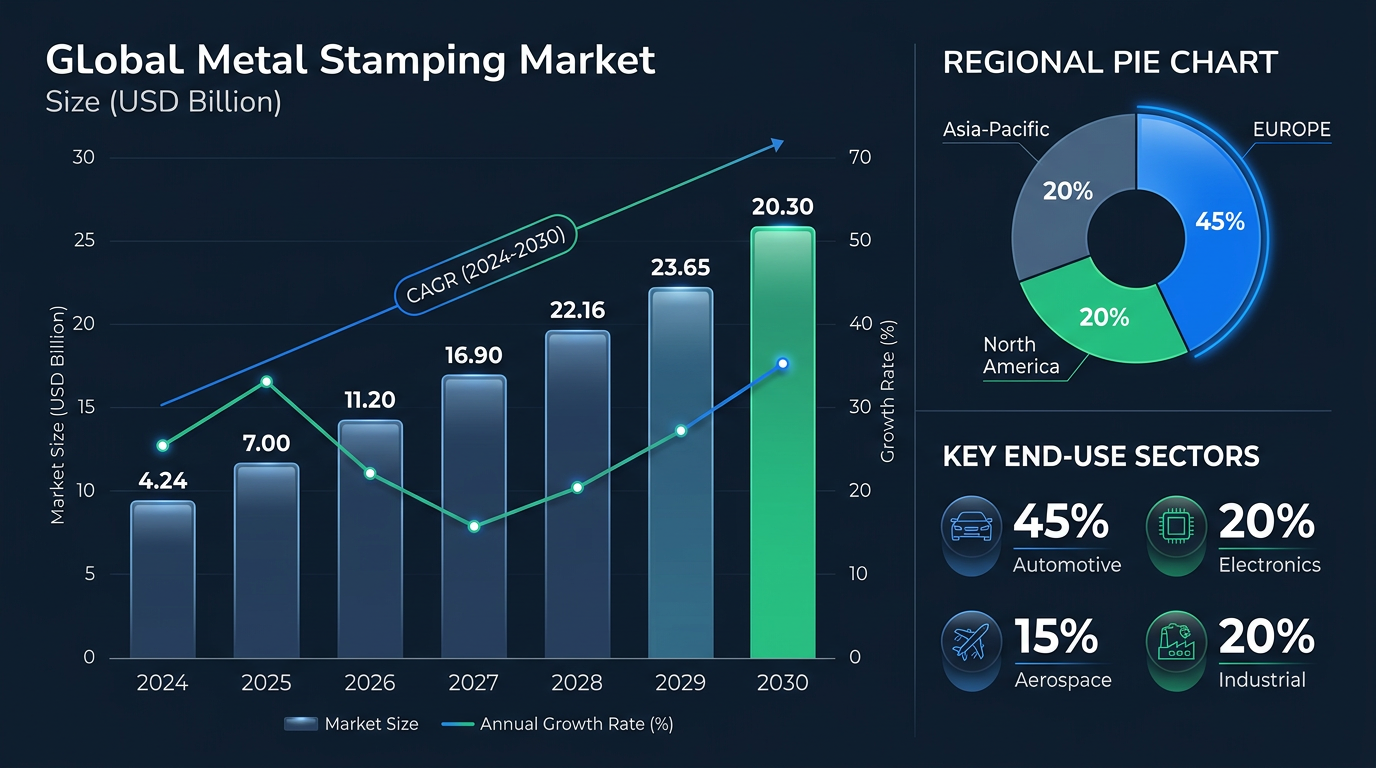
The global metal stamping market is experiencing significant transformation in 2026, valued at approximately $265 billion with projections to reach $386 billion by 2035. This represents a robust compound annual growth rate (CAGR) of approximately 4.2% globally, with stronger growth in specific regions and segments.
North America remains a critical market, driven by three converging factors: the reshoring of manufacturing from overseas to domestic facilities, the explosive growth in electric vehicle (EV) production, and increased investment in advanced manufacturing technologies. The North American metal stamping market is expected to grow at a 3.9% CAGR through 2035, outpacing historical trends.
The market landscape has shifted dramatically from traditional automotive applications. While traditional vehicles still represent a significant portion of stamping demand, the composition of that demand has fundamentally changed. Suppliers are now competing for high-margin contracts with EV manufacturers who demand precision, lightweight components, and multi-material stamping capabilities that traditional stamping shops may not possess.
Asia remains the largest regional market by volume, but North America and Europe are growing faster due to EV production incentives, government subsidies, and supply chain diversification initiatives. The International Trade Commission reports that stamping capacity additions in North America over the next five years will exceed any period in the last two decades.
2. Electric Vehicles Reshape Stamping Demand
The electrification of the automotive industry is the primary growth driver for the metal stamping sector in 2026. Electric vehicles require fundamentally different stamped components compared to internal combustion engine (ICE) vehicles, creating both challenges and opportunities for manufacturers.
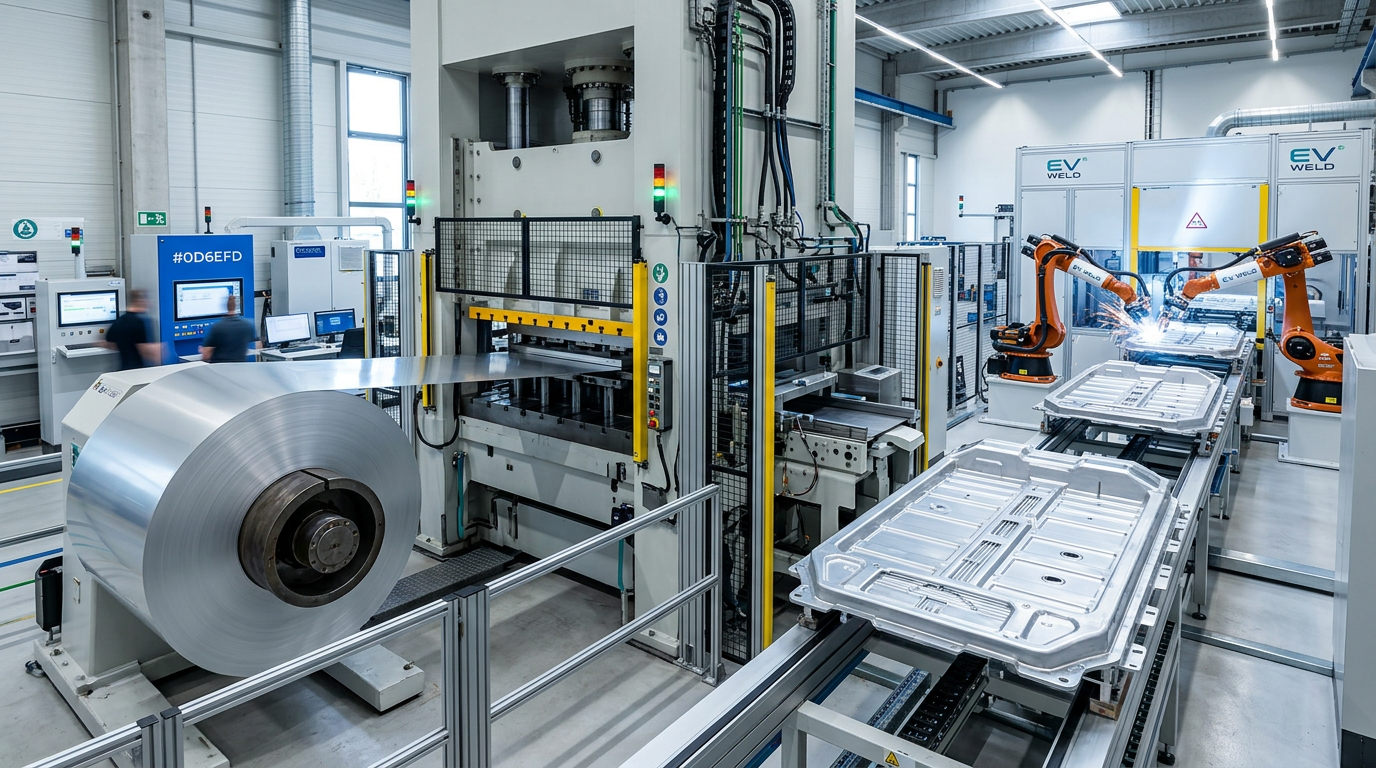
Battery trays and structural components now account for 40% of the metal stamping market share in the EV segment. These components require extreme precision, lightweight design, and often involve multi-material stamping processes. A single EV requires an average of 15-20 stamped components specifically for battery integration, compared to 8-12 for traditional vehicles.
The specifications for EV stamping are dramatically different from legacy automotive. Battery trays must withstand crash testing standards, provide thermal management, minimize weight to extend range, and integrate seamlessly with vehicle architecture. This has created a premium market segment where OEMs will pay significantly more for suppliers who can demonstrate expertise in these specialized applications.
Research indicates that 70%+ of EV OEMs prioritize suppliers with lightweight stamping expertise. This preference has created a competitive moat for manufacturers who have invested in advanced materials, precision tooling, and process optimization. Conversely, traditional stamping shops that have not adapted are losing market share as OEMs consolidate their supplier base around fewer, more capable partners.
Tesla, Volkswagen, General Motors, Ford, and emerging EV manufacturers in China are all aggressively qualifying new suppliers for battery component production. The qualification process typically takes 18-24 months and requires significant investment in R&D, tooling, and quality systems. However, once qualified, these suppliers often secure long-term contracts with substantial volumes.
The geographic distribution of EV manufacturing is also creating new opportunities. Gigafactory expansions in North America, Europe, and Asia are driving localized demand for stamped components, reducing transportation costs and lead times. Companies positioned near these manufacturing hubs are gaining competitive advantages.
Battery Tray Specialization
EV battery trays represent a premium market segment. Suppliers with expertise in crash testing compliance, thermal management, and weight optimization can command 18-25% gross margins—double traditional stamping rates.
Geographic Concentration Benefits
Proximity to Gigafactories reduces lead times from 8-12 weeks to 2-3 weeks. Regional suppliers capture 40% higher volumes and enjoy stronger customer relationships with EV OEMs focused on supply chain resilience.
3. Automation and Smart Stamping
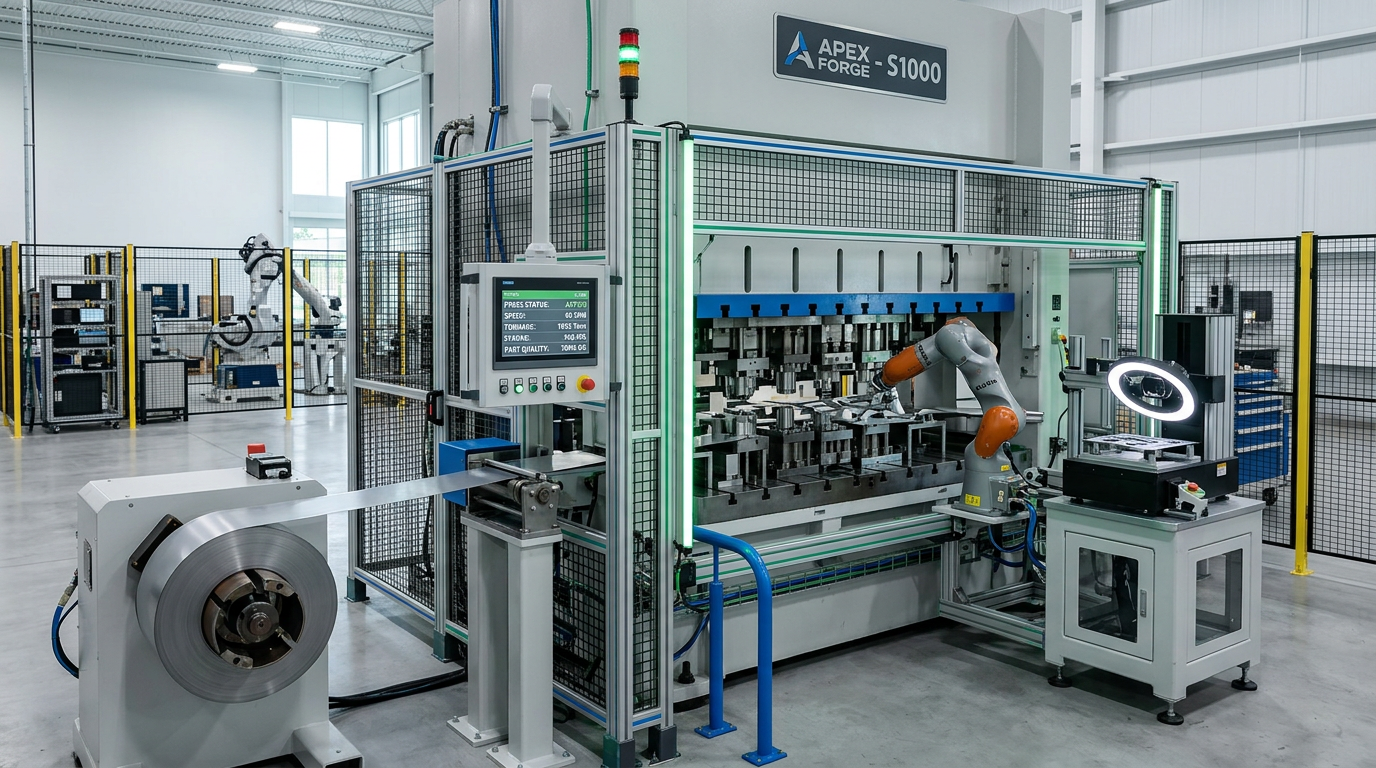
Automation is reshaping the metal stamping industry at an unprecedented pace. In 2026, progressive manufacturers are moving beyond traditional press automation toward "smart stamping" ecosystems that integrate robotics, artificial intelligence, and predictive maintenance systems.
The traditional stamping operation involved a hydraulic or mechanical press, a die, and human operators managing the workflow. Modern smart stamping facilities now feature collaborative robots, real-time quality monitoring systems, automated part removal and sorting, and AI-driven process optimization. These systems don't replace human workers—they redeploy them to higher-value activities like tool design, process improvement, and quality engineering.
Key automation trends in 2026 include:
- Robotic Die Handling: Automated die changes reduce downtime and improve safety. Presses equipped with robotic systems can change dies in minutes rather than hours, enabling smaller batch sizes and faster product transitions.
- Predictive Maintenance: IoT sensors monitor press performance, tool wear, and environmental conditions. Machine learning algorithms predict maintenance needs before failures occur, reducing unplanned downtime by up to 40%.
- AI-Driven Quality Control: Computer vision systems inspect every stamped part in real-time, detecting defects with greater accuracy than human inspection. This reduces scrap rates and ensures consistency across production runs.
- Closed-Loop Press Control: Advanced hydraulic systems with feedback control maintain consistent pressure and tonnage throughout the stamping cycle, improving part consistency and reducing material waste.
- Digital Twin Technology: Manufacturers are creating virtual replicas of their presses and dies. Engineers can simulate production runs, optimize parameters, and troubleshoot issues before implementing changes on the production floor.
The investment in automation is significant but justified by improved economics. A modern automated stamping cell costs $2-4 million but can produce 10,000-50,000 parts annually with minimal waste and maximum uptime. The ROI period is typically 3-5 years for high-volume applications.
However, automation investments are creating a bifurcated industry. Large, capital-rich stamping companies are rapidly deploying advanced systems, while smaller shops struggle to justify the investment. This is driving consolidation, with larger companies acquiring regional players to build nationwide or international networks.
Key Insight: Automation ROI
A modern automated stamping cell costs $2-4 million but produces 10,000-50,000 parts annually with 15-40% waste reduction. The typical ROI period is 3-5 years, with high-volume applications achieving payback in under 3 years. Companies that delay automation investment risk competitive disadvantage as automated competitors achieve 20-30% cost advantages.
4. Lightweight Materials and Multi-Material Stamping
The drive to reduce vehicle weight—critical for extending EV range—is driving rapid adoption of lightweight materials in stamping operations. In 2026, traditional mild steel stamping is being complemented by aluminum, advanced high-strength steel (AHSS), magnesium, and composite materials.
Each material presents distinct stamping challenges and opportunities:
Aluminum Stamping
Aluminum offers 50% weight reduction compared to steel while maintaining structural integrity. However, aluminum requires different die geometry, higher press pressures, and specialized lubrication. Thermal management is critical, as aluminum dies must be maintained at specific temperatures to prevent galling and ensure surface finish. Aluminum stamping is particularly popular for body panels and lightweight structural components in EVs.
Advanced High-Strength Steel (AHSS)
AHSS grades (dual-phase, transformation-induced plasticity, complex-phase) offer superior strength-to-weight ratios compared to conventional steel. These materials allow thinner gauges while maintaining structural performance. However, AHSS is more difficult to stamp due to higher strength and reduced formability. Tooling costs are 30-40% higher than conventional steel, but the weight savings and improved performance justify the premium for battery trays and structural components.
Magnesium Stamping
Magnesium is the lightest structural metal, offering 35% weight reduction compared to aluminum. However, magnesium stamping is limited due to flammability concerns and processing difficulties. Current applications focus on non-structural, non-safety components. Research efforts are underway to expand magnesium applications, but adoption remains limited in 2026.
Multi-Material Stamping
The most exciting trend in 2026 is multi-material stamping—producing parts that combine different materials (e.g., aluminum face sheet with steel back) in a single operation. This approach optimizes cost, weight, and performance. A single part might use lightweight aluminum where appearance matters, steel where strength is critical, and composite inserts where vibration damping is needed. Multi-material stamping requires sophisticated tooling and process control but delivers superior performance-to-cost ratios.
Industry Insight: Multi-Material Investment
Stamping companies investing in multi-material capabilities today are positioning themselves as strategic partners for OEMs. The ability to reduce component weight by 25-35% while maintaining strength and improving cost is a rare value proposition. Companies that master multi-material stamping will command premium pricing and long-term contracts with EV manufacturers.
Aluminum Advantages
50% weight reduction vs. steel drives adoption for body panels and lightweight structures. Requires higher press pressures and specialized thermal management, but delivers superior margins on high-volume EV contracts.
AHSS Premium Positioning
Advanced high-strength steel enables thinner gauges with superior structural performance. 30-40% higher tooling costs offset by premium pricing and extended contract terms with OEMs seeking strength-to-weight optimization.
Traditional vs. Advanced Stamping
Traditional Steel Stamping
- Material: Mild to medium carbon steel
- Weight: Baseline (100%)
- Cost: Lower material cost ($0.50-$1.50/lb)
- Tooling: Moderate complexity, lower cost
- Lead Time: 12-16 weeks for new tooling
- Applications: Traditional ICE vehicles, structural components
- Margin: 8-12% gross margin
Lightweight Multi-Material Stamping
- Materials: Aluminum, AHSS, composites, multi-material
- Weight: 25-35% reduction vs. traditional
- Cost: Higher material cost ($1.50-$3.50/lb)
- Tooling: High complexity, premium tooling investment
- Lead Time: 18-24 weeks for new tooling
- Applications: EV battery trays, structural components, performance vehicles
- Margin: 18-25% gross margin
5. Workforce Challenges and the Skills Gap
The metal stamping industry faces a critical workforce challenge in 2026. Approximately 25% of the stamping workforce is nearing retirement, and the supply of trained replacement workers is insufficient to meet demand. This creates a significant constraint on industry growth and competitive advantage.
The workforce challenge operates on multiple levels:
Tool-and-Die Maker Shortage
Tool-and-die makers are the backbone of the stamping industry. These highly skilled craftspeople design and build the dies that shape metal. The aging of this workforce is particularly acute in the Midwest, where stamping clusters have evolved over decades. Many companies report 6-12 month lead times to hire qualified tool-and-die makers, and some positions go unfilled for extended periods.
Critical Alert: Retirement Wave Impact
The retirement of experienced tool-and-die makers represents an existential threat to some stamping companies. Unlike traditional manufacturing skills, tool-and-die expertise requires 5-7 years of apprenticeship. Companies that have not invested in apprenticeship programs and knowledge transfer will face severe capacity constraints and potentially business discontinuity.
AI and Advanced Engineering Shortage
As stamping companies adopt automation, AI, and digital technologies, they are competing with tech companies and larger manufacturers for AI engineers, data scientists, and software developers. The pool of candidates with both stamping industry knowledge and AI expertise is extremely limited. Companies are addressing this by partnering with technology firms, hiring computer science graduates and training them on stamping applications, and investing heavily in retention.
Leadership and Succession Planning
Many stamping companies are family-owned or have long-tenured leadership. As founders and senior leaders approach retirement, companies must develop next-generation leaders who understand both traditional stamping and modern technology. Poor succession planning is contributing to business sales and consolidation in the industry.
Demand Exceeds Supply
The growth in EV production is creating unprecedented demand for stamping capacity and expertise. New EV manufacturers (Tesla, Lucid, Rivian, Chinese OEMs) are aggressive in talent acquisition, often paying premium salaries to attract experienced team members from established automotive suppliers. This wage competition is pushing up labor costs across the industry.
Companies addressing the workforce challenge are taking multiple approaches: increasing wages and benefits, investing in apprenticeship programs, automating routine tasks to focus human effort on high-value work, partnering with vocational schools and community colleges, and creating clear career advancement pathways. The most successful companies recognize that workforce development is a competitive advantage that deserves investment equivalent to capital equipment spending.
Critical Insight: Apprenticeship ROI
Companies investing in apprenticeship programs today are solving tomorrow's talent crisis. A 5-year tool-and-die maker apprenticeship costs $150,000-$250,000 per apprentice but creates 20+ years of productivity value exceeding $2 million per employee. Early investment in workforce development is as critical as capital equipment investment.
Tool-and-Die Expertise
Critical shortage of experienced die makers creates 6-12 month hiring lead times. Companies offering $80,000-$120,000 starting salaries plus apprenticeship programs are attracting talent and building competitive advantage through superior tooling capabilities.
AI Engineering Talent
Competition with tech firms for AI engineers is driving up wages. Successful stamping companies partner with universities, hire computer science graduates, and provide on-the-job training in manufacturing automation and predictive maintenance systems.
6. Sustainability and Carbon Reduction
Sustainability has shifted from a nice-to-have to a requirement in the stamping industry. OEMs are setting aggressive carbon reduction targets, and they're requiring their suppliers to demonstrate measurable progress. By 2026, leading stamping companies have implemented sustainability initiatives that could lower their carbon footprint by up to 20% by 2026, creating competitive advantage with environmentally conscious OEMs.
Key sustainability initiatives in the stamping industry include:
Energy Efficiency
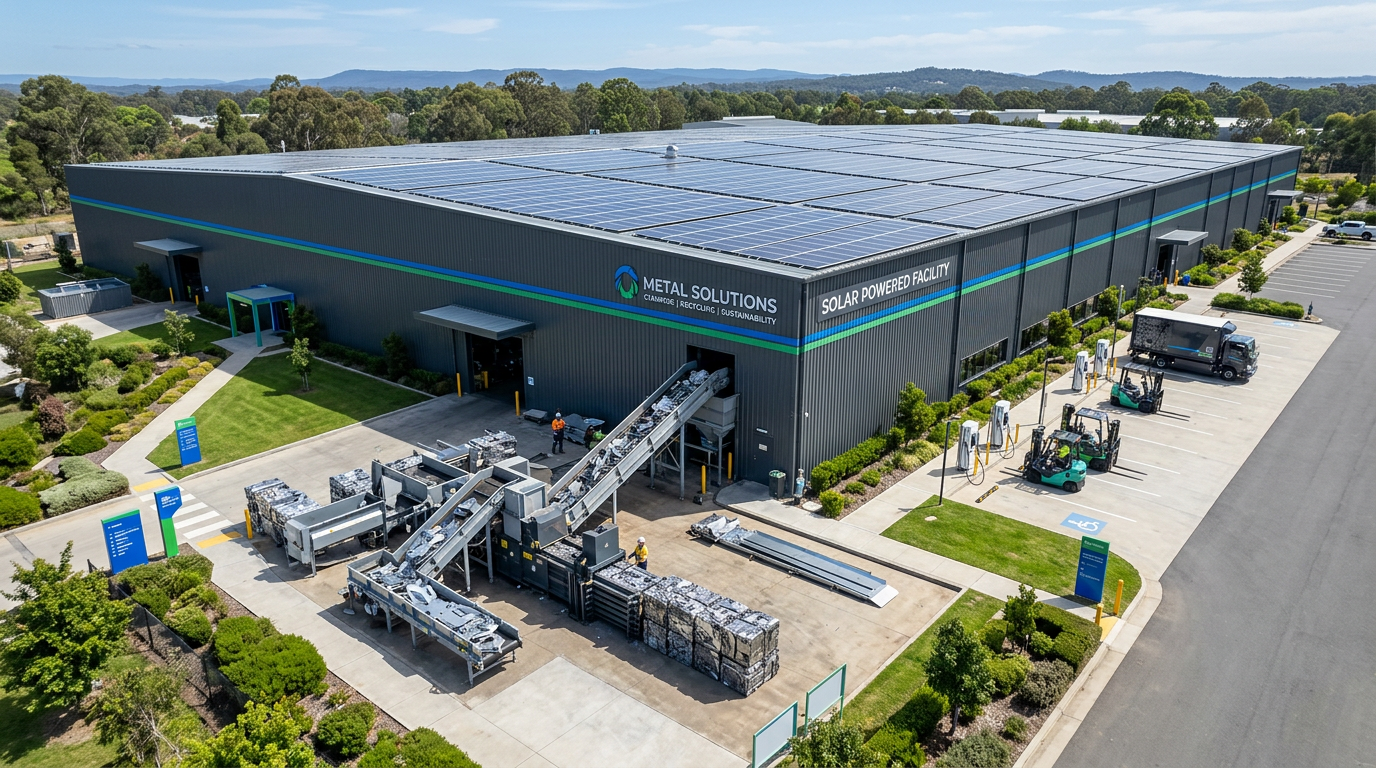
Stamping presses consume significant electricity. Modern press designs are 15-25% more energy efficient than legacy equipment. Companies are also investing in renewable energy, installing solar panels and wind power systems at facilities, and purchasing renewable energy credits. Some leading manufacturers operate carbon-neutral stamping facilities.
Material Recycling
Metal stamping generates scrap—the portion of raw material not formed into finished parts. Scrap rates vary by material and process but average 15-25%. Leading companies are implementing closed-loop recycling systems where scrap is immediately returned to the smelter for reuse, eliminating landfill waste and recovering material value. Some companies have achieved near-zero waste operations.
Lightweight Material Adoption
By stamping lighter materials (aluminum instead of steel, for example), companies reduce both material consumption and customer environmental impact. Lightweight stamped components reduce vehicle weight, extending EV range and reducing carbon emissions over the vehicle's lifetime. This cascading environmental benefit is attractive to OEMs and end consumers.
Supply Chain Transparency
OEMs require visibility into the sourcing of materials, energy sources, and labor practices. Companies are implementing supply chain tracking systems, conducting environmental audits of suppliers, and publishing sustainability reports. This transparency is becoming a competitive advantage, particularly with sophisticated buyers like major OEMs and companies with ESG commitments.
Water Conservation
Stamping operations use water for hydraulics, cooling, and lubricant mixing. Leading companies are implementing closed-loop water systems, treating and reusing water, and reducing consumption by 30-50%. Some facilities operate on rainwater and recycled water systems.
Market Advantage: Sustainability Certification
Stamping companies achieving 20%+ carbon reduction and obtaining ISO 14001 certification command 5-10% price premiums from OEMs with ESG commitments. Sustainability investment improves both competitive positioning and long-term contract security with major automotive manufacturers.
7. What This Means for Metal Stamping Companies
The trends outlined in this report create both significant opportunities and formidable challenges for metal stamping manufacturers. The industry is undergoing a fundamental transformation, and companies must adapt to survive and thrive.
Opportunity: EV Growth Creates New Markets
EV production is growing rapidly, and battery tray and structural component demand will continue expanding through 2035. Companies positioned to serve EV OEMs will enjoy strong demand, higher margins, and long-term contracts. This represents one of the most significant market expansion opportunities the stamping industry has seen in decades.
Challenge: Capital Investment Requirements
Modernizing stamping operations requires substantial capital investment in automation, tooling, and digital systems. Small and mid-sized companies may struggle to fund these investments while maintaining profitability. Industry consolidation will likely accelerate as larger companies acquire smaller regional players to build integrated, modern networks.
Opportunity: Premium Pricing for Advanced Capabilities
Companies that master multi-material stamping, advanced materials, and lightweight design command premium pricing. The ability to reduce weight, improve performance, and reduce cost simultaneously is rare and valuable. Investing in these capabilities today will position companies to negotiate favorable contracts with OEMs.
Challenge: Talent Acquisition and Retention
Attracting and retaining top talent—particularly skilled tool-and-die makers and AI engineers—is critical. Companies must invest in competitive compensation, career development, and a positive workplace culture. The companies that crack the talent problem will have significant competitive advantage.
Opportunity: Technology Leadership
Early adopters of smart stamping technologies, digital twins, and AI-driven optimization will achieve superior quality, lower costs, and faster innovation cycles. Technology investment today creates competitive moat that becomes harder for competitors to overcome as time passes.
Strategic Recommendation: Develop Expertise in Multi-Material Stamping
If your company is involved in metal stamping manufacturing, the single most important strategic initiative for the next 24-36 months should be developing world-class multi-material stamping capabilities. This includes:
- Investing in tooling and process development for aluminum, AHSS, and composite materials
- Hiring or developing engineering talent with expertise in lightweight design
- Building relationships with OEMs and communicating your multi-material capabilities
- Pursuing certifications and qualifications with EV manufacturers
- Implementing automation and quality systems that support precision multi-material stamping
Companies that execute this strategy effectively will position themselves as valued partners in the EV revolution and capture disproportionate value as the industry transforms.
Technology Investment Priority
Early adoption of smart stamping technologies creates competitive moat that strengthens over time. Companies investing in automation and digital twins today will achieve 20-30% cost advantages by 2028 that competitors will struggle to overcome.
OEM Partnership Development
Qualification with EV OEMs takes 18-24 months but delivers long-term contracts and premium pricing. Strategic focus on battery tray and structural component specialization creates defensible market position and higher profitability than traditional stamping.
Your 24-Month Action Plan
Stamping manufacturers must act now: (1) Conduct capability assessment for multi-material stamping readiness, (2) Develop business case for automation investment in high-margin applications, (3) Launch apprenticeship or training partnership with local vocational institutions, (4) Identify and pursue EV OEM qualification opportunities aligned with your capabilities, and (5) Implement sustainability initiatives targeting 15%+ carbon reduction. Companies that execute these priorities will position themselves as leaders in the transformed stamping industry of 2030.