
1. Market Overview & Size
The global injection molding market has entered a robust growth phase, driven by increased demand across automotive, consumer electronics, medical devices, and industrial applications. Valued at approximately $298.7 billion in 2025, the market is projected to reach $462.4 billion by 2033, representing a compound annual growth rate (CAGR) of 5.0%. This acceleration reflects post-pandemic normalization, accelerated digital transformation, and substantial capital investment in advanced manufacturing technologies.
Market Insight
Market growth accelerated from 2.5-3.0% (2020-2023) to 5.0%+ through 2026-2028, indicating sustained demand momentum driven by automotive EV transition and electronics miniaturization.
The market growth trajectory has strengthened considerably since 2023. Market growth rates averaged 2.5-3.0% during 2020-2023; growth rates have accelerated to 5.0%+ through 2026-2028, suggesting sustained demand momentum. The automotive sector, traditionally the largest consumer of injection molded plastics, is expanding from approximately $95 billion in market value (2025) to an estimated $165 billion by 2033, representing 6.2% CAGR. This acceleration is driven by EV architecture evolution requiring integrated plastic thermal management components, under-body protection systems, and lightweight structural elements.
Consumer electronics represents the second-largest vertical, valued at $78 billion in 2025 and projected to reach $118 billion by 2033 at 5.5% CAGR. Miniaturization trends, 5G device proliferation, wearable technology expansion, and increased demand for custom battery enclosures are driving consistent growth. Medical device molding, the fastest-growing segment, is expanding from $42 billion (2025) to $85 billion (2033) at 8.1% CAGR, reflecting aging global populations, expansion of minimally invasive surgical procedures, and increased demand for drug delivery devices.
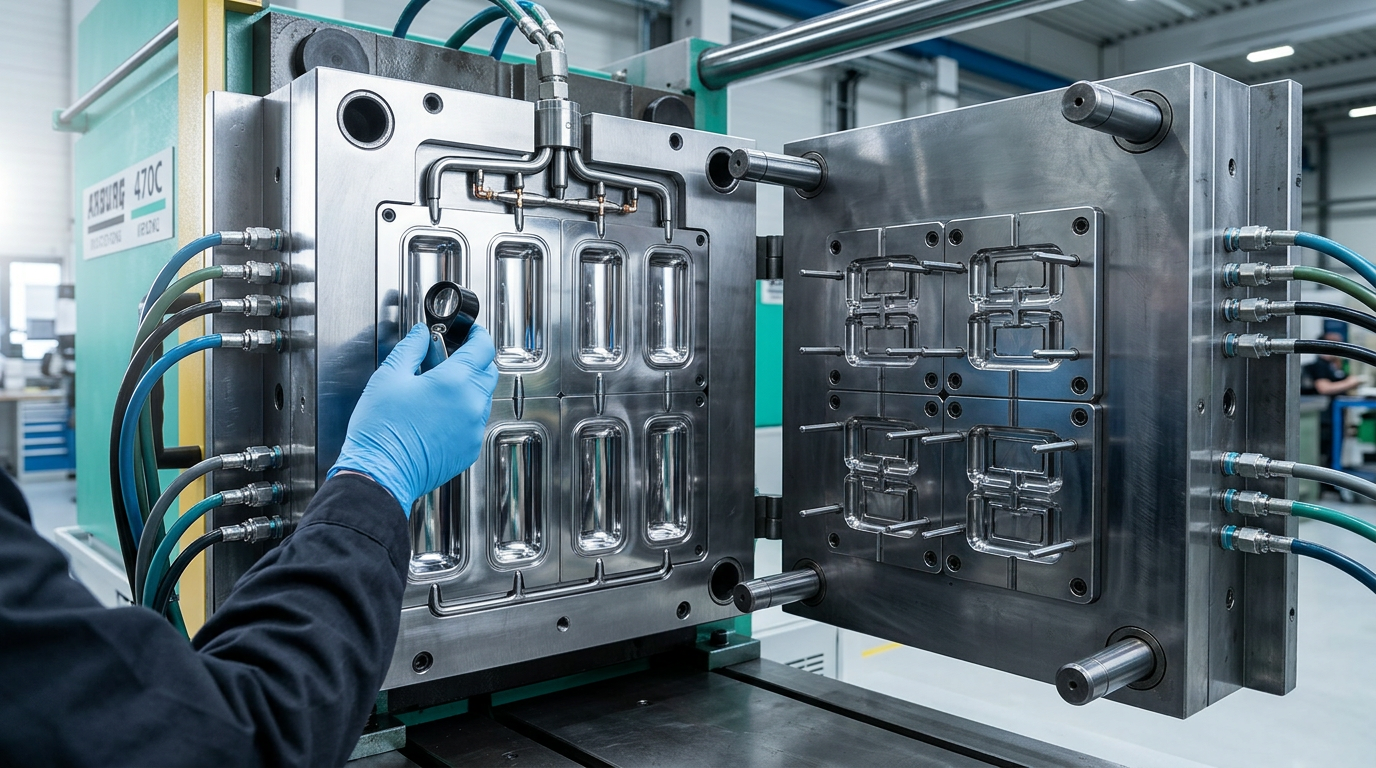
Regional dynamics reveal important patterns. Asia-Pacific commands 58% of global injection molding capacity, with China controlling approximately 35% of worldwide production. North America represents 24% of capacity, while Europe holds 18%. However, investment flows reveal shifting dynamics. North American and European manufacturers are investing 35-40% more capital per facility in automation and advanced technology compared to 2023, suggesting technology differentiation rather than commodity competition. Investment in advanced machinery per facility in North America reached $8.5 million average in 2026, compared to $4.2 million in Asia-Pacific, indicating strategic repositioning toward higher-value, technology-intensive applications.
2. Sustainability Is Reshaping the Industry
Environmental regulation and consumer demand are fundamentally reshaping material selection and process efficiency in injection molding. Recycled content polymers have experienced a 34% increase in usage over the past 24 months, driven by regulatory mandates and achieved cost parity with virgin materials. The European Union's Single-Use Plastics Directive, UK Environment Act provisions, and California's Plastic Pollution Prevention Act all mandate 30-50% recycled content in single-use packaging by 2028, with penalties reaching 4-8% of product revenue for non-compliance.
Regulatory Drivers
EU, UK, and California mandate 30-50% recycled content by 2028. Non-compliance penalties reach 4-8% of product revenue. OEM sustainability commitments are cascading requirements through supply chains.
Consumer Demand
42% increase in sustainable product preference since 2023. 61% of consumers willing to pay 5-10% premiums for sustainable alternatives. Major brands (Unilever, Nestlé, P&G) committed to 50%+ recycled/bio-based content by 2030.
Bio-based plastics adoption has reached 38% among major molders, expanding from 15% in 2023. Polylactic acid (PLA) from corn and sugarcane feedstocks, polyhydroxyalkanoates (PHA) from microbial fermentation, and plant-based polyurethanes are achieving commodity pricing parity with conventional materials for high-volume applications. Major consumer brands—including Unilever, Nestlé, Procter & Gamble, and Coca-Cola—have committed to 50%+ recycled or bio-based content by 2030, creating pull-through demand that is reshaping supplier relationships throughout the plastic value chain.
The biodegradable plastics market specifically is experiencing explosive growth. Valued at $13.19 billion in 2024, the segment is projected to reach $91.26 billion by 2034, representing a 20.7% CAGR. This growth is driven by marine plastic pollution concerns, agricultural film requirements in the EU, and expanding compostable packaging mandates for food service applications. Molders are investing heavily in biodegradable material processing expertise; 42% of molding facilities have established dedicated production lines for compostable and biodegradable materials.
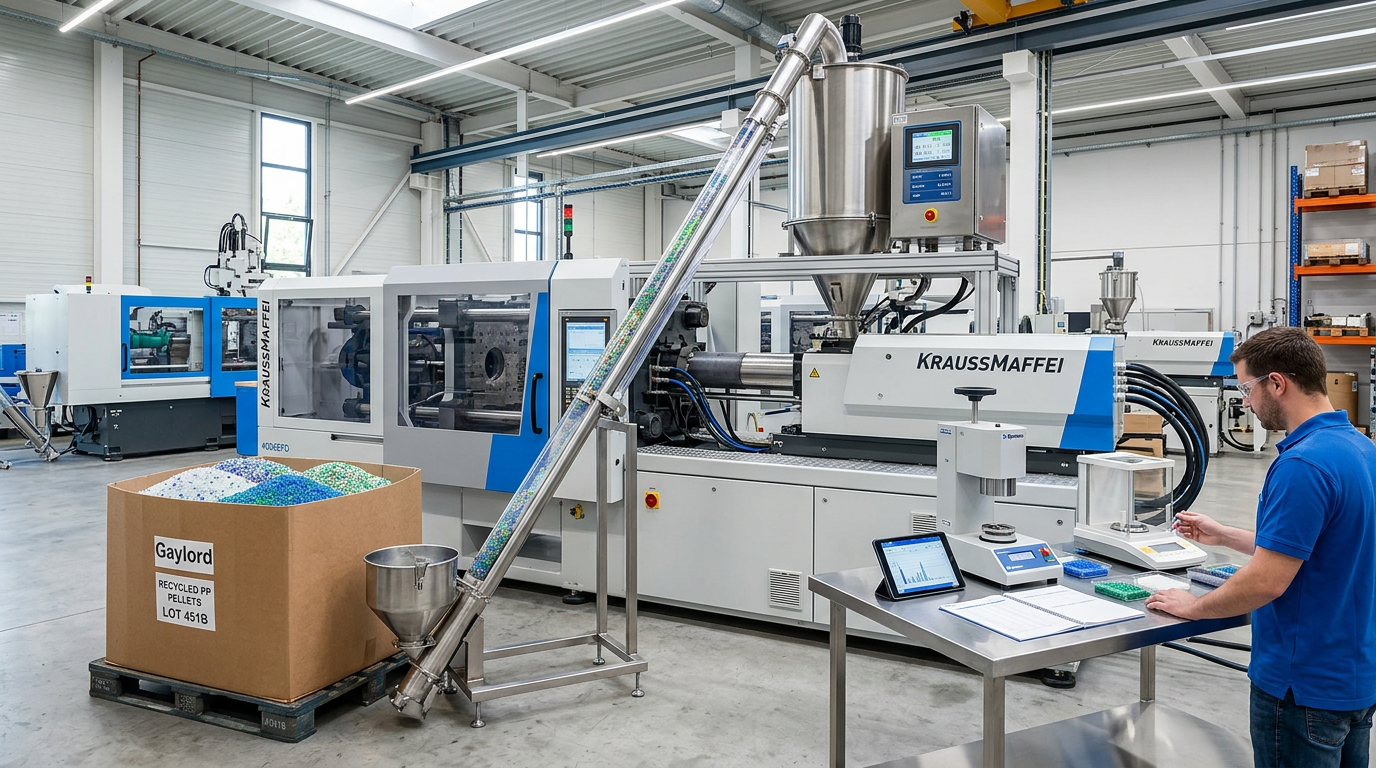
Water usage in molding operations is receiving increased regulatory and cost focus. Modern molding facilities consume 2-4 gallons of water per pound of plastic produced (cooling and mold release). Closed-loop cooling systems and water recycling technologies are being mandated by progressive regulations in California, the EU, and China, driving capex investment of $15-40 million per facility for advanced water treatment infrastructure. Molders implementing these technologies report 60-75% water consumption reduction and 40-50% associated cost savings, creating ROI within 4-6 years.
Warning: Regulatory compliance for recycled content requires rigorous material traceability and certification. Brands sourcing from molders face supply chain audits and potential liability for contaminated recycled content streams. Molders must implement blockchain-based material tracking and achieve third-party certifications (UL Environment, Global Recycled Standard) to maintain customer relationships. Failure to establish credible recycled content verification systems can result in brand delisting and contract termination.
Carbon accounting is becoming a procurement lever. OEMs and consumer brands are using Scope 3 carbon footprinting to evaluate supplier environmental performance. A typical injection molding operation generates 1.2-2.8 tons of CO2 per ton of plastic processed, depending on equipment technology, electricity grid carbon intensity, and material composition. Molders investing in electric equipment, renewable energy procurement, and waste heat recovery systems can reduce carbon intensity by 45-55%, creating 5-12% cost premiums in sustainability-focused supply chains.
3. Electric Machines Take Over
All-electric injection molding machines are displacing hydraulic systems at an accelerating rate, representing a fundamental shift in manufacturing technology comparable to the transition from mechanical to hydraulic presses several decades ago. All-electric machines are growing at 5.6% CAGR and now represent 32% of new equipment sales globally (up from 18% in 2023). In Western European markets, electric machine penetration has reached 58% of new sales; in North America, adoption stands at 41%.
Adoption Milestone
Electric machines now represent 32% of global new equipment sales, growing at 5.6% CAGR. Western European penetration has reached 58% of new sales; North America stands at 41%. Total cost of ownership demonstrates 4-6 year payback at typical utilization.
The performance advantages are compelling. Electric machines consume 40-60% less energy than hydraulic equivalents, reducing operating costs by $0.12-0.22 per pound of plastic processed. This cost advantage compounds dramatically at utilization rates above 50%, where electric machines achieve superior efficiency. Cycle time improvements of 15-30% are achievable through precise servo-drive control, enabling molders to increase throughput without additional capital investment. Precision improvements enable ±0.1mm tolerance repeatability versus ±0.3mm typical for hydraulic systems, expanding addressable markets to high-precision medical devices and electronics components.
Thermal advantages create facility-wide benefits. Hydraulic systems generate substantial waste heat, requiring intensive cooling; electric machines operate at dramatically lower temperatures, reducing facility cooling requirements by 40-60%. This translates to $8-15 million in annual HVAC cost savings for a 100-press facility. Lower operating temperatures also extend equipment life; electric machine gearboxes and servo systems typically achieve 25,000+ operating hours (8-10 years) versus 12,000-18,000 hours for hydraulic systems, reducing maintenance burden and unplanned downtime.
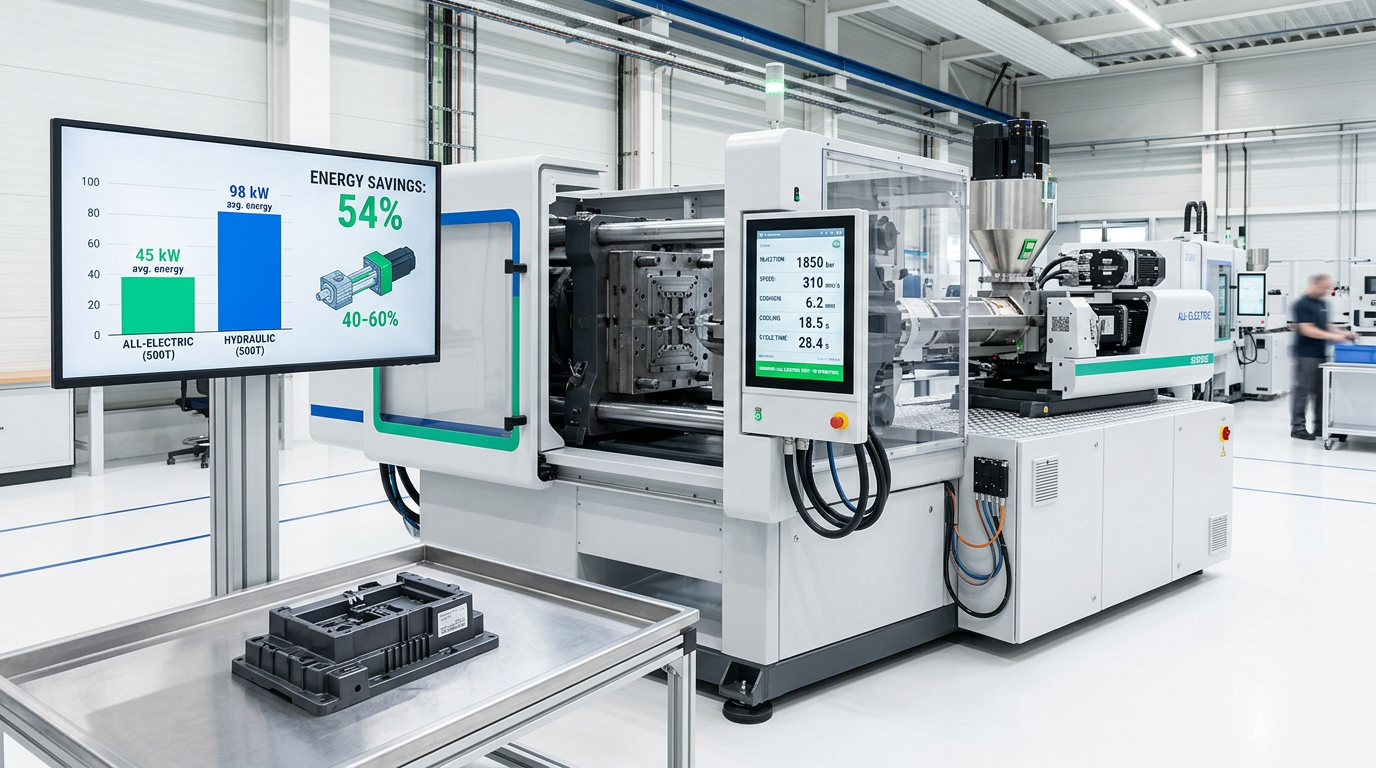
Capital investment remains the primary barrier to adoption. A modern 500-ton electric injection molding machine costs $2.8-3.8 million compared to $1.6-2.2 million for equivalent hydraulic capacity. However, total cost of ownership analysis demonstrates payback within 4-6 years at typical utilization rates (60-80% running time). Lease financing options are emerging as adoption barriers, with OEMs and independent leasing companies offering 5-7 year full-service leases ($45,000-68,000 annually for 500-ton class machines) that enable adoption without large upfront capital.
Tip: Investment in electric molding machine conversion delivers compelling financial returns when applied to high-volume, stable-demand applications. Parts with 10+ million annual volumes achieve cost amortization fastest. Prioritize electric conversion for product lines with narrow tolerance requirements (±0.2mm or better) and long production runs (2,000+ hours annually per machine). Secondary benefits include improved part quality requiring 20-30% less post-molding finishing, further enhancing ROI.
Adoption is accelerating through 2026-2028 as OEM production ramps and supply chains expand. Equipment financing is becoming more accessible; leasing options are reducing capital barriers. Grid decarbonization in most developed markets is improving the environmental value proposition—electric machines powered by renewable energy eliminate 70-80% of molding carbon footprint versus hydraulic systems running on grid electricity. This environmental advantage is creating procurement requirements from sustainability-focused OEMs and consumer brands, pulling adoption forward among supply chain partners.
Hydraulic Press Systems
- Energy: 2.8-4.2 kWh per pound plastic
- Cycle time: 30-60 seconds typical
- Precision: ±0.3-0.5mm tolerance
- Operating temp: 140-180°F facility ambient
- Equipment life: 12,000-18,000 hours
- Maintenance: Annual hydraulic fluid replacement required
- Capital cost: $1.6-2.2M per 500-ton machine
All-Electric Press Systems
- Energy: 1.2-1.8 kWh per pound plastic
- Cycle time: 20-45 seconds typical
- Precision: ±0.1-0.2mm tolerance
- Operating temp: 72-85°F facility ambient
- Equipment life: 25,000+ hours
- Maintenance: Minimal, servo-based
- Capital cost: $2.8-3.8M per 500-ton machine
4. AI and Industry 4.0 in Molding
Artificial intelligence is revolutionizing quality control, predictive maintenance, and process optimization in injection molding. Machine learning algorithms analyzing real-time pressure, temperature, velocity, and acoustic data can predict part defects 10-20 cycles before they occur, enabling preventive intervention before scrap is generated. This represents a fundamental shift from reactive quality management (100% inspection post-production) to predictive quality management (prevention before defect generation).
Computer Vision Inspection
100% part inspection at 400+ parts/minute with 98.5%+ accuracy. Reduces manual inspection labor by 25-35%. Cost: $180,000-400,000 per installation. Now required by major automotive OEMs for structural components.
Predictive Maintenance
Algorithms forecast equipment failures 2-4 weeks in advance. Reduces unplanned downtime by 45% and maintenance costs by 30%. Particularly valuable for mold temperature controllers where unexpected failure halts production.
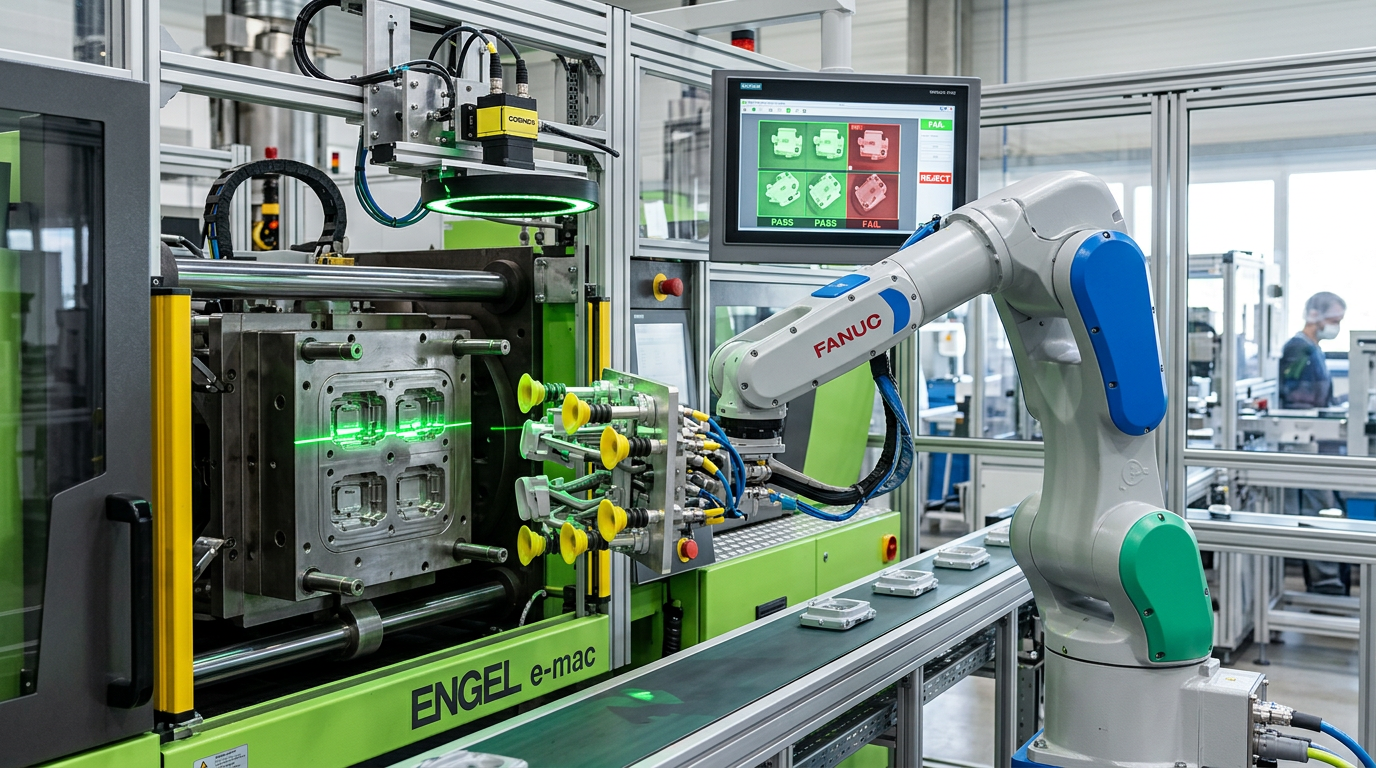
AI-enabled computer vision systems now inspect 100% of injection molded parts at 400+ parts per minute with near-human accuracy (98.5%+ detection of aesthetic and dimensional defects). These systems cost $180,000-400,000 per installation but reduce 25-35% of manual inspection labor while catching defects conventional sampling would miss. Major automotive OEMs are now requiring 100% computer vision inspection for structural and thermal management components, creating de facto standards that cascade through supply chains.
Digital twin technology allows manufacturers to create virtual replicas of molding equipment and molds, enabling simulation of production conditions and optimization of parameters before physical implementation. Twin systems can simulate 1,000+ cavity designs or mold configurations in 3-5 days, reducing physical trial-and-error iterations from 8-12 down to 1-2. This compression of engineering cycles enables 20-30% faster time-to-production for new parts and reduces mold development costs by 25-40%. Companies like BASF, Sumitomo, and Husky Injection Molding Systems are embedding digital twin capabilities directly into equipment platforms.
Predictive maintenance algorithms forecast equipment failures 2-4 weeks in advance by analyzing vibration signatures, temperature patterns, and component wear indicators. This enables maintenance planning rather than emergency response. Major molders report 45% reduction in unplanned downtime and 30% reduction in maintenance costs when implementing AI-driven predictive maintenance. The value is particularly pronounced for critical equipment like mold temperature controllers (MTCs), where unexpected failure can halt an entire production line.
Quality data integration across facilities enables network-level learning. A 50-facility injection molding network can aggregate defect data, process parameters, and material specifications across thousands of molds to identify patterns invisible in single-facility analysis. This network learning approach enables cross-facility sharing of best practices; a mold optimization discovered at one facility can be replicated across 20 similar facilities within weeks. Companies implementing network-level AI systems report 15-25% overall scrap rate reduction and 8-12% productivity improvement.
Real-time material tracking is improving process repeatability and compliance. Integration of material batch coding with production data enables perfect traceability; parts can be instantly linked to specific polymer batches, mold configurations, and process parameters. This granular traceability is critical for medical device and aerospace applications where material provenance and processing history must be documented. It also enables rapid identification of supplier quality issues; if a polymer batch exhibits processing anomalies, all parts from that batch can be instantly identified for rework or testing.
5. Bio-Based and Recycled Materials
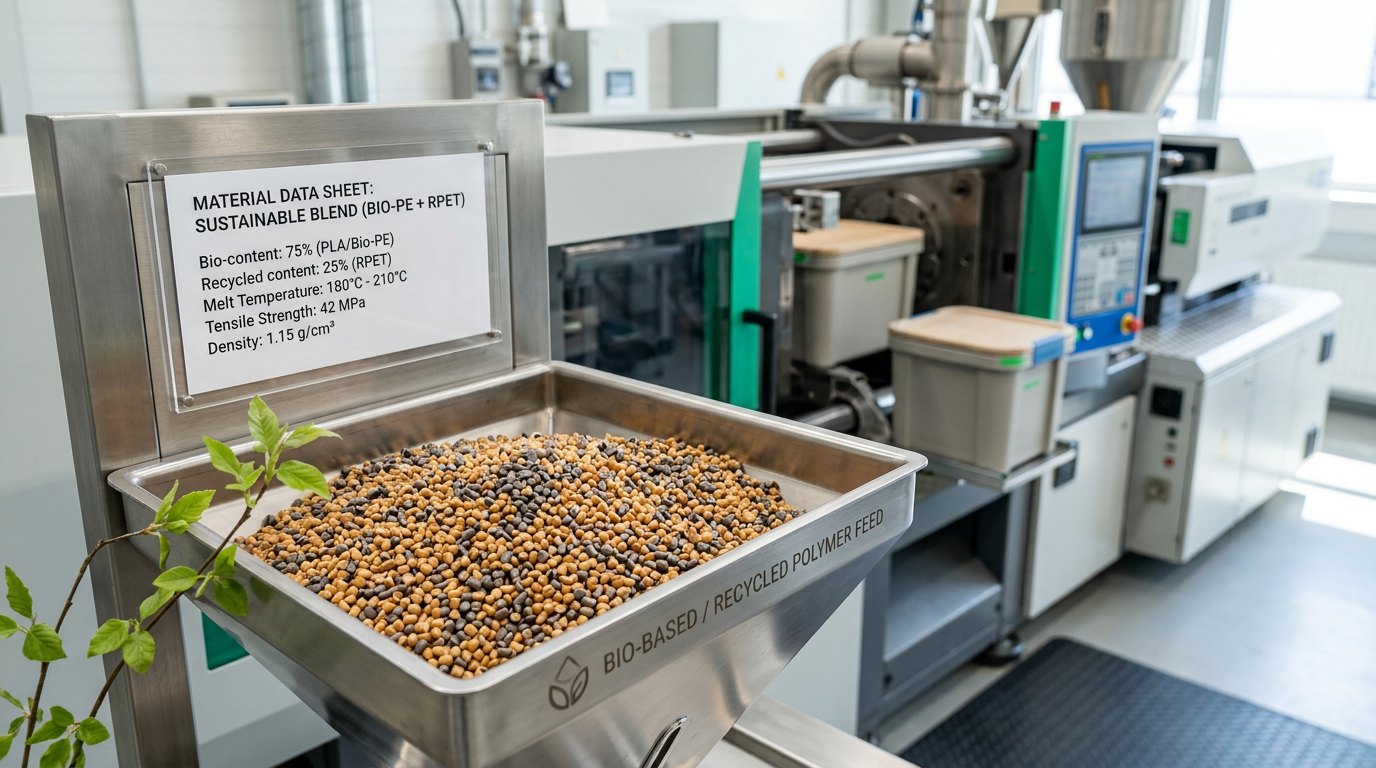
Bio-based and recycled materials are achieving rapid adoption in injection molding, driven by regulatory mandates, consumer demand, and achieved cost parity with virgin polymers. The injection molding industry's relationship with plastic materials is undergoing a fundamental realignment toward circular economy principles. Recycled content in molding resins has increased 34% over 24 months; 63% of molders now offer recycled-content material options for standard applications.
Material Innovation Pipeline
PLA costs down 22% since 2023; cost parity with PET achieved. Advanced reprocessing of rPE/rPP enabled virgin-equivalent performance. PHA production expanding 40% annually with costs projected to reach parity by 2029-2030. 68% of consumer brands now accept 30-50% recycled blends.
Polylactic acid (PLA) from renewable feedstocks (corn, sugarcane) is expanding from specialty applications into high-volume consumer goods packaging. PLA material costs have declined 22% since 2023, achieving approximate parity with polyethylene terephthalate (PET) for many applications. Processing requirements differ from conventional polymers—PLA requires lower barrel temperatures (350-380°F) and shorter cooling cycles—but modern molding machines accommodated these requirements. Unilever, Nestlé, and Danone have committed to 30-50% PLA content in consumer packaging by 2030, creating pull-through demand that is reshaping material procurement strategies.
Recycled polyethylene (rPE) and recycled polypropylene (rPP) are achieving technical performance parity with virgin materials for non-critical applications. Advanced reprocessing techniques using enzymatic decontamination and post-consumer waste sorting enable virgin-equivalent melt flow characteristics. Cost premiums have compressed from 8-12% above virgin materials (2023) to 2-4% (2026), making recycled content economically attractive for high-volume applications. Major automotive suppliers are now incorporating 40-50% recycled content in under-body protective shields and interior trim, applications where virgin-level performance is not required.
Polyhydroxyalkanoates (PHA) from microbial fermentation represent a frontier in fully biodegradable plastics compatible with injection molding. PHAs achieve mechanical properties comparable to polyethylene and polypropylene, processing at similar temperatures, but degrade in marine or soil environments within 6-12 months. Material costs remain 2-3x higher than conventional plastics ($4.50-6.00 per pound vs. $1.50-2.50 for conventional), limiting adoption to premium applications and sustainability-focused consumer brands. However, production capacity is expanding 40% annually as fermentation technology scales; material costs are projected to approach conventional polymer pricing by 2029-2030.
Post-consumer waste (PCW) recovery and reprocessing capacity is expanding rapidly. Collection infrastructure in developed markets has achieved 35-45% recovery rates for plastic containers; advanced sorting facilities using optical spectroscopy and density separation can now isolate specific polymer types with 92%+ purity. This supply reliability is enabling large-scale incorporation of PCW into injection molding applications. Uncontaminated PCW costs approximately 30-40% less than virgin resin, creating substantial cost incentive for high-volume applications.
Material blending strategies are enabling cost-effective sustainability. A 70% virgin / 30% recycled blend maintains mechanical properties comparable to 100% virgin material for many applications while reducing material cost by 18-22% and carbon footprint by 25-30%. This blending approach is becoming standard for consumer goods packaging, appliance components, and industrial containers. OEM acceptance of blended materials has increased substantially; 68% of consumer brands now accept 30-50% recycled content blends for standard applications.
6. Lightweighting Demand Across Industries
Lightweighting—reducing product weight while maintaining performance—is driving significant demand expansion for injection molded components across automotive, consumer electronics, aerospace, and industrial sectors. In automotive, the transition to electric vehicles creates imperative for weight reduction; every kilogram of weight reduction extends EV range by 5-8 kilometers and improves thermal efficiency by 1-2%. This translates to direct cost reduction for OEMs through smaller battery packs, reduced thermal management requirements, and improved performance metrics.
Engineering Materials
Glass-filled and mineral-filled polymers deliver 35-50% weight savings compared to metals. Carbon-filled nylon and PPS enable structural applications previously requiring aluminum. Unilever's lightweighting achieved 15% portfolio reduction and $420M annual material cost savings.
Advanced Molding Techniques
Thin-wall molding: 25-40% weight reduction via reduced wall thickness. Foam molding: 35-50% weight savings while maintaining dimensional stability. Both require electric machine technology and precise temperature control for optimal results.
Glass-filled and mineral-filled engineering polymers are achieving mechanical performance comparable to metals while delivering 35-50% weight savings. Carbon-filled nylon and polyphenylene sulfide (PPS) are enabling structural applications previously requiring aluminum or magnesium. Unilever's commitment to lightweight packaging has driven 15% weight reduction across product portfolio through optimized injection molding designs and material selection, reducing material costs by $420 million annually while improving transportation efficiency by 12%.
Thin-wall molding technologies are enabling 25-40% weight reduction compared to conventional injection molding through reduced wall thickness while maintaining structural integrity. Thin-wall molding requires precise temperature control, higher injection pressures, and rapid cooling, typically requiring electric machine technology for optimal results. Thin-wall techniques are rapidly expanding in consumer electronics (smartphone casings, tablet frames), automotive (interior trim, under-body clips), and appliance applications (microwave enclosures, refrigerator liners).
Foam injection molding is gaining adoption for cushioning and structural applications where weight reduction is critical. Microcellular foam reduces weight by 35-50% compared to solid injection molding while maintaining dimensional stability. Automotive applications include seat bottoms, door panels, and instrument panel substrates. Consumer electronics applications include protective cases and bracket assemblies. Foam molding requires precise metering of chemical blowing agents and sophisticated temperature profiling, capabilities available in modern injection molding systems.
7. What This Means for Injection Molding Companies
The convergence of sustainability mandates, electric machine adoption, AI-driven quality systems, and material innovation is creating a bifurcated competitive environment with fundamentally different winning strategies for different manufacturer segments.
Large Tier-1 Molders (>$500M Revenue)
Focus on technology platform leadership. Commit $150-300M in capital for electric machine conversion (50%+ penetration by 2028). Establish AI-driven quality systems and material tracking across 50+ facilities. Partner with resin suppliers on proprietary bio-based formulations. First movers with integrated technology-material platforms will capture disproportionate premium OEM contracts.
Mid-Market Specialists ($50-500M Revenue)
Focus on vertical specialization: (1) vertical mastery in medical devices, electronics, or automotive; (2) technology niche in thin-wall, foam, or precision molding; (3) geographic focus as preferred regional supplier. Avoid competing across all dimensions. Vertical specialization enables 20-30% better margins vs. horizontal commodity competition.
Regional and Local Molders (<$50M Revenue)
Strategic options: (1) niche application mastery in high-margin segments; (2) OEM supply integration leveraging just-in-time capability; (3) merger positioning with clean operations and quality systems. Standalone commodity competition is untenable; consolidation or vertical specialization are primary paths to sustainability.
Capital Investment Strategy
Electric machines deliver 4-6 year simple payback. Qualitative benefits—superior precision, reduced thermal load, extended equipment life—often justify conversion despite longer quantitative ROI. Early adoption creates competitive advantage as OEMs increasingly include sustainability in supplier scoring (42% of major automotive OEMs).
Material Strategy & Supply Chain
Establish proactive material strategy: develop recycled content processing expertise, establish bio-based partnerships, implement blockchain-based material tracking, educate customers on options. Position as material innovators to capture 10-15% pricing premiums vs. commodity competitors.
Quality & Industry 4.0 Adoption
100% computer vision inspection is non-negotiable for automotive and medical device supply. AI-driven quality systems deliver: 25-35% manual labor reduction, 45-60% reduction in customer complaints, 8-12% improvement in on-time metrics. Viewed as prerequisite for Tier-1 OEM participation, not optional.
Talent & Skills Development
Required talent: process engineers (Moldflow, ANSYS), data science resources for AI/ML, electric machine technicians, quality engineers with computer vision expertise. Specialized roles command 40-60% wage premiums. Invest in apprenticeships, technical college partnerships, and internal training infrastructure.
Competitive Positioning
Bifurcated competitive environment favors technology leaders and specialized verticals. Commodity competition is unsustainable. Success requires: early technology adoption (electric machines), vertical specialization, or platform consolidation. Geographic proximity and just-in-time capabilities remain competitive factors for regional players.