
1. When to Use Injection Molding (and When Not To)
Injection molding is one of the most versatile and economical manufacturing processes for producing plastic components at high volumes. However, it is not the right fit for every application. Understanding when injection molding excels will help you make informed sourcing decisions and avoid costly mistakes.
High-Volume Production
Injection molding excels at producing large quantities of identical parts with consistent quality and minimal variation. The automated process produces parts at rates of 1,000 to 10,000 pieces per day depending on part size and complexity, making cost per unit highly competitive at volumes above 10,000 annual units.
Complex Geometries
Injection molding enables production of parts with complex shapes, thin walls, inserts, and intricate details that would be difficult or impossible to achieve through other manufacturing methods. The process accommodates living hinges, undercuts, and multi-color parts with excellent repeatability.
Material Versatility
Injection molding works with dozens of thermoplastic materials offering diverse properties including flexibility, rigidity, transparency, chemical resistance, and thermal stability. Glass-reinforced, flame-retardant, and conductive compounds expand application possibilities beyond standard plastics.
Cost Efficiency
Once tooling is complete, injection molding achieves among the lowest per-unit costs of any manufacturing process. Fast 10 to 30 second cycle times and reusable molds spread fixed costs across large production runs. Material costs are minimal compared to metals, and labor requirements are low due to automation.
When to consider other processes
If you need fewer than 1,000 parts, injection molding tooling investment may not be justifiable. CNC plastic machining or 3D printing may be more cost-effective for prototypes and low-volume production. For very large parts exceeding machine capacity, or applications requiring metal properties, consider compression molding, stamping, or casting alternatives.
2. Understanding the Injection Molding Process
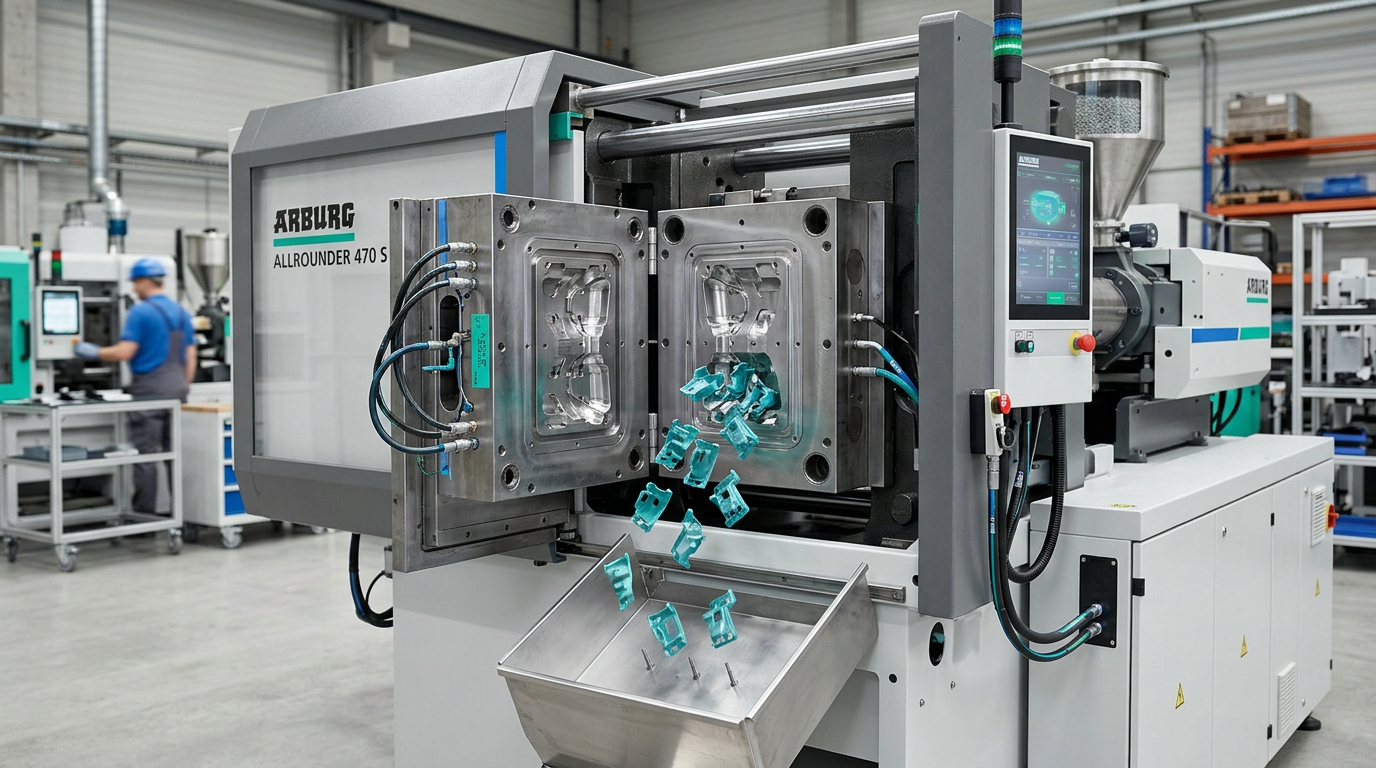
The injection molding process transforms raw plastic resin into finished parts with precision and consistency. Understanding how this process works helps you appreciate the capabilities and limitations of injection molding for your application.
How It Works
Plastic resin pellets are melted in a heated barrel and forced through a heated screw into a closed mold cavity at pressures between 5,000 to 30,000 PSI. The molten plastic fills the cavity in 2 to 5 seconds, then cools and solidifies. The mold opens and the finished part is ejected. The cycle repeats 15 to 60 times per minute depending on part size and cooling requirements.
- Materials: Thermoplastic resins (PE, PP, ABS, PS, PET, etc.)
- Cycle time: 10 to 60 seconds per part
- Tolerance: plus or minus 0.005 inches
- Tool life: 1 million to 10 million cycles typical
- Best for: High-volume complex parts with consistent quality
Key Process Parameters
Successful injection molding depends on precise control of barrel temperature, injection pressure, mold temperature, and cooling time. Mold flow analysis simulates plastic flow through the cavity to optimize gate location, vent placement, and cooling channels. Proper parameters eliminate defects like short shots, sink marks, warping, and weld lines.
- Barrel temperature: 150 to 400 degrees depending on material
- Injection pressure: 5,000 to 30,000 PSI
- Mold cooling: Water-cooled channels extract heat rapidly
- Gate design: Strategic location minimizes weld lines and defects
- Packing pressure: Holds dimensions during cooling phase
Pro tip
Request mold flow analysis simulation from your injection molding supplier before mold construction. FEA simulation predicts plastic flow, identifies potential short shots or weld lines, and recommends gate locations and cooling channel placement. Investment in simulation upfront saves thousands in mold modifications and scrap parts during production ramp-up.
3. Choosing the Right Thermoplastic Material
Material selection dramatically affects part performance, mold design, processing parameters, cost, and sustainability. The most common thermoplastics offer the best balance of processability, cost, and properties for high-volume injection molding. Here is a guide to thermoplastic materials:
| Material | Strength | Processability | Best Applications |
|---|---|---|---|
| Polyethylene (PE) | Low | Excellent | Flexible films, containers, tubing, packaging |
| Polypropylene (PP) | Medium | Excellent | Automotive parts, consumer products, hinges, food containers |
| ABS Copolymer | Medium-High | Good | Automotive housings, electronic enclosures, tools, appliances |
| Polystyrene (PS) | Medium | Excellent | Rigid transparent parts, packaging, injection-molded foam |
| PET (Polyethylene Terephthalate) | Medium-High | Good | Beverage bottles, food containers, transparent high-strength parts |
Pro tip
Polyethylene and polypropylene are the default materials for cost-sensitive applications due to excellent processability and low material cost. ABS provides superior strength and rigidity for structural parts. PET offers transparency and chemical resistance. Specify recycled content or bio-based alternatives if sustainability is a priority, though supply and cost may vary by material and supplier.
[ Photo: Assorted plastic resin pellets showing different thermoplastic materials ]
4. Understanding Injection Molding Tooling Costs
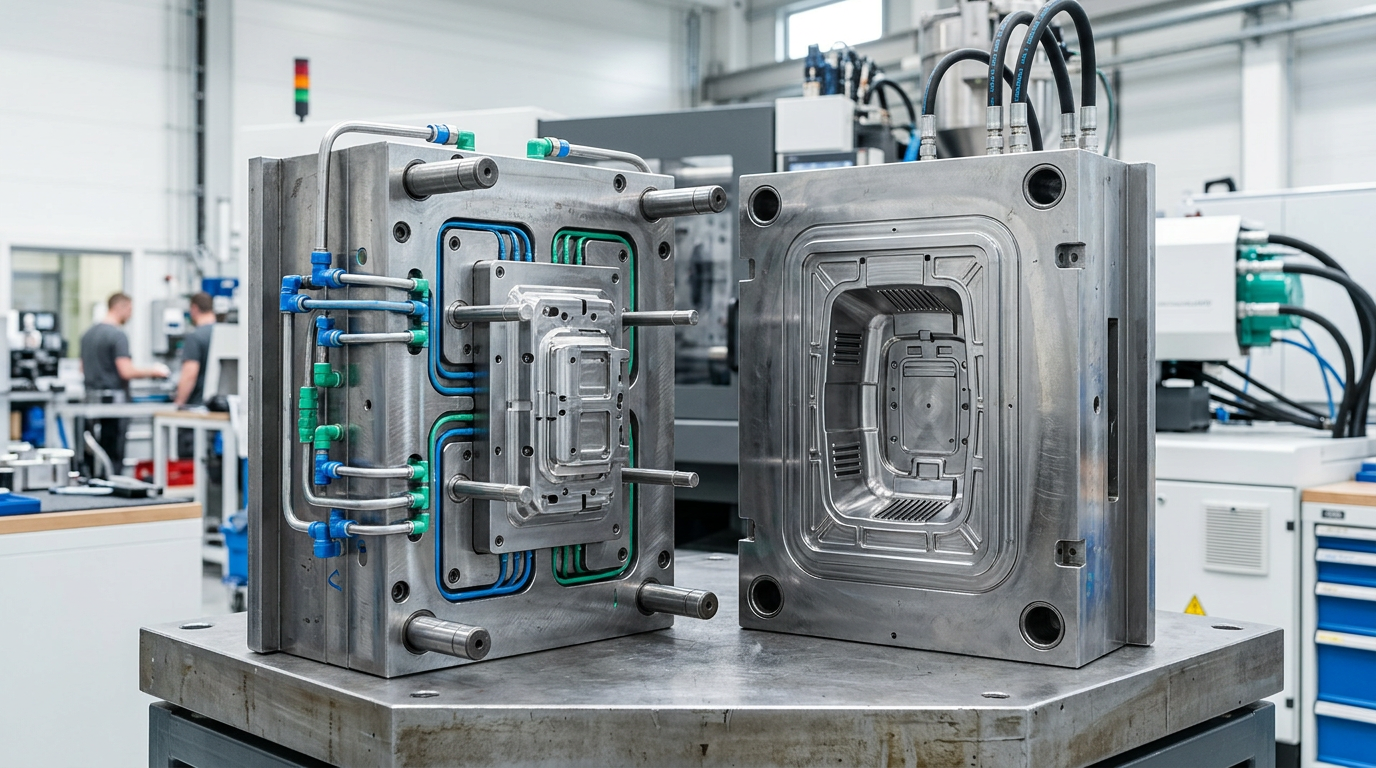
Tooling represents the largest upfront investment in any injection molding project. Mold complexity, cavity count, and material requirements drive cost. Understanding tooling cost drivers helps you budget accurately and evaluate supplier quotes.
Part geometry and cavity count
Simple flat parts with straight drafts require basic single-cavity molds costing $3,000 to $8,000. Complex parts with thin walls, undercuts, and multi-color features require intricate mold designs with sliding actions and multiple cores. Multi-cavity molds producing 2 to 8 parts per cycle significantly reduce per-unit cost but increase mold complexity and initial investment.
Mold material and steel grade
Standard P20 tool steel works for most applications and costs less than hardened H13. Higher cavity counts and longer production runs justify hardened beryllium copper or stainless steel inserts for superior heat transfer and durability. Aluminum molds cost less and machine faster but wear quickly above 100,000 cycles and suit prototype and low-volume tooling only.
Cooling system design
Efficient water cooling channels reduce cycle time and improve part quality. Complex channel designs add cost but enable faster production and higher quality parts with reduced warping. Direct cooling in challenging areas costs more but improves surface finish and dimensional consistency. Standard conformal cooling versus optimized channel routing significantly affects both mold cost and production efficiency.
Prototype versus production molds
Prototype aluminum molds ($2,000 to $10,000) validate design and material selection with quick lead times. Soft steel tooling ($5,000 to $20,000) handles 50,000 to 100,000 cycles. Production-grade hardened steel molds ($15,000 to $100,000+) withstand 1 to 10 million cycles. Many projects justify prototype tooling first to catch design issues before committing to expensive production tooling.
Pro tip
Discuss tooling strategy with your supplier. If your volume is 100,000 units over 3 years, a $25,000 production mold amortizes to just $0.25 per part. If volume is uncertain or part design may change, prototype aluminum tooling ($5,000) first validates design and then upgrade to production tooling once volumes are confirmed. This reduces total cost and schedule risk.
5. How to Evaluate an Injection Molding Manufacturer
Choosing the right injection molding partner is critical. A reliable manufacturer ensures consistent quality, on-time delivery, and transparent communication. Evaluate potential suppliers across these critical dimensions:
Certifications and Quality Systems
ISO 9001 certification demonstrates commitment to quality management systems. ISO 13485 is required for medical device suppliers. FDA registration is essential for food-contact parts. Advanced Process Control, Statistical Process Control, and documented inspection procedures are indicators of quality-driven culture.
Process Capability
Review the range of machine sizes, tonnage capacity, and specialty capabilities. Can they produce your part size? Do they have experience with your material? Do they offer secondary operations like assembly, ultrasonic welding, pad printing, or labeling?
Equipment and Capacity
Modern machines with advanced controls ensure consistent process control. Ask about machine age, maintenance schedules, and redundancy. Do they have backup equipment if a machine fails? Can they scale production if your volume suddenly increases?
Technical Expertise
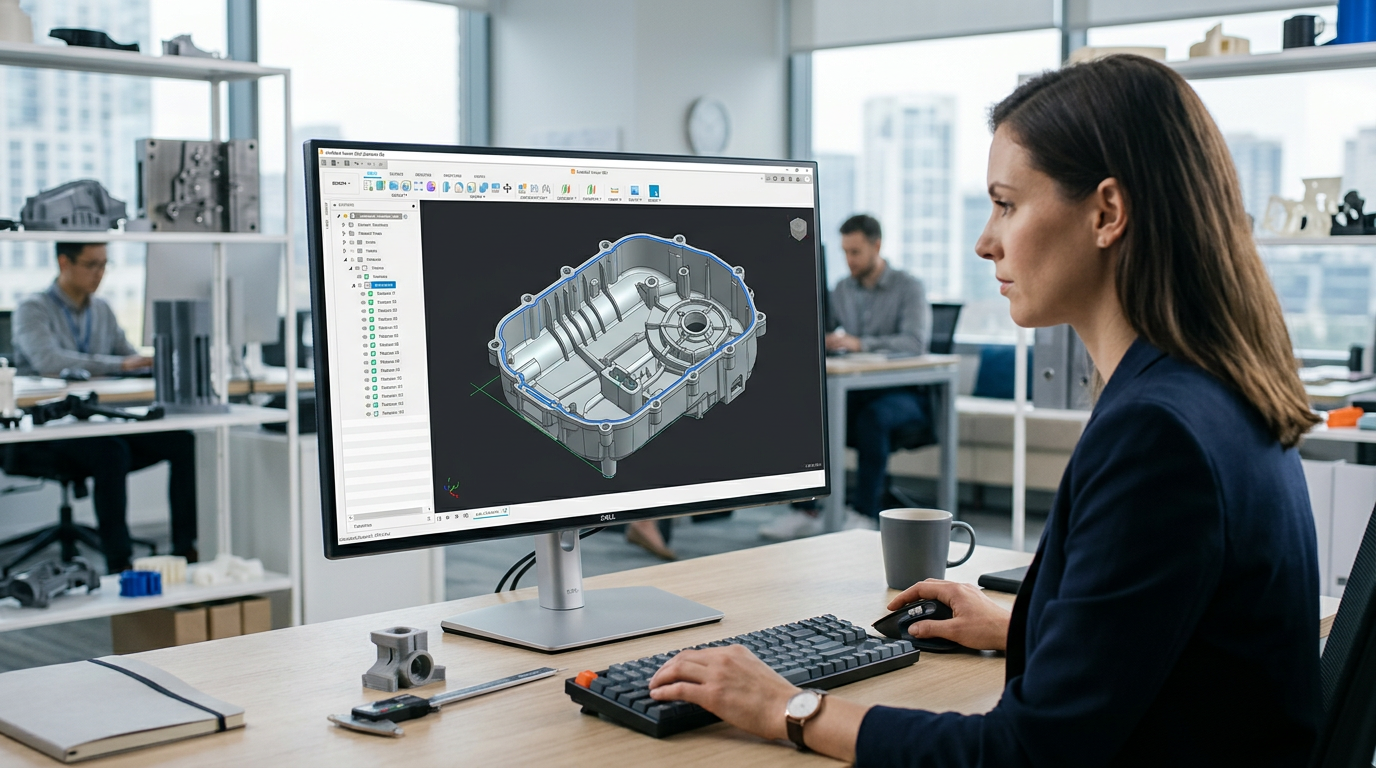
Does the supplier offer design-for-manufacturability reviews? Can they perform mold flow analysis? Do they have experience with your material and similar part designs? Technical partnership early in development prevents costly mistakes later.
Cost Competitiveness
Request quotes broken down by mold cost, per-piece production cost, setup fees, and secondary operations. Compare quotes from 3 to 5 suppliers to establish baseline pricing. Beware of unusually low quotes that may indicate inadequate process control or hidden costs.
Communication
How quickly do they respond to inquiries? Do you have a dedicated project manager? How do they handle engineering changes and production issues?
Schedule a facility visit before committing to major tooling investment. A plant tour reveals capacity, equipment condition, worker expertise, quality culture, and organizational capability far better than any website or brochure ever could.
6. Writing an Effective RFQ
A well-structured RFQ gets you faster responses, better quotes, and more accurate pricing. Include all critical information so suppliers can provide comprehensive cost estimates and timeline projections without multiple follow-up questions:
3D CAD File
STEP or IGES format with all critical dimensions and features clearly defined
2D Drawing with GD&T
Geometric dimensioning and tolerancing, surface finish callouts, and material specification
Material Requirements
Thermoplastic resin grade, color, additives (flame retardant, UV stabilizer), recycled content percentage
Annual Volume
Expected annual quantity and planned release schedule over 3 to 5 years
Secondary Operations
Ultrasonic welding, assembly, insert molding, pad printing, labeling, packaging requirements
Quality Standards
Required certifications, inspection level, material testing, first article inspection (FAI), and reporting expectations
Pro tip
Send your RFQ to 3 to 5 qualified injection molders. Fewer than 3 suppliers does not provide sufficient pricing comparison. More than 5 creates noise and dilutes individual supplier attention. Request quotes broken down by mold cost, per-piece cost, and secondary operations so you can compare apples to apples.
7. Common Mistakes Injection Molding Buyers Make
After years of working with manufacturing buyers, we see the same sourcing mistakes repeated. Learn from these common pitfalls and avoid the costly consequences:
Skipping design-for-manufacturability review
Launching tooling without DFM is expensive insurance to skip. A thorough review catches draft angle deficiencies, undercut problems, gate location concerns, and cooling channel placement before they become $5,000 to $20,000 mold modifications or scrap.
Choosing material based on price alone
Polyethylene is cheapest but not always the best choice. Polypropylene offers better stiffness. ABS provides superior strength and dimensional stability. PET delivers transparency and chemical resistance. The right material for your application may cost slightly more but eliminates design rework, warping issues, and quality problems.
Underestimating cooling time requirements
Insufficient cooling time causes warping, sink marks, and dimensional variation. Thick wall sections and dark colors cool slower than thin walls and light colors. Each material has unique cooling requirements. Mold flow analysis identifies cooling hotspots and recommends channel placement before expensive mold construction.
Accepting vague mold ownership terms
Clarify tooling ownership, maintenance responsibility, and disposition rights before paying for the mold. Get everything in writing. Some suppliers claim mold ownership and refuse to release it if you switch manufacturers, creating supply chain lock-in and negotiating disadvantages.
Single-sourcing without backup capacity
Relying on one injection molder creates significant supply chain vulnerability. For critical production parts, develop a qualified second source or ensure your molds can be transferred to another manufacturer if the primary supplier fails or experiences capacity constraints.