
1. Market Overview & Size
The global aluminum extrusion market reached $109.15 billion in 2026, representing steady growth across all major regions. The market is projected to expand to $219.82 billion by 2035, driven by a compound annual growth rate of 8% or higher. This sustained expansion reflects the material's increasing adoption across automotive, construction, renewable energy, and consumer electronics sectors.
North America and Europe continue to represent mature, stable markets with established supply chains and stringent quality standards. However, the highest growth rates are occurring in Asia-Pacific, which now commands 30.1% of global market share. China's dominance in extrusion manufacturing remains unchallenged, with nearly 40% of global production capacity located within the region. Vietnam and India are emerging as secondary manufacturing hubs, attracting investment from multinational extruders seeking to diversify supply chains away from tariff-impacted zones.
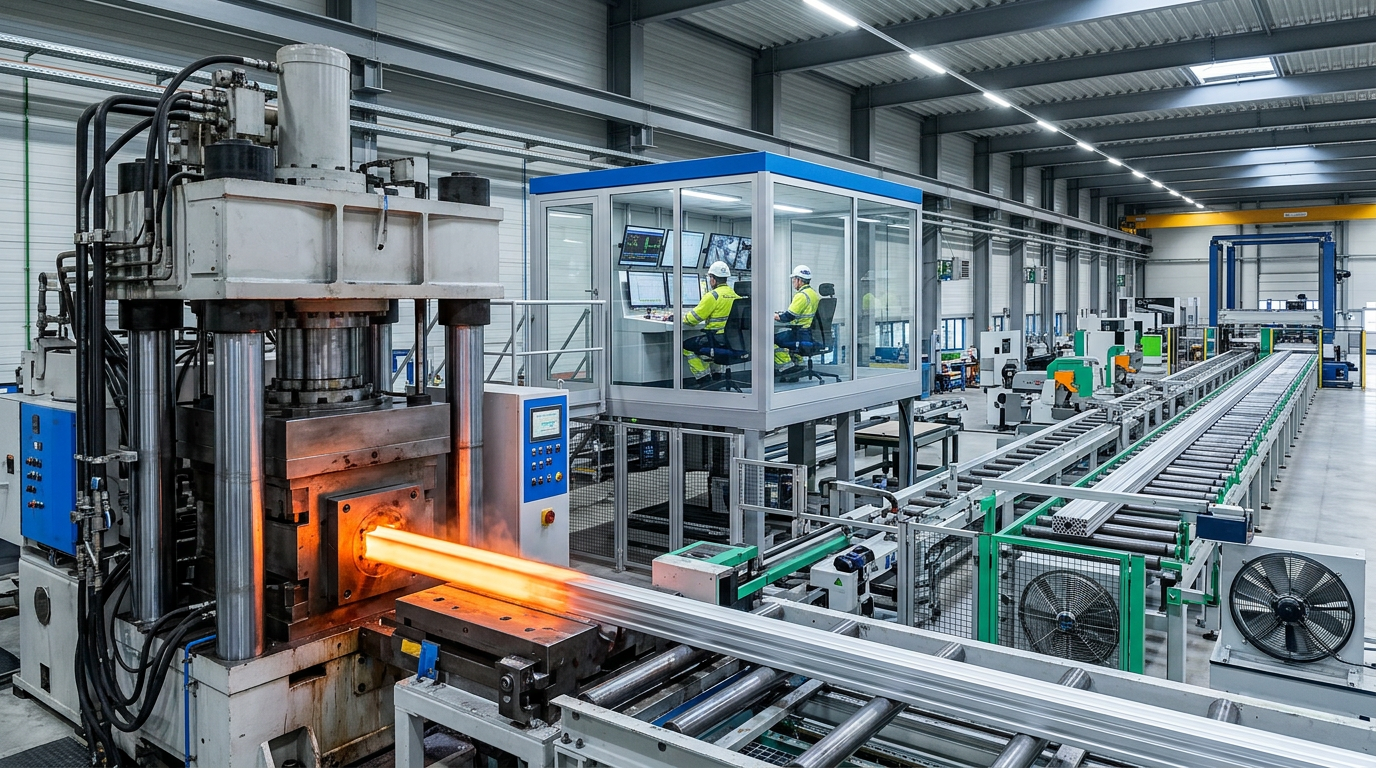
The market segmentation reflects diverse end-use applications. Building and construction represents the largest segment at approximately 35% of global demand, followed by automotive at 28%. Transportation (aerospace, rail), electrical/electronics, and consumer goods comprise the remaining 37%. However, the composition is rapidly shifting as automotive—particularly electric vehicles—accelerates from 28% to an estimated 35% of total demand by 2030.
Market consolidation continues at a moderate pace. Larger integrated manufacturers with backward integration into billet production and recycling operations are gaining market share relative to pure converters. Companies like Hydro, Constellium, and Novelis are expanding their global footprint and capacity, while smaller regional players face pressure to either specialize in niche applications or consolidate with larger operators.
2. EV Demand Is the Primary Growth Engine
Electric vehicle production is the single most important driver of extrusion demand growth in 2026 and beyond. Global EV production reached 14.3 million units in 2025, and is projected to surpass 25 million units by 2030—representing approximately 30% of total vehicle production. This shift is fundamentally reshaping aluminum demand.
A typical battery electric vehicle (BEV) contains approximately 45-65 kg of aluminum, compared to 15-25 kg in a conventional internal combustion engine vehicle. Of this aluminum, 60-75% consists of extrusions in the form of battery enclosure frames, structural components, thermal management systems, cable trays, and door framing. As EV production scales, the per-unit extrusion demand substantially exceeds that of traditional vehicles.
Steel Components (Traditional)
- Weight: 2.5-3.0 kg per component
- Cost per kg: $1.20-1.50
- Thermal conductivity: Lower
- Recyclability: 90%+
- EV compatibility: Limited
Aluminum Extrusions (EV)
- Weight: 0.9-1.2 kg per component
- Cost per kg: $2.50-3.20
- Thermal conductivity: Superior
- Recyclability: 95%+
- EV compatibility: Optimized
The weight advantages of aluminum extrusions directly translate to EV range improvements. Industry analysis indicates that substituting steel components with optimized aluminum extrusions can improve EV driving range by 10-15% through reduced vehicle curb weight and improved thermal management. For a vehicle with a baseline 300-mile range, this translates to 30-45 additional miles per charge—a significant value proposition for consumers concerned about range anxiety.
Specific applications driving extrusion demand include:
- Battery enclosure frames: Aluminum extrusions provide structural rigidity while managing thermal dissipation, essential for battery longevity and safety.
- Structural body components: Extruded aluminum sections reduce weight while maintaining crash safety requirements, particularly in unibody construction.
- Thermal management systems: Extrusions with complex internal geometry enable advanced liquid cooling for batteries and power electronics.
- Cable trays and connectors: Lightweight extrusions reduce parasitic weight while providing reliable cable management and EMI shielding.
- Door and roof modules: Integrated extrusion systems simplify assembly and reduce manufacturing complexity compared to welded steel alternatives.
The shift toward gigacasting and other consolidated manufacturing processes is also boosting extrusion demand. As automotive OEMs consolidate 40-80 individual components into single castings, extrusions are increasingly used as structural frames supporting these large cast sections, creating new demand categories that did not exist in traditional vehicle architecture.
Key Insight: EV Structural Innovation
Extruded aluminum frames supporting gigacast sections enable 20-30% weight reduction compared to traditional welded steel architectures, directly translating to extended EV range and improved performance characteristics.
3. Tariffs and Raw Material Volatility
The tariff environment in 2026 has introduced unprecedented complexity to aluminum supply chains. Section 232 tariffs on aluminum remain in effect at 10%, while the Inflation Reduction Act's domestic content requirements are reshaping sourcing decisions. Additional tariffs targeting Chinese and Vietnamese extrusions range from 15-35%, depending on product classification and origin.
⚠️ Tariff Impact on Margins
Tariff-driven cost increases of 12-18% are compressing profit margins across the extrusion value chain. Manufacturers with limited pricing power—those serving highly competitive markets or bound by long-term fixed-price contracts—are experiencing margin compression of 200-400 basis points. Strategic sourcing diversification and hedging programs are becoming essential operational requirements, not optional considerations.
Raw material costs have responded with significant volatility. Aluminum billet prices have fluctuated between $2,350-2,850 per metric ton in the first quarter of 2026, reflecting uncertainty around trade policy, bauxite supply constraints, and smelting capacity utilization rates. This 21% quarterly volatility substantially exceeds the historical 8-12% range, creating planning challenges across the supply chain.
Extrusion converters face difficult strategic choices. Traditional long-term contract models with fixed pricing are being replaced by quarterly adjustment mechanisms, passthrough clauses, and more frequent renegotiations. Spot market purchases have increased from 15-20% of typical purchasing to 30-40%, creating exposure to weekly price fluctuations. Forward purchasing and hedging have become critical competencies, with larger manufacturers establishing commodity trading operations or partnerships to manage price risk.
The tariff impact is particularly acute for manufacturers with North American production serving North American markets. While domestic production avoids Section 232 tariffs, the limited domestic capacity and premium pricing create incentives for manufacturers to source from tariffed regions and absorb the tariff cost, provided market conditions permit. This geographic arbitrage is temporarily sustaining tariff collection levels while creating distortions in the competitive landscape.
Longer-term strategies to mitigate tariff impacts include reshoring production to North America or establishing production facilities in free trade agreement partners (Mexico, CAFTA countries). However, the capital intensity of extrusion press capacity ($15-25 million per press) and extended payback periods (8-12 years) make strategic investments in relocation highly sensitive to assumptions about tariff permanence and trade policy stability.
Tariff Impact Scenario
High Tariff Environment: Sourcing from tariffed regions + 12-18% cost increase. Requires pricing power or margin compression mitigation through product mix optimization or geographic relocation.
Strategic Response
Nearshoring Advantage: North American or Mexico-based production avoids tariffs, improves supply chain resilience, and positions manufacturers closer to key automotive OEM customers.
💡 Hedging Strategies for Billet Costs
Progressive extrusion manufacturers are implementing multi-layered hedging approaches to manage commodity price volatility:
- Commodity futures: Forward contracts on aluminum and raw material inputs, typically covering 40-60% of projected needs.
- Supplier partnerships: Long-term agreements with indexed pricing that share upside and downside movement, stabilizing absolute cost trajectories.
- Product mix optimization: Strategic shift toward higher-margin specialty extrusions where pricing power permits full cost passthrough.
- Vertical integration: Controlled acquisition of billet production capacity or recycling operations to reduce exposure to spot market volatility.
- Geographic diversification: Multi-region sourcing to arbitrage tariff impacts and benefit from regional cost differential optimization.
4. Construction and Infrastructure Growth
Construction remains the largest end-use market for aluminum extrusions, accounting for approximately 35% of global demand. This segment is experiencing healthy growth driven by infrastructure investment, building modernization, and adoption of high-performance building systems.
The construction segment encompasses several major product categories. Architectural extrusions for window and door framing represent the largest subcategory, followed by structural and load-bearing applications, curtain wall systems, and specialty applications including HVAC ducting and cable management. The shift toward modern building design emphasizing minimalist aesthetics, enhanced thermal performance, and integrated services is driving specification of more sophisticated extrusion profiles.
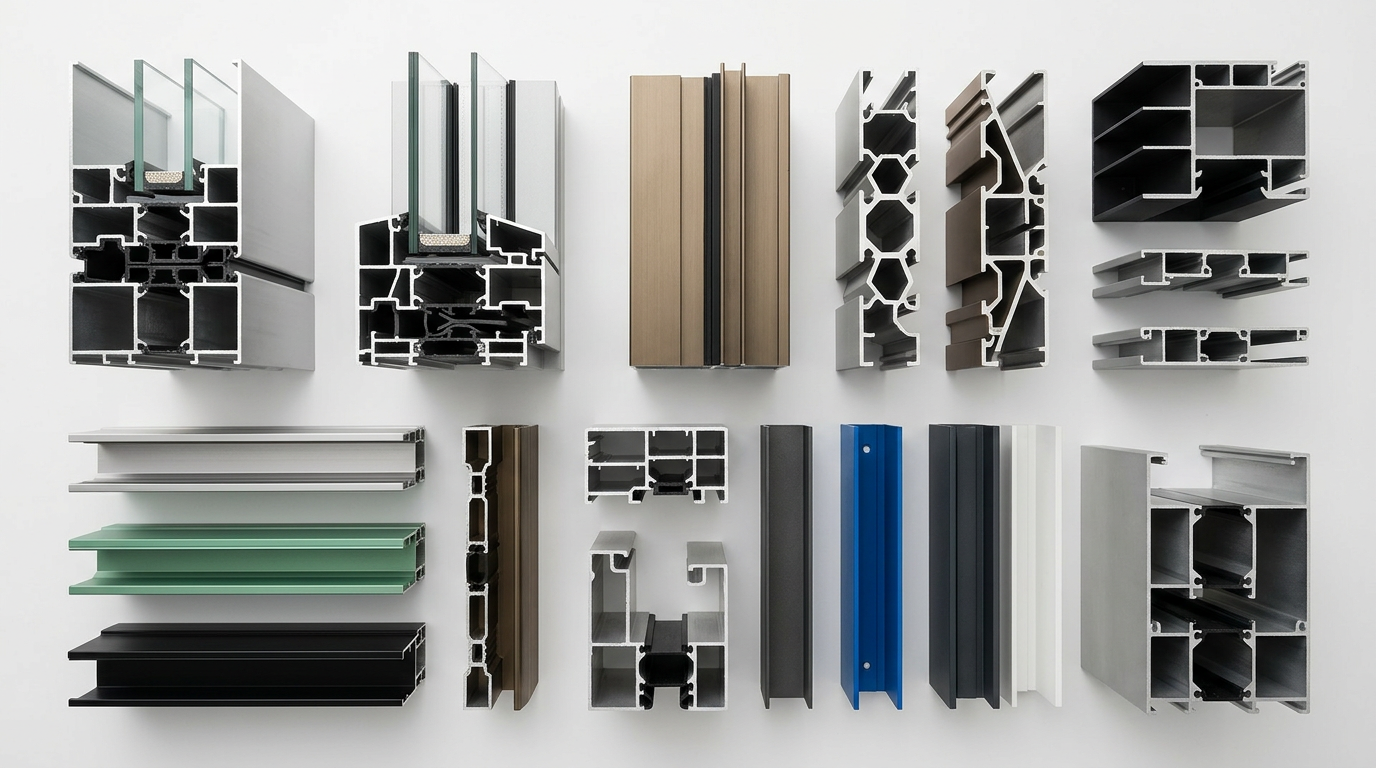
Building-integrated photovoltaic (BIPV) systems represent an emerging growth category within the construction segment. These systems integrate solar functionality into building envelopes—roofing, walls, and windows—reducing the need for dedicated solar installations while enhancing architectural appeal. Aluminum extrusions are critical components in BIPV racking systems, framing, and mounting hardware. As BIPV adoption accelerates with improving economics and building code evolution, extrusion demand is growing at 15-20% annually—substantially higher than the base construction market growth rate of 3-5%.
Thermal efficiency regulations are also driving extrusion specification. Modern building codes in Europe, Asia, and increasingly in North America mandate high thermal performance windows and doors. This requirement favors more sophisticated extrusion designs with integrated thermal breaks, multi-chamber geometry, and optimized profiles. Manufacturers specializing in thermally optimized profiles for high-performance buildings are experiencing above-market growth.
Geographic variation in construction demand reflects regional economic conditions and infrastructure investment priorities. Europe continues investing in building renovation and modernization, with particular focus on thermal efficiency improvements driving 4-6% annual extrusion demand growth. China's infrastructure focus, while moderating from historic levels, remains substantial, with 5-7% annual extrusion growth driven by urbanization and infrastructure modernization. India represents an emerging opportunity, with construction extrusion demand growing at 8-12% annually as building standards evolve and construction activity accelerates.
Commercial real estate development, while variable, remains a significant driver in developed markets. Office, retail, and hospitality construction cycles directly correlate with extrusion demand for architectural and structural applications. The post-pandemic shift toward mixed-use development, sustainability-focused design, and adaptive reuse of existing structures is creating specification opportunities for aluminum extrusions in applications previously dominated by steel and other materials.
5. Industry 4.0 in Extrusion
Digital transformation and Industry 4.0 technologies are fundamentally reshaping extrusion manufacturing operations. While extrusion is historically a mature, capital-intensive process, digital tools are enabling previously unattainable levels of precision, efficiency, and responsiveness.
Real-time process monitoring and control represents the foundational Industry 4.0 capability. Modern extrusion presses are being retrofitted with comprehensive IoT sensor networks monitoring press temperature, pressure, die temperature, ram velocity, and product velocity in real-time. These data streams are processed through edge computing systems that enable closed-loop control, automatically adjusting process parameters to maintain dimensional tolerances and surface quality within specification. This capability has increased the percentage of first-pass quality parts from 92-95% to 97-99%, substantially reducing scrap and rework.
Predictive maintenance powered by machine learning is extending press service life and reducing unplanned downtime. Historical sensor data combined with maintenance records enable ML algorithms to predict component failures before they occur, typically 2-4 weeks in advance. This proactive maintenance approach has reduced unplanned downtime by 30-40%, a substantial improvement in capital-intensive operations where press downtime costs are measured in thousands of dollars per hour.
Quality control systems powered by computer vision and artificial intelligence are replacing manual inspection processes. High-speed camera systems capture images of extruded profiles at 100+ frames per second, with AI algorithms analyzing dimensional accuracy, surface defects, color consistency, and assembly fit within milliseconds. This real-time feedback enables immediate corrective action and provides quality assurance documentation throughout production runs. Dimensional accuracy has improved from ±0.2-0.3mm (traditional manual inspection) to ±0.05-0.10mm (AI-powered automated inspection).
Production scheduling and optimization software is enabling more responsive, efficient operations. Advanced planning and scheduling (APS) systems ingest orders, material availability, press capacity, and die changeout requirements to optimize production schedules that minimize changeovers, balance press utilization, and meet delivery commitments. Manufacturers implementing APS have achieved 5-15% improvements in overall equipment effectiveness (OEE), substantial productivity gains in capital-constrained environments.
Supply chain visibility and material tracking systems are reducing inventory carrying costs and improving operational agility. IoT-enabled traceability from billet through final product enables real-time visibility into material flows, work-in-progress, and finished goods. This visibility supports lean inventory practices, reduces working capital requirements, and enables rapid response to customer changes or demand shifts.
Industry 4.0 Implementation Areas
Real-Time Monitoring: IoT sensors on extrusion presses track temperature, pressure, and product velocity to achieve 97-99% first-pass quality rates and reduce scrap by 50%+ compared to traditional methods.
Competitive Advantage Timeline
Rapid ROI Realization: Manufacturers implementing comprehensive Industry 4.0 systems report 15-25% cost reductions and 20-30% quality improvements within 18-24 months, creating sustainable competitive advantages.
Digital twins—virtual replicas of physical production systems—are enabling simulation, optimization, and training. Manufacturers are building digital models of extrusion processes that can be used to validate process changes before implementation, optimize parameters for new alloys or products, and train operators on complex procedures without risking equipment damage or product loss. This simulation capability is shortening new product introduction cycles by 20-30% and reducing implementation risk.
The capital and competency requirements for Industry 4.0 implementation are creating competitive advantages for larger, more sophisticated manufacturers while creating barriers to entry for smaller competitors. Companies that successfully implement comprehensive digital transformation are achieving 15-25% cost reductions and 20-30% quality improvements, while those investing selectively or lagging implementation face competitive pressure.
6. Sustainability and Recycling
Aluminum's recyclability and sustainability characteristics are increasingly important competitive differentiators in the extrusion industry. Unlike many materials, aluminum retains its properties through unlimited recycling cycles, creating opportunities for true circular economy operations.
The energy differential between primary and recycled aluminum production is dramatic. Producing secondary aluminum from recycled scrap requires only 5% of the energy required for primary aluminum smelting from bauxite ore. This 95% energy reduction translates directly to reduced greenhouse gas emissions, improved carbon footprint, and lower production costs. Recycled aluminum content pricing typically ranges 15-25% below primary aluminum, a substantial economic advantage that is driving increasing use of recycled content across extrusion applications.
End-of-life extrusion recycling is becoming an increasingly organized, profitable business. EV battery cases, automotive components, and structural elements reaching end-of-life are being systematically collected, sorted, and reprocessed. Modern recycling facilities can sort and grade extruded aluminum with sufficient precision to reprocess directly into new extrusion feedstock, closing the material loop. This creates profitable secondary material markets, with pure aluminum scrap trading at 80-90% of primary aluminum prices while eliminating smelting and refining costs.
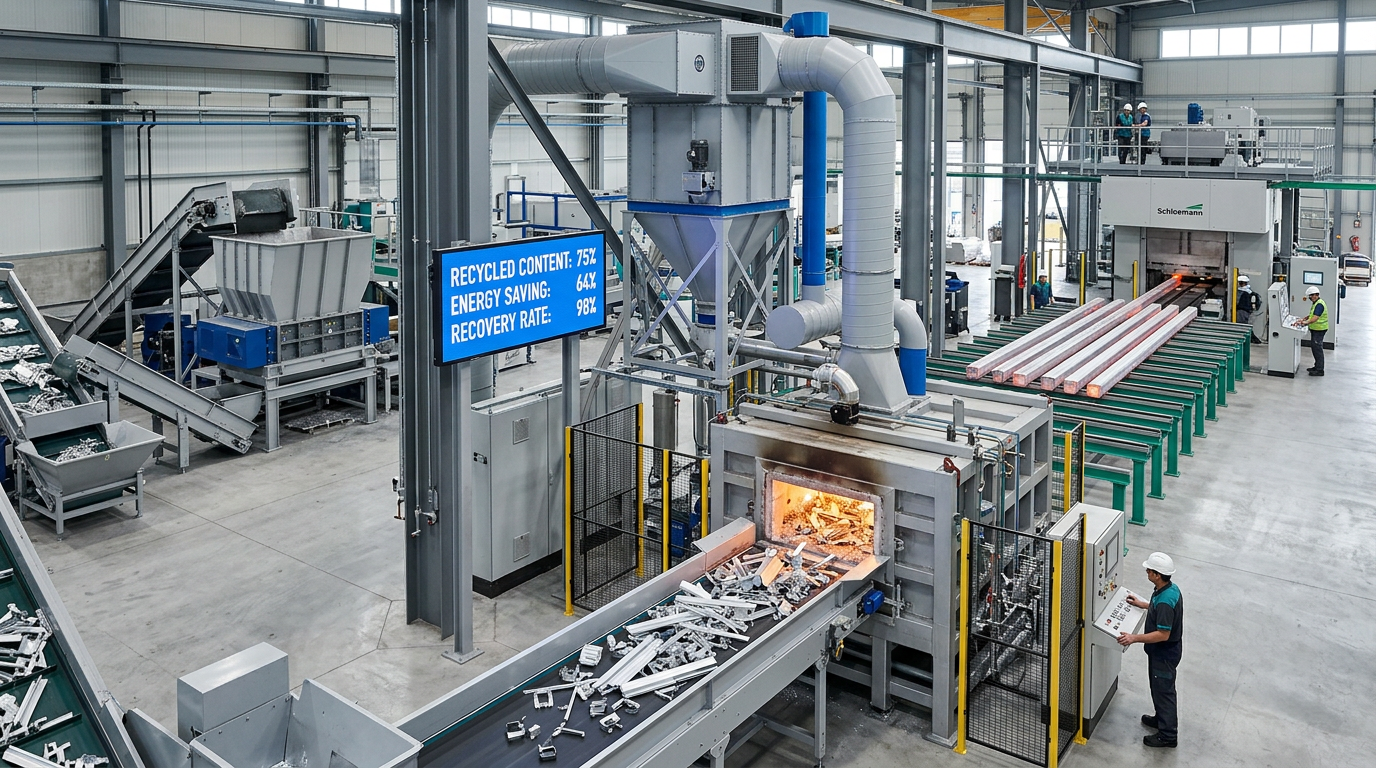
Corporate sustainability commitments are driving adoption of recycled-content specifications. Major automotive OEMs, including Tesla, VW, and BMW, have committed to increasing recycled content in aluminum components to 30-50% by 2030. This creates pull-through demand for recycled-content extrusions and premium pricing for certified post-consumer recycled (PCR) and post-industrial recycled (PIR) material.
Carbon accounting and scope 3 emissions are creating transparency requirements throughout supply chains. Extrusion manufacturers are implementing comprehensive life cycle assessment (LCA) methodologies to quantify carbon footprint of products from raw material through end-of-life. Product-specific environmental product declarations (EPDs) are becoming customer requirements, creating competitive advantages for manufacturers with lower-carbon production processes, higher recycled content, and efficient operations.
Regulatory drivers are accelerating sustainability adoption. The EU's Corporate Sustainability Reporting Directive, California's supply chain accountability legislation, and similar regulatory regimes in other jurisdictions are requiring companies to document and report supply chain carbon emissions. This regulatory pressure is translating to customer requirements for low-carbon material specifications and transparent carbon accounting.
In-house recycling operations are becoming competitive necessities for larger manufacturers. Scrap generated during extrusion production—butt ends, rejected parts, machining chips—is being recycled directly into furnace feed, reducing waste, offsetting virgin material purchases, and improving operating margins. Manufacturers implementing closed-loop recycling systems are achieving 10-15% reductions in primary aluminum purchases and improved cost structures relative to competitors reliant on purchased recycled material.
7. What This Means for Extrusion Companies
The convergence of EV growth acceleration, tariff complexity, Industry 4.0 capabilities, and sustainability requirements creates a complex operating environment for extrusion manufacturers. Companies must navigate multiple simultaneous transformation requirements while managing commodity price volatility and competitive intensity.
Key Insight: Multi-Factor Transformation
Successful extrusion manufacturers in 2026-2030 require simultaneous capability development across four dimensions: EV-optimized product portfolio, tariff-resilient supply chains, Industry 4.0 digital infrastructure, and certified sustainable operations. Single-dimension improvement is insufficient for competitive sustainability.
Capacity Planning Challenges: The projected 8%+ CAGR through 2035 means total market capacity must expand from current levels. However, capital intensity creates planning challenges. New extrusion press capacity requires $15-25 million per press plus facility infrastructure, with 8-12 year payback periods. Capacity additions must be sized correctly—undersizing leaves customer demand unmet and market share to competitors; oversizing creates stranded assets if demand growth moderates or trade policy shifts. Leading manufacturers are establishing modular, flexible capacity that can serve multiple markets and applications, reducing concentration risk.
Geographic Footprint Optimization: Tariff exposure is driving reshoring and nearshoring decisions. Companies with North American customers are evaluating capacity investments in Mexico or the southern United States to avoid Section 232 tariffs. Companies with European customers are assessing capacity optimization within the tariff-free EU. This geographic optimization requires substantial capital and multi-year payback, creating competitive advantages for well-capitalized manufacturers and consolidation pressures for smaller, undercapitalized competitors.
Product Mix and Specialization: Generalist commodity extrusion providers face intense price competition and margin pressure. Successful manufacturers are specializing in high-value applications—EV-specific extrusions, thermally optimized construction profiles, specialty alloys, tight-tolerance precision extrusions—where technical capabilities command premium pricing and create customer switching costs.
Customer Concentration Risk: EV manufacturers and major automotive OEMs represent concentrated sources of demand, creating business concentration risk. A single major customer loss or dramatic production reduction could impact 15-25% of revenue for manufacturers heavily dependent on automotive customers. Diversification across construction, renewable energy, and industrial applications reduces this concentration risk, though diversification requires distinct technical capabilities and market presence.
Digital Capability Development: Industry 4.0 is no longer optional—it is becoming table stakes for competitive participation. Manufacturers lacking modern process control, quality assurance, production scheduling, and supply chain visibility systems face competitive disadvantages. However, digital capability requires significant capital investment ($2-5 million for comprehensive manufacturing execution systems, process control systems, and data infrastructure), skilled personnel, and multi-year implementation timelines. The capability gap between digital leaders and followers is widening.
Supply Chain Resilience: Tariff volatility, trade policy uncertainty, and geographic concentration of production capacity in Asia are creating supply chain risk. Manufacturers are building resilience through geographic diversification of sourcing, inventory buffer strategies, forward purchasing programs, and supplier relationship management. The cost of supply chain resilience (slightly higher material costs, carrying inventory) is a competitive necessity, not optional spending.
Talent and Capability Acquisition: Digital transformation, quality system management, sustainability reporting, and regulatory compliance all require specialized capabilities that are increasingly scarce. Manufacturers are investing in talent acquisition, development, and retention through competitive compensation, technical training, and career development. The ability to attract and retain technical talent—process engineers, data scientists, quality specialists—is becoming a material competitive differentiator.
M&A and Consolidation: The capital intensity of Industry 4.0 investment, reshoring and nearshoring capacity additions, and specialized capability requirements are creating consolidation pressures. Smaller, undercapitalized competitors are increasingly attractive acquisition targets for larger, better-capitalized manufacturers seeking to expand geographic footprint, add technical capability, or achieve cost synergies. Consolidation activity is expected to remain elevated throughout 2026-2030.