
1. When to Use Aluminum Extrusion (and When Not To)
Aluminum extrusion is one of the most versatile and cost-effective manufacturing processes for producing complex aluminum profiles at high volumes. However, it is not the right fit for every application. Understanding when aluminum extrusion excels will help you make informed sourcing decisions and avoid costly mistakes.
Complex Profiles
Extrusion can produce complex cross-sectional shapes with features, ribs, and channels in a single operation. Shapes that would require multiple operations or machining with other processes are economical to extrude, making extrusion ideal for architectural trim, structural frames, and custom housings.
Light Weight
Aluminum extrusions deliver excellent strength-to-weight ratios making them ideal for aerospace, automotive, renewable energy, and portable equipment applications where weight reduction is critical and cost per pound is economical.
Fast Time to Market
Once the extrusion die is produced, making extrusions is relatively quick. Extrusion runs can start within weeks of design completion. The ability to scale volume without re-tooling makes extrusion cost-effective for medium to large production runs and product iterations.
Corrosion Resistance
Aluminum naturally forms an oxide layer providing excellent corrosion resistance. Anodizing and powder coating further enhance durability for marine, outdoor, and corrosive environment applications. This makes extrusion ideal for architectural applications and equipment exposed to weather and chemicals.
When to consider other processes
If you need fewer than 500 parts, extrusion tooling investment may not be justified. CNC machining, waterjet cutting, or 3D printing may be more economical. For very small diameter solid rods or extremely high-strength aerospace requirements, forging or specialty processes may be better options.
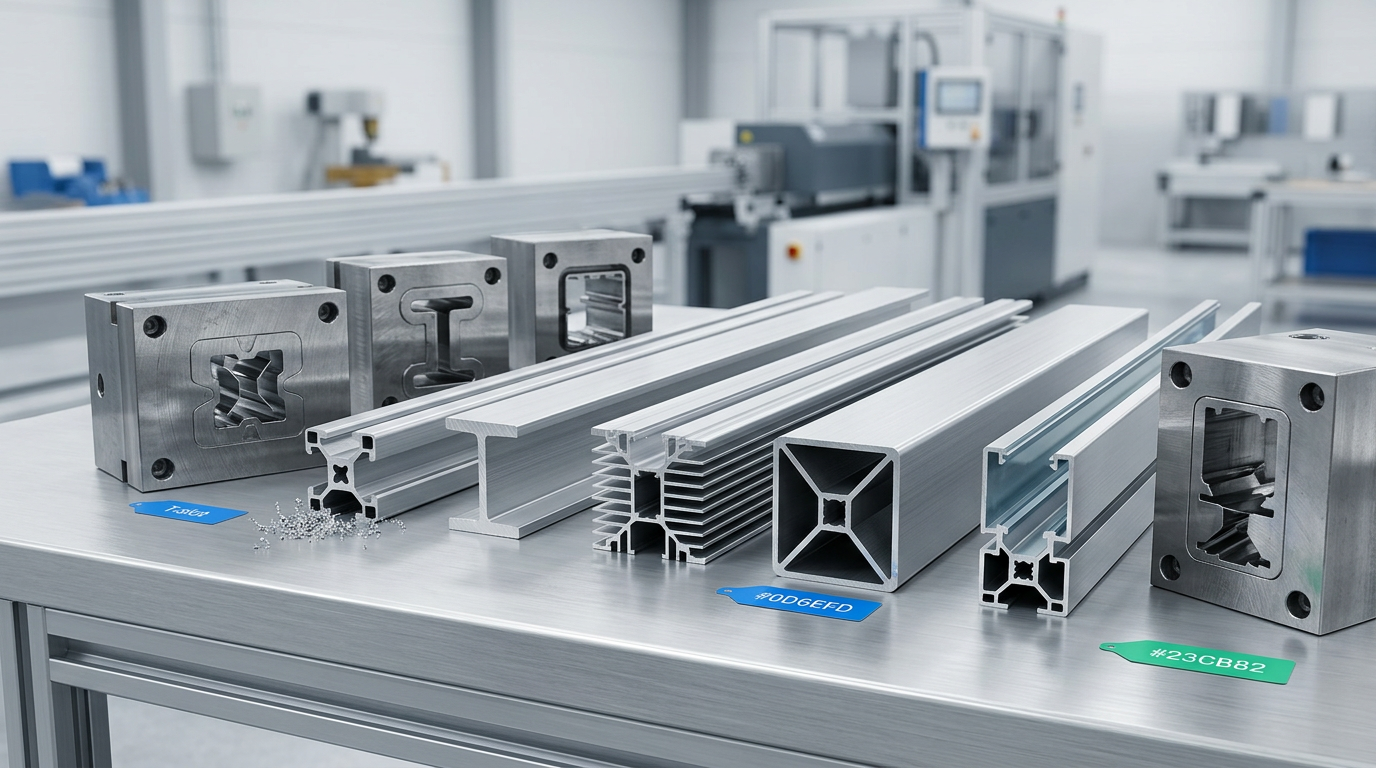
2. Understanding Direct vs. Indirect Extrusion
Aluminum extrusion primarily uses two methods: direct and indirect extrusion. Understanding the differences helps you evaluate supplier capabilities and optimize part performance for your application.
Direct Extrusion
A heated aluminum billet is placed in a container and pushed directly into a stationary die mounted on the press. The ram applies pressure to force the metal through the die at pressures of 10,000 to 20,000 PSI, creating the extrusion profile. This is the most common extrusion method.
- Metals: All aluminum alloys
- Extrusion ratio: 100:1 to 200:1 typical
- Die life: 10 to 50 million shots typical
- Equipment cost: Lower initial investment
- Best for: Standard profiles, cost-sensitive applications
Indirect Extrusion
The extrusion die is mounted on the ram and moves toward the stationary billet, allowing the metal to flow in the opposite direction. Indirect extrusion requires more sophisticated equipment and die design but enables superior material properties and higher extrusion ratios for complex aerospace and high-strength applications.
- Metals: Aluminum alloys, primarily high-strength
- Extrusion ratio: 200:1 to 500:1 achievable
- Die life: Extended due to reduced friction
- Equipment cost: Higher initial investment
- Best for: Complex aerospace profiles, premium strength applications
Pro tip
Verify your extrusion supplier has capability for your profile complexity. Simpler standard profiles work well with direct extrusion. Complex aerospace profiles or high-strength applications requiring superior grain structure benefit from indirect extrusion equipment despite higher costs. Mold flow simulation helps optimize die design for your specific profile.
3. Choosing the Right Aluminum Alloy
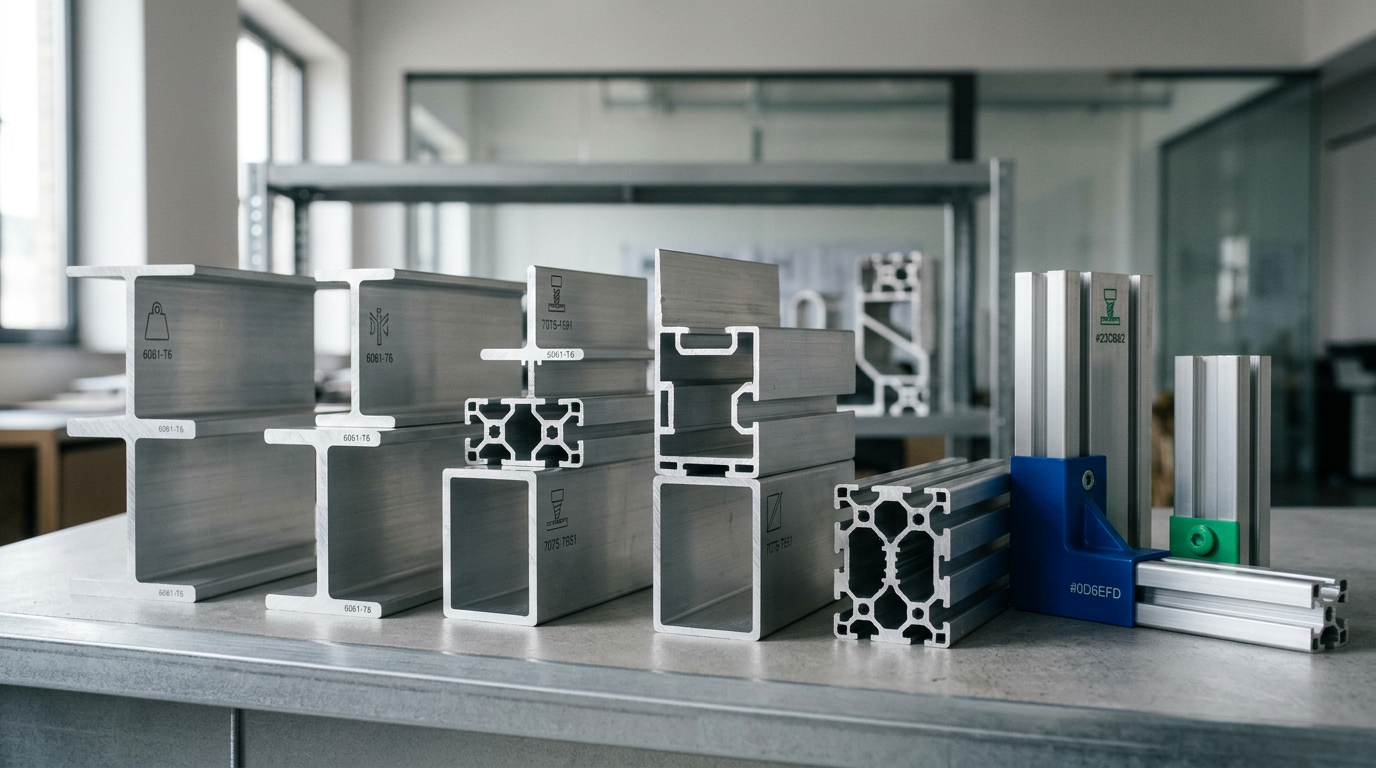
Aluminum alloy selection dramatically affects part performance, extrusion efficiency, tooling life, and cost. The most common extrusion alloys represent the best balance of extrusion characteristics and strength for production. Here is a guide to aluminum extrusion alloys most manufacturers stock:
| Alloy | Tensile Strength | Extrusion Ease | Best Applications |
|---|---|---|---|
| 6063 | 25-30 ksi | Excellent | Architectural, decorative trim, window frames, anodizing ideal |
| 6061 | 40 ksi | Excellent | Structural components, general purpose, automotive, marine |
| 6005A | 35-45 ksi | Good | Automotive frames, suspension, structural strength applications |
| 7075 | 85 ksi | Good | High-strength aerospace, military, premium performance applications |
| 2024 | 70 ksi | Fair | Premium aerospace, aircraft components, maximum strength needs |
Pro tip
6063 is the default choice for architectural and decorative applications due to excellent extrusion characteristics and anodizing properties. 6061 is the workhorse for structural and general-purpose extrusions. If your application requires higher strength, specify 6005A or 7075, understanding that extrusion costs increase and lead times extend due to more difficult die design and process control requirements.
4. Understanding Aluminum Extrusion Tooling Costs
Tooling represents the largest upfront investment in any aluminum extrusion project. Extrusion dies are specialized tools that create your custom profile shape. Understanding tooling cost drivers helps you budget accurately and evaluate supplier quotes for fairness.
Profile complexity and cavity count
Simple solid or hollow profiles cost less than complex shapes with ribs, pockets, and integral features. Multi-cavity dies that produce multiple extrusions per shot increase die costs but reduce per-piece production costs. Profile symmetry and design for extrusion directly impact die machining time and cost.
Die material and thermal analysis
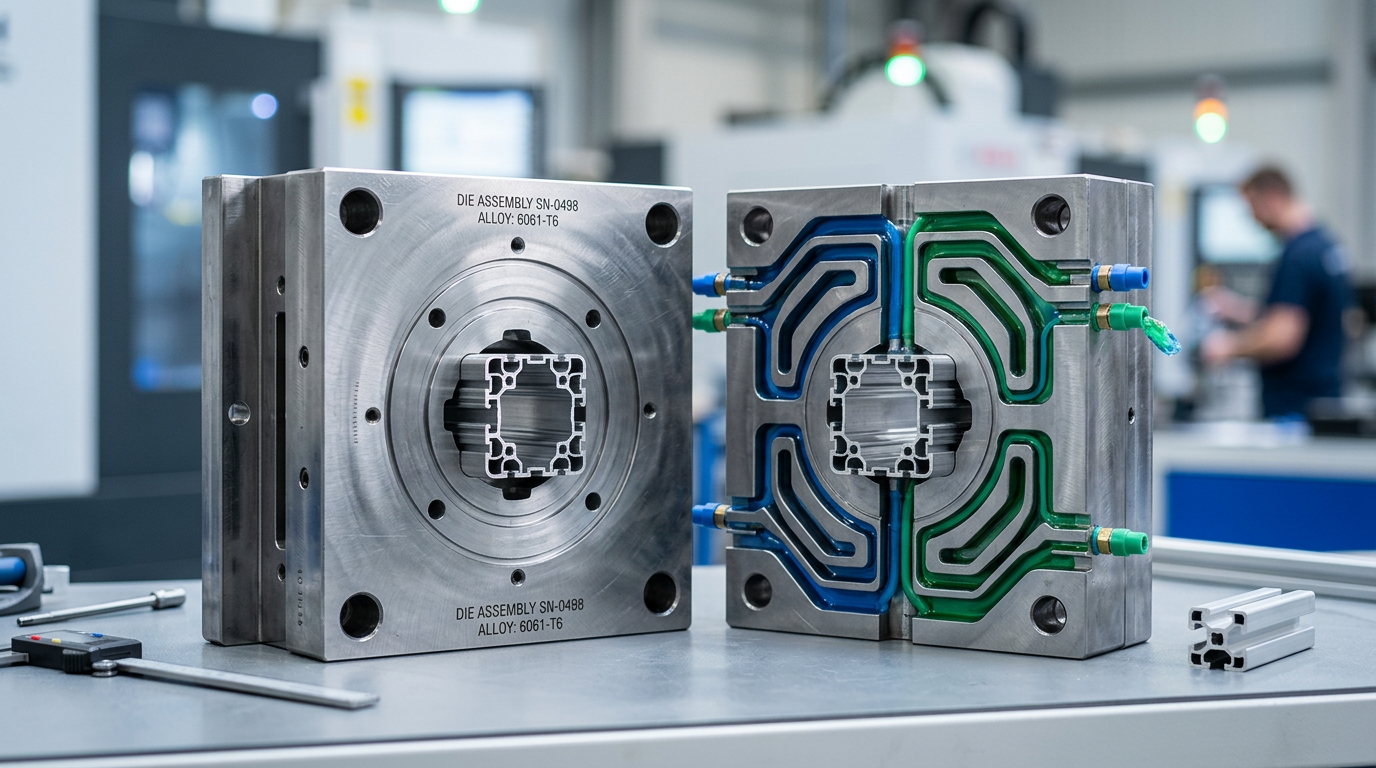
Extrusion dies are typically made from tool steel or hardened steel capable of withstanding repeated pressure cycles. Cooling line design and placement is critical to uniform temperature control. Mold flow simulation and thermal analysis add cost but prevent expensive die modifications and part quality issues during production.
Profile size and extrusion press requirements
Larger profiles require higher tonnage presses. Extrusion press capacity ranges from 500 to 5,000 tons. Die costs scale with profile size and complexity. A simple small architectural profile might use a 500-ton press, while a large automotive frame profile could require a 3,000-ton press, directly affecting available supplier capacity.
Alloy selection and extrusion temperature
Harder alloys like 7075 and 2024 extrude at higher temperatures and pressures, requiring more robust dies and more sophisticated process control. Softer alloys like 6063 extrude more easily and cost less for tooling. High-strength alloys and specialty tempers significantly increase die design and manufacturing complexity and cost.
| Tooling Type | Cost Range | Best For |
|---|---|---|
| Standard simple profile die | $500 to $2,000 | Solid rods, basic shapes, architectural trim |
| Complex profile single cavity | $2,000 to $5,000 | Custom shapes, multi-feature designs, medium volume |
| Advanced/multi-cavity die | $5,000 to $15,000+ | High-volume production, multiple profiles, aerospace grade |
Watch out
Extremely low tooling quotes often indicate the supplier will cut corners on die design, cooling lines, or simulation. These savings show up as quality problems, production delays, and rework. Premium die designs with proper thermal analysis and multiple cooling zones cost more upfront but ensure reliable production. Request detailed tooling specifications and cooling line diagrams from suppliers.
5. How to Evaluate an Aluminum Extrusion Manufacturer
Choosing the right extrusion supplier is critical to project success. The lowest cost bid is rarely the best choice when quality, reliability, and responsiveness are factored in. Here are the key factors to evaluate when qualifying aluminum extrusion suppliers:
Press Capacity
Available press tonnage (500-5000 ton range), number of presses, and ability to handle your profile size and complexity
Alloy Capability
Which aluminum alloys they regularly extrude, special alloys they support, and temperature/pressure control for difficult grades
Die Design Experience
In-house die design, CAD simulation capability, cooling line analysis, and optimization for your application
Secondary Services
Straightening, sawing, anodizing, powder coating, heat treatment, and assembly capabilities
Quality Systems
ISO 9001 certification, dimensional traceability, material testing, and inspection protocols
Production Capacity
Monthly extrusion capacity, lead times, ability to scale volume, and delivery schedule reliability
Pro tip
Request site visits with your top 2 to 3 suppliers. See their equipment, die shop, quality control labs, and finished goods storage. Ask to review similar projects they've completed. Check references with customers. A supplier that invests in die design optimization, quality systems, and responsive communication will deliver better results than the lowest cost bid.
6. Writing an Effective RFQ
A well-written RFQ sets clear expectations and ensures suppliers quote accurately on your project. Include sufficient detail so suppliers understand your requirements and can provide competitive, comparable quotes. Here is what to include in your aluminum extrusion RFQ:
Profile Drawings
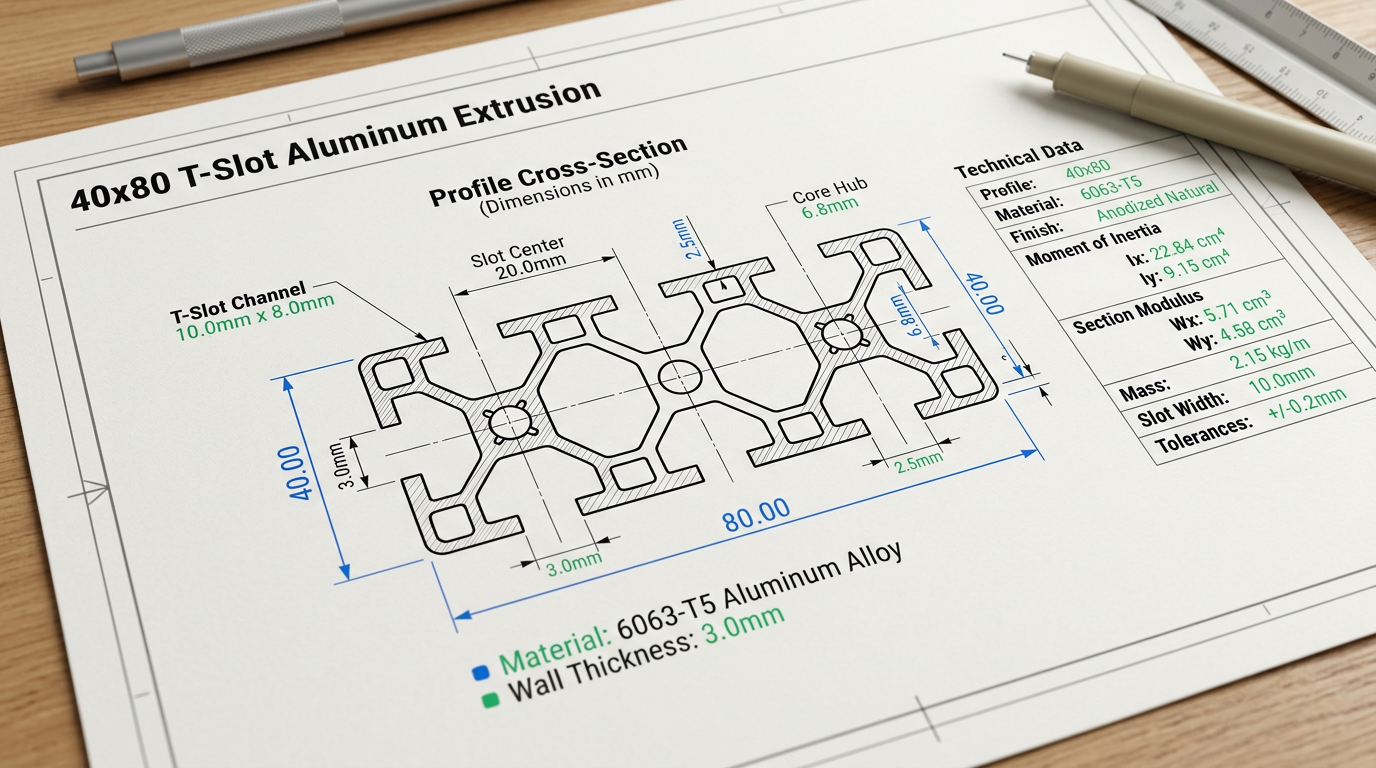
Detailed CAD drawings showing cross-sectional profile, length, tolerances, and any dimensional callouts critical to your application
Material Specifications
Alloy grade (6061-T6, 6063-T5, 7075-T73, etc.), any special material requirements or certifications needed
Production Volume
Expected annual quantity, launch volume, and planned production schedule over 3 to 5 years
Secondary Operations
Cutting, drilling, anodizing, powder coat, painting, assembly, testing requirements
Delivery Requirements
Lead time expectations, delivery location, packaging, and schedule flexibility for production planning
Quality Standards
Required certifications, inspection level, dimensional testing, and documentation expectations
Pro tip
Send your RFQ to 3 to 5 qualified aluminum extrusion suppliers. Fewer than 3 does not provide sufficient pricing comparison. More than 5 creates noise and dilutes individual supplier attention. Request quotes broken down by die cost, per-pound cost, and secondary operations so you can compare apples to apples. Ask for die design specifications and thermal analysis reports.
7. Common Mistakes Aluminum Extrusion Buyers Make
After years of working with manufacturing buyers, we see the same sourcing mistakes repeated. Learn from these common pitfalls and avoid the costly consequences:
Choosing die supplier based on price alone
The lowest die cost often results in poor design, inadequate cooling, and production problems. Premium die design with proper thermal analysis ensures reliable production and prevents rework. A $3,000 die designed correctly beats a $1,500 die with quality problems every time.
Ignoring design-for-extrusion principles
Launching profiles without DFE review is expensive insurance to skip. Improper draft angles, unrealistic wall thickness, and undercut problems are caught in design review. A $2,000 DFE consultation saves $10,000 to $30,000 in die rework and scrap.
Selecting alloy based purely on cost
6063 is cheaper but not always the best choice. 6061 offers better structural strength. 6005A is superior for automotive. 7075 provides maximum strength for aerospace. The right alloy for your application may cost slightly more material but eliminates design rework and quality problems.
Accepting vague die ownership terms
Clarify tooling ownership, maintenance responsibility, and disposition rights before paying for the die. Get everything in writing. Some suppliers claim die ownership and refuse to release it if you switch manufacturers, creating supply chain lock-in and negotiating disadvantages.
Single-sourcing without backup supply
Relying on one extrusion supplier creates significant supply chain vulnerability. For critical production parts, develop a qualified second source or ensure your die and designs can be transferred to another manufacturer if your primary supplier fails or experiences capacity constraints.