Contents
1. Market Overview & Size
The global sand casting market has demonstrated consistent growth and resilience despite macroeconomic headwinds. As of 2024, the market reached approximately $372 billion in value, driven by sustained demand across manufacturing sectors. Projections indicate this market will expand to $679 billion by 2033, representing a compound annual growth rate of 7.8%.
Sand casting remains the largest segment within the broader casting industry, accounting for roughly 70% of all metal castings produced globally. The process's versatility, cost-effectiveness for medium-volume production, and ability to handle complex geometries make it indispensable for manufacturers worldwide. Unlike other casting methods, sand casting requires minimal equipment investment and tooling compared to permanent mold or die casting processes, making it accessible to foundries of varying sizes and capabilities.
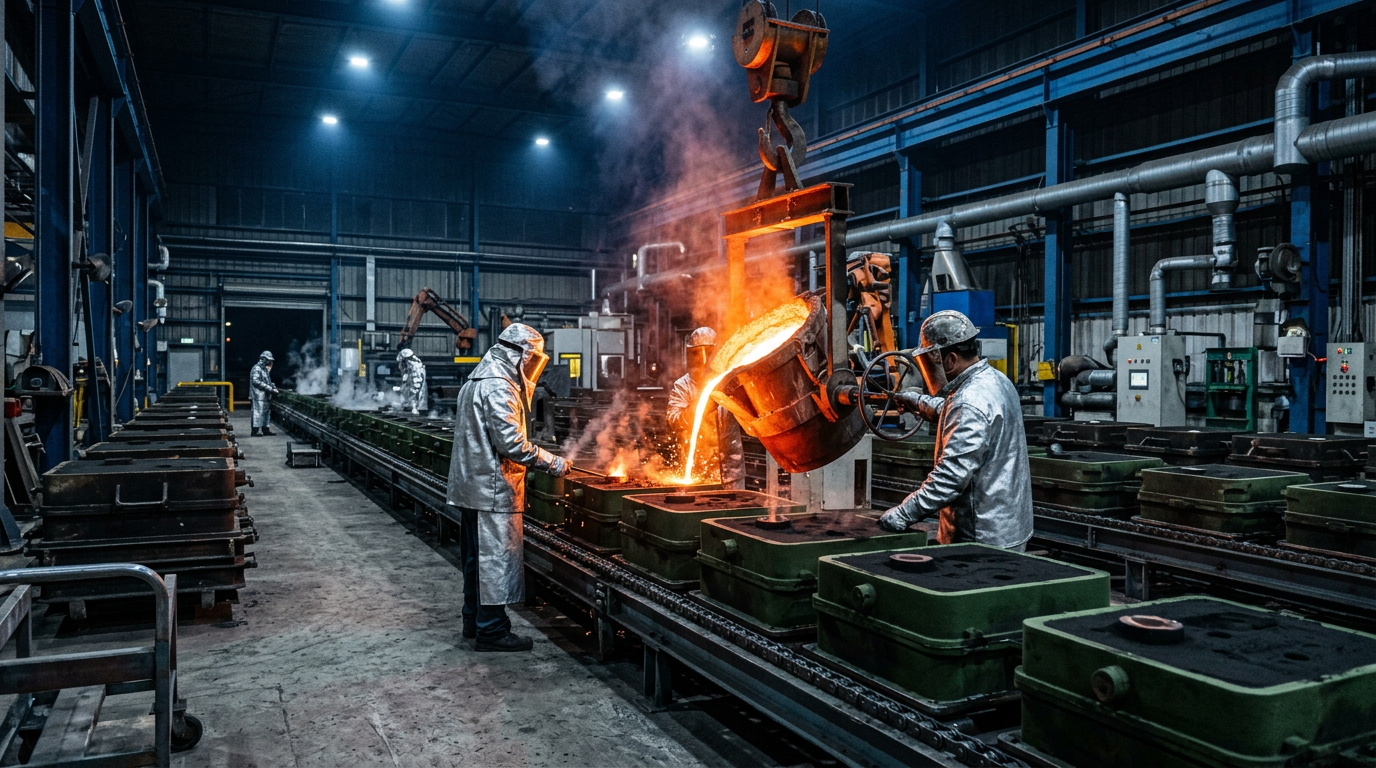
Several macroeconomic factors support this growth trajectory. Global vehicle production is projected at 91 million units in 2026, maintaining strong demand for engine blocks, transmission housings, and brake components. Industrial machinery manufacturers continue investing in equipment upgrades, driving demand for pump housings, gear boxes, and structural castings. The renewable energy sector, particularly wind power expansion, requires massive castings for turbine hubs and housings. Additionally, infrastructure development in emerging markets fuels demand for construction equipment and machinery castings.
Geographic distribution of this market is uneven, with Asia-Pacific commanding 41% of global sand casting volume and value, followed by North America at 25%, Europe at 22%, and other regions at 12%. Within Asia-Pacific, China remains the largest producer and consumer, though India and Southeast Asia are experiencing accelerated growth as manufacturers relocate production capacity to reduce costs and access growing domestic markets.
Market Insight
The 7.8% CAGR projected through 2033 outpaces GDP growth in most developed economies, suggesting sand casting is gaining market share relative to alternative manufacturing processes. This indicates the process is becoming more cost-competitive, technologically advanced, and essential to modern manufacturing strategies.
2. 3D-Printed Sand Molds Are Changing Everything
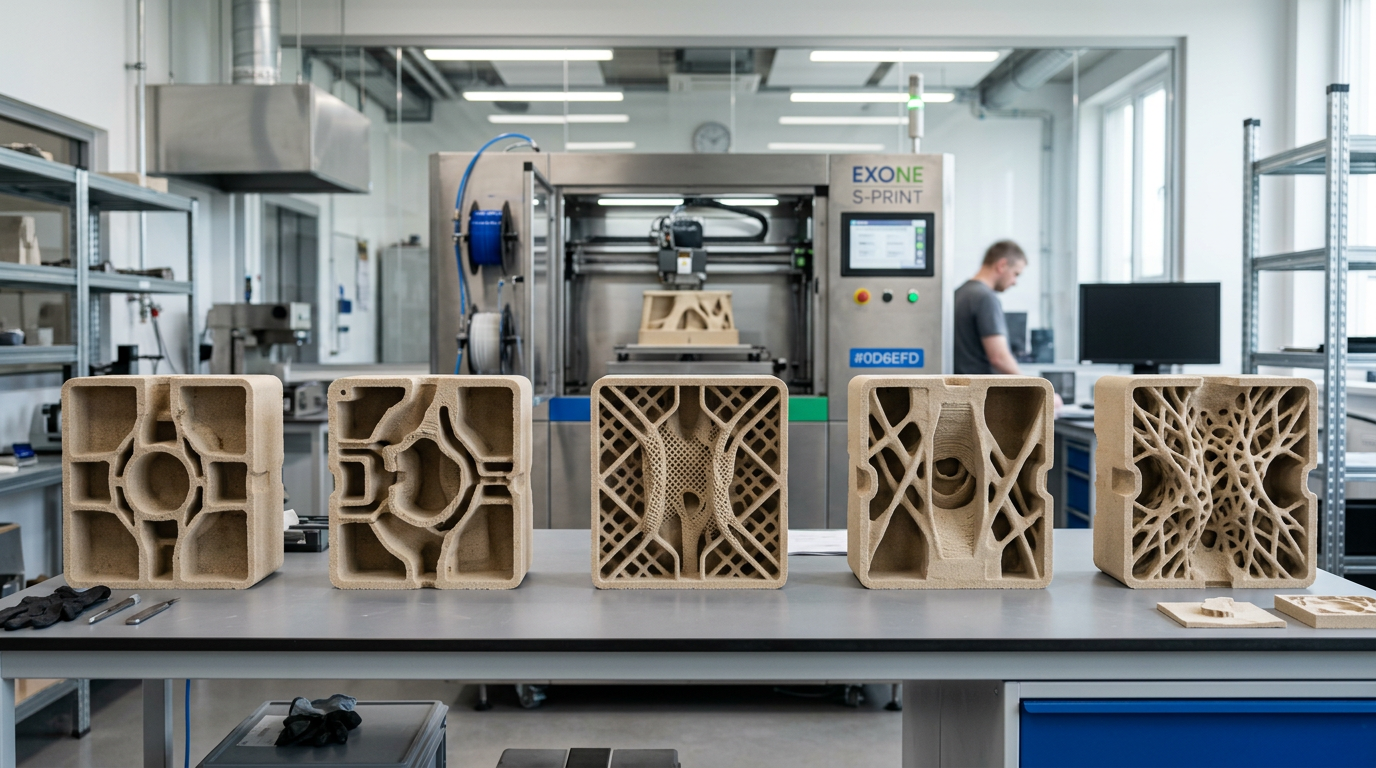
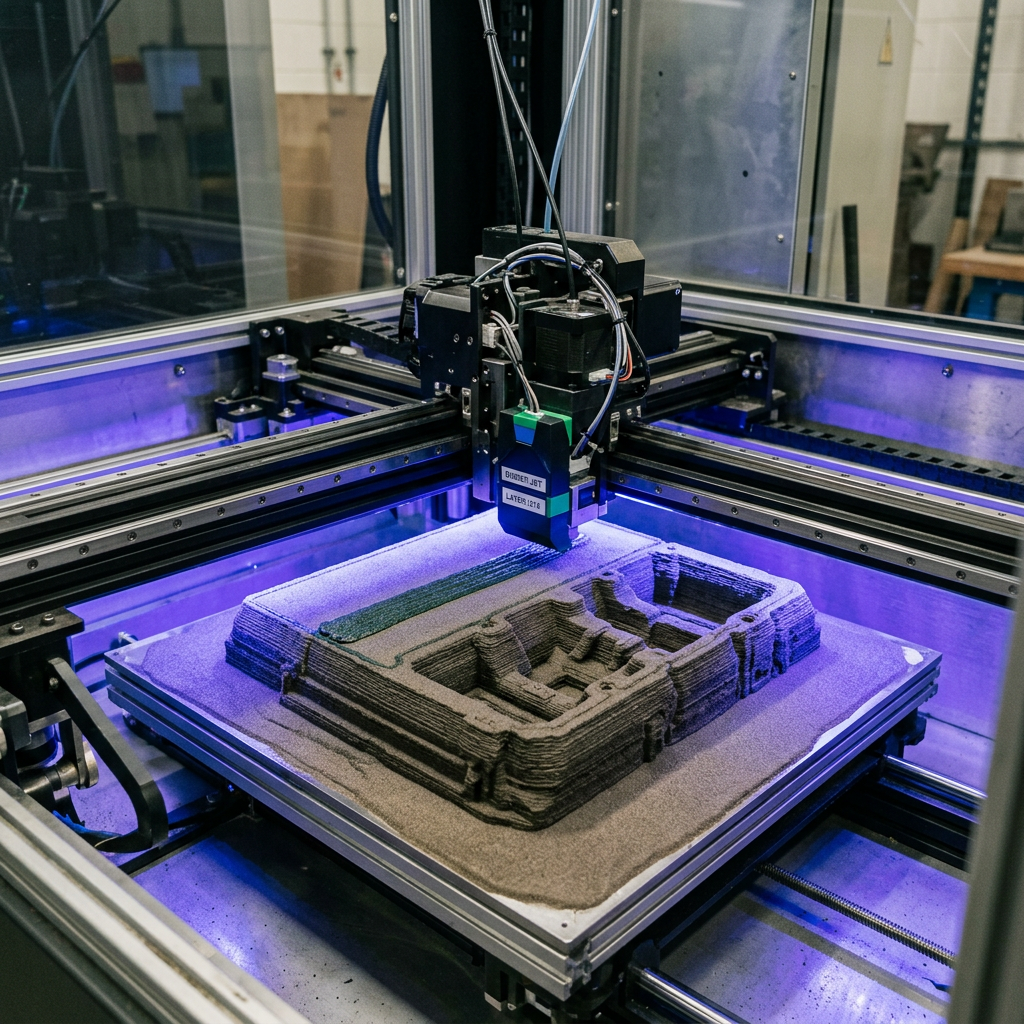
Perhaps the most transformative development in sand casting over the past five years is the adoption of 3D printing technology for mold and core manufacturing. This innovation is fundamentally reshaping how foundries approach product development, prototyping, and short-to-medium run production.
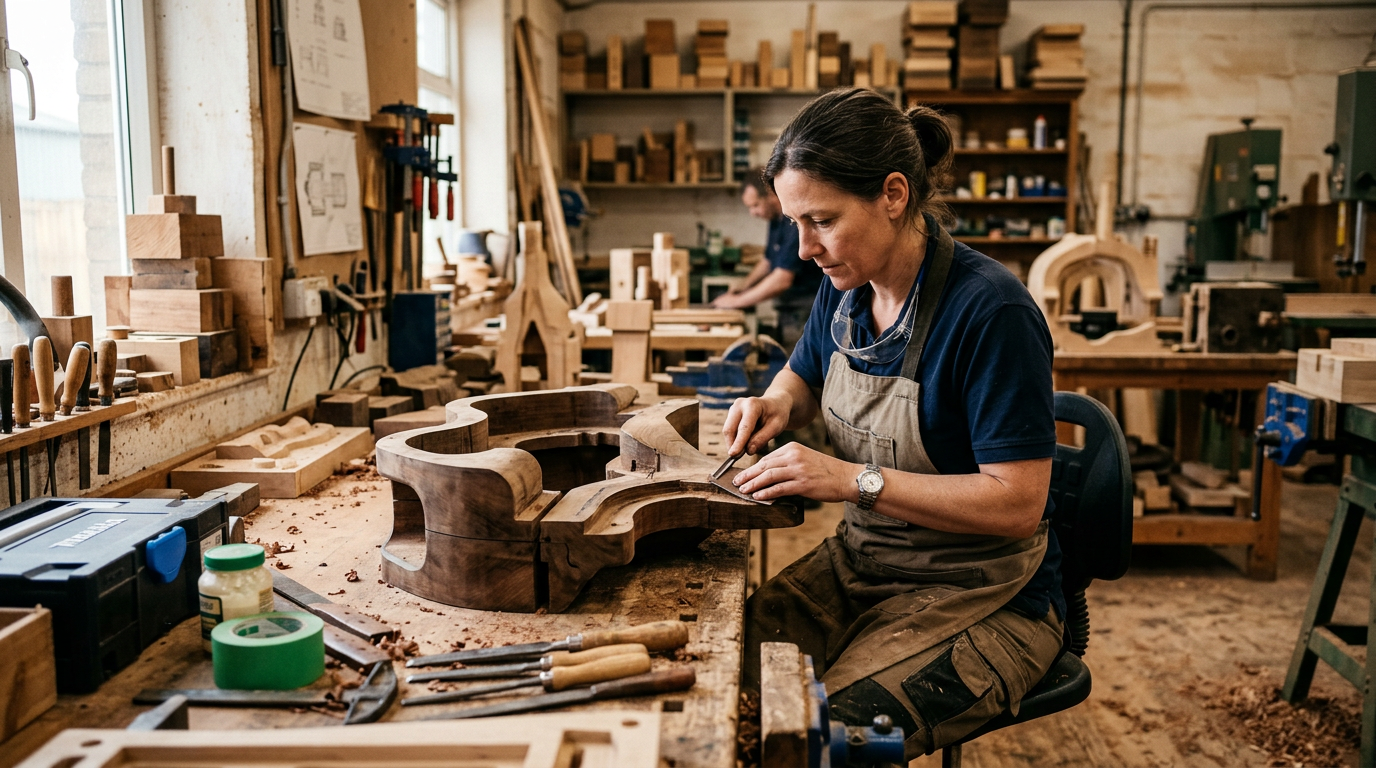
Traditional sand casting requires pattern making—the creation of physical patterns (typically wood, aluminum, or composite) that serve as templates for mold cavity creation. Pattern making is expensive, time-consuming, and inflexible. A complex pattern can cost $10,000-$50,000 and require 4-12 weeks to produce. Any design changes necessitate pattern rework or replacement. 3D printing of sand molds eliminates this bottleneck entirely.
With 3D-printed sand molds, designs go directly from CAD files to printed molds within days. ExOne, Voxeljet, and other specialized 3D printing manufacturers now produce industrial-scale sand printers capable of creating large molds. The process involves binding sand particles with proprietary binders, layer by layer, according to digital specifications. The resulting molds are dimensionally accurate, capable of handling complex internal geometries, and ready for casting with minimal post-processing.
Lead Time Impact
3D-printed molds reduce lead times from 8-12 weeks to 2-3 weeks while cutting pattern costs from $10,000-$50,000 to $2,000-$10,000 per mold. This transformation enables rapid design iterations and makes low-volume production economically viable.
The advantages are compelling. Lead times shrink from 8-12 weeks to 2-3 weeks. Design changes can be implemented instantly without tooling costs. Material waste decreases substantially since 3D printing produces near-net-shape molds. Complex internal cooling channels and undercuts that would be impossible or prohibitively expensive with traditional patterns become feasible. For companies conducting design iterations or producing limited quantities, 3D-printed molds represent dramatic cost and time savings.
Traditional Pattern-Making
- 4-12 week lead time
- $10,000-$50,000 pattern cost
- Design changes = pattern rework
- Limited complexity
- Material waste in pattern creation
- Skilled pattern makers required
3D-Printed Sand Molds
- 2-3 week lead time
- $2,000-$10,000 mold cost
- Design changes = CAD updates
- Extreme complexity possible
- Minimal material waste
- CAD and print expertise needed
However, 3D printing isn't universally optimal. The process works best for complex geometries, small-to-medium production runs (typically under 1,000 units), and design-intensive applications. For high-volume production (10,000+ units), traditional pattern-making combined with multiple casting cycles often remains more cost-effective. Print material costs, though decreasing, still exceed traditional sand-and-binder for very large molds. Additionally, post-processing requirements and surface finish expectations vary by application.
Low-Volume Production Strategy
3D-printed molds excel for prototypes and small production runs (under 1,000 units). Rapid design changes, no tooling costs, and fast lead times make this approach ideal for custom applications and design-intensive projects.
High-Volume Production Strategy
Traditional pattern-making remains cost-effective for high volumes (10,000+ units) where mold per-unit costs amortized over long production runs deliver lower total costs than 3D printing.
By 2026, an estimated 25-30% of foundries globally have invested in 3D printing capabilities or have access to 3D-printed mold suppliers. This adoption rate is highest in North America and Europe (40-45%) but growing rapidly in Asia-Pacific. Forward-thinking foundries are positioning 3D printing as a competitive advantage, enabling faster product development cycles and more agile manufacturing strategies.
3. Lightweighting and Material Substitution
A dominant manufacturing trend reshaping casting demand is lightweighting—the strategic reduction of component weight to improve fuel efficiency, performance, and environmental impact. This trend is particularly pronounced in automotive and aerospace, two major sand casting end-markets.
In the automotive industry, regulatory pressure to meet increasingly stringent fuel economy and emissions standards creates powerful incentives for weight reduction. Every 100 kilograms of vehicle weight reduction improves fuel economy by approximately 0.5%, translating to significant cost savings over a vehicle's lifetime and reduced carbon emissions. Manufacturers are systematically evaluating which iron and steel components can be replaced with lighter aluminum castings without compromising safety or performance.
Sand-cast aluminum components are expanding rapidly in applications traditionally dominated by cast iron. Engine blocks that historically weighed 80-120 kilograms in iron now weigh 30-50 kilograms in aluminum, representing 50-70% weight savings. Transmission housings, intake manifolds, oil pans, and structural brackets are all experiencing this substitution. This shift increases sand casting volumes for aluminum while potentially reducing iron casting demand, though total casting value often increases due to aluminum's higher material cost.
Automotive Lightweighting Gains
Engine blocks reduced from 80-120 kg (iron) to 30-50 kg (aluminum) = 50-70% weight savings. Every 100 kg of vehicle weight reduction improves fuel economy by 0.5%, directly lowering operational costs and emissions.
Aerospace applications are even more aggressive in lightweighting pursuits. Aircraft manufacturers work with a formula where each kilogram of weight reduction at cruise altitude provides continuous fuel efficiency benefits across thousands of flight hours. Aluminum and magnesium castings are standard. Research into titanium sand castings and aluminum-matrix composite castings is advancing, though these remain niche applications due to material costs and technical complexity.
Lightweighting also influences casting design philosophy. Net-shape casting capability becomes critical—producing castings closer to final dimensions minimizes subsequent machining, which removes material and adds cost. Wall thickness optimization, core utilization for weight reduction, and topology optimization (using software to identify material needed for strength while eliminating unnecessary bulk) are increasingly common.
Industry Challenge
While lightweighting creates new casting opportunities, it simultaneously increases technical demands on foundries. Aluminum casting requires different sand types, binder systems, and quality controls than iron. Thinner walls demand superior mold and core quality. Foundries must invest in new expertise and equipment to compete effectively in lightweighting-driven markets.
Material substitution extends beyond iron-to-aluminum transitions. Stainless steel castings are increasing in food processing, pharmaceutical, and chemical industries where corrosion resistance justifies premium material costs. High-strength aluminum alloys (5000 and 7000 series) are enabling more demanding applications. Ductile iron (nodular iron) is gaining share in applications where superior toughness and machinability justify cost premiums over gray iron.
The lightweighting trend is projected to continue accelerating through 2030, driven by electric vehicle adoption (which demands even greater efficiency due to battery weight) and carbon emissions reduction mandates in Europe, China, and increasingly, North America. Foundries that develop expertise in aluminum casting, magnesium processing, and advanced aluminum alloys will capture disproportionate growth during this transition.
4. Automation in the Foundry
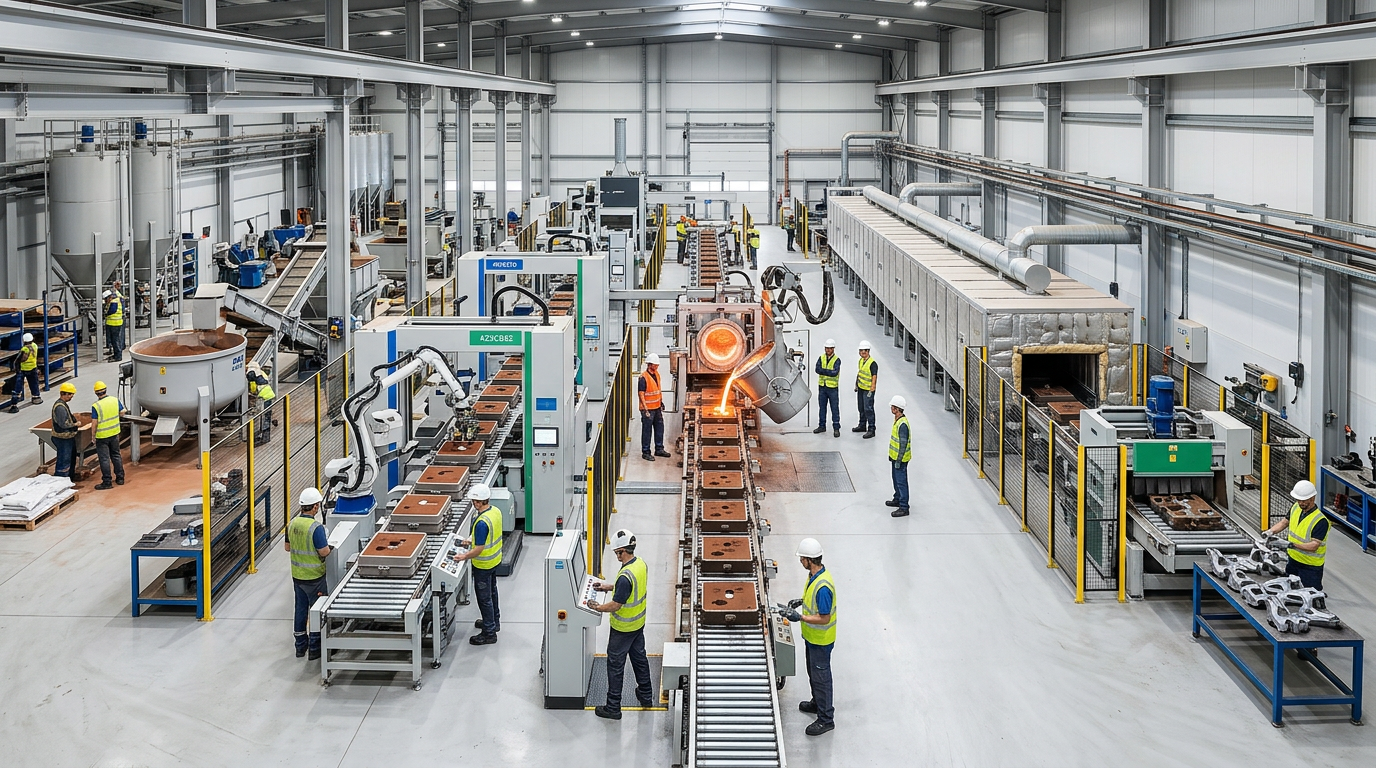
Automation is transforming foundry operations across molding, core production, casting, and finishing. Driven by labor cost inflation, workforce availability challenges, safety considerations, and the need for consistency at scale, foundries are increasingly deploying robotic and digital systems throughout their processes.
In molding, robotic systems now perform flask setup, sand placement, pattern positioning, and mold closure in many modern foundries. Automated molding lines can produce 400-800 molds per eight-hour shift with consistent quality, compared to 100-200 molds per worker shift with greater variability. These systems are particularly valuable for high-volume production where consistency directly impacts casting quality and scrap rates. Investment in automated molding lines typically ranges from $2-5 million depending on throughput requirements, resulting in payback periods of 3-5 years at modest volumes.
Core production is experiencing even more rapid automation adoption. Automated core shooting (the process of forcing sand-binder mixture into core boxes using compressed air) has been used for decades, but modern systems integrate robotics, real-time monitoring, and AI-powered quality detection. Cores are automatically ejected, cooled, positioned, and prepared for assembly with minimal human intervention. This automation dramatically improves core quality consistency, reduces labor, and minimizes workplace heat and dust exposure.
Digital monitoring systems now track temperatures, pressures, and chemical properties throughout production. IoT sensors embedded in equipment provide real-time data on equipment performance, enabling predictive maintenance that prevents unexpected downtime. Quality control systems using computer vision and AI analyze castings for surface defects, dimensional accuracy, and weight variations, identifying problems before parts are shipped to customers.
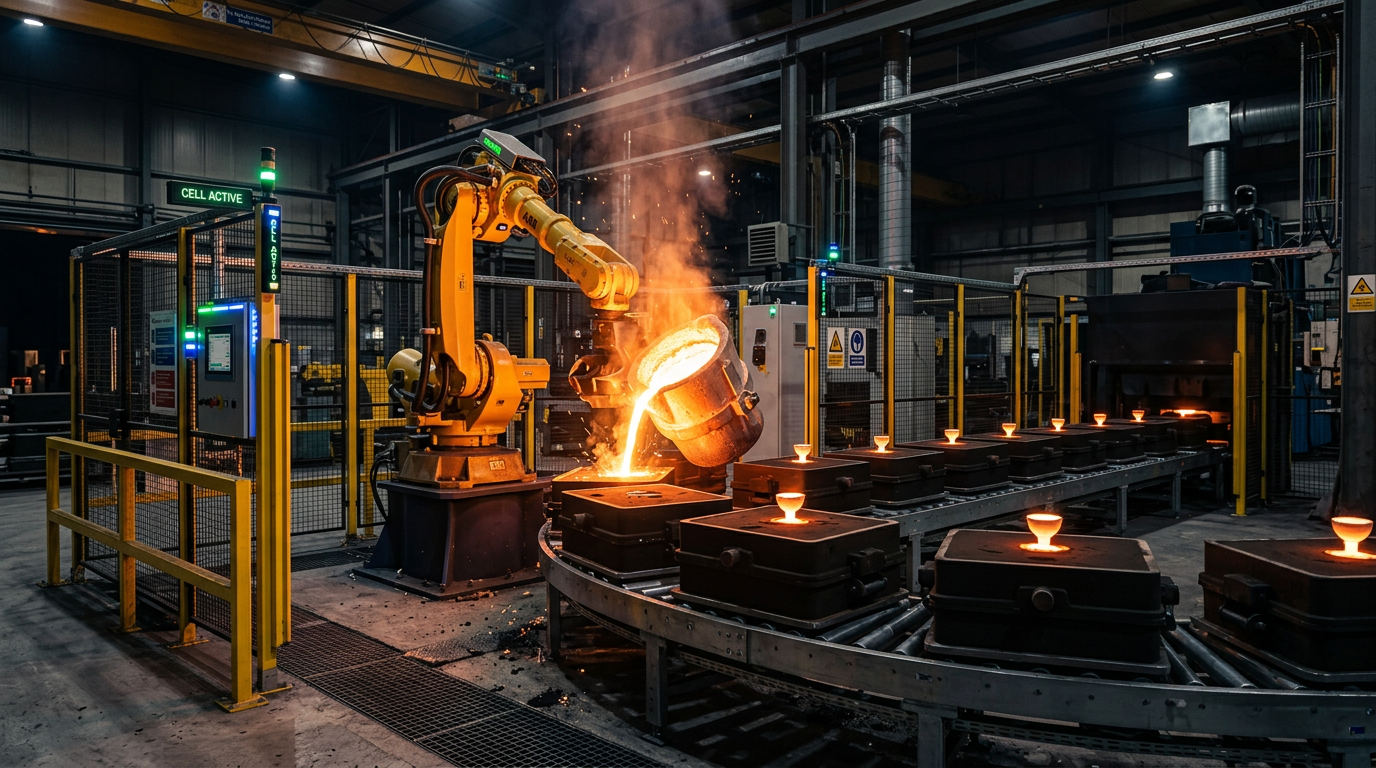
Pouring and casting processes are also becoming automated. Robotic pour systems deliver molten metal to molds with consistent temperature, velocity, and positioning. Automated degassing systems remove hydrogen gas from molten metal, improving casting integrity. Automated shakeout and finishing systems separate castings from molds, remove gates and risers, and perform initial cleaning with minimal human handling.
Automation Adoption Rates
In developed markets, 35-40% of sand casting volume is produced on automated or semi-automated lines. In developing markets, the figure is 15-20% but growing rapidly as labor costs rise globally and quality expectations increase.
Despite these advances, skilled labor remains essential in foundries. Experienced metallurgists are needed to optimize alloy chemistry and pouring temperatures. Process engineers design and troubleshoot automated systems. Maintenance technicians maintain complex equipment. Quality inspectors interpret data and make process adjustments. The skill profile is shifting from manual labor toward technical expertise, requiring foundries to invest in workforce training and development.
Capital requirements for automation represent a significant barrier, particularly for smaller foundries. A state-of-the-art foundry with modern automation can require $50-100 million in capital investment. This has accelerated consolidation in the industry, as larger foundries achieve economies of scale that justify these investments, while smaller operations increasingly serve niche markets or operate as job shops with lower automation levels.
Capital requirements for automation represent a significant barrier, particularly for smaller foundries. A state-of-the-art foundry with modern automation can require $50-100 million in capital investment. This has accelerated consolidation in the industry, as larger foundries achieve economies of scale that justify these investments, while smaller operations increasingly serve niche markets or operate as job shops with lower automation levels.
Large Foundries
Capital-intensive automation systems ($50-100M+) justify ROI through high volumes, consistent quality, and competitive per-unit costs in price-sensitive markets.
Smaller Foundries
Target niche markets with specialized capabilities, complex geometries, and custom applications where volume doesn't justify heavy automation investment.
By 2026, an estimated 35-40% of sand casting volume in developed markets is produced on automated or semi-automated lines. This percentage is lower (15-20%) in developing markets where labor costs remain relatively low. However, the trend is clearly toward greater automation as labor costs rise globally and quality expectations increase across all markets.
5. Environmental Regulations and Green Sand
Environmental regulations are increasingly stringent and expanding, creating both compliance challenges and business opportunities for foundries. Emissions controls, waste management, water quality, and land remediation have become major cost drivers in foundry operations globally.
Sand casting generates several environmental concerns. Molten metal pouring and casting cooling produce particulate emissions. Sand disposal is substantial—a typical foundry producing 5,000 tons of castings annually generates 15,000-20,000 tons of waste sand. Historically, much of this waste went to landfills. Water runoff from cooling and cleaning operations can carry heavy metals and chemicals. Volatile organic compounds (VOCs) from binder systems contribute to air pollution. Dust from molding and core production creates occupational and environmental hazards.
Green sand practices address these concerns. Modern foundries increasingly use recycled sand (up to 90-95% of molding sand can be recycled and reused) combined with environmentally friendly binder systems. Water-based inorganic binders and soy-based organic binders are replacing traditional phenol-formaldehyde systems that emit toxic fumes. Closed-loop water systems recycle cooling and cleaning water, reducing consumption by 70-80%. Baghouse and electrostatic precipitator systems capture emissions before they enter the atmosphere. Land remediation programs address historical contamination at older foundry sites.
Environmental Compliance Investment
Mid-size foundries investing in comprehensive environmental controls spend $5-15 million upfront with annual operating costs of $500,000-1.5 million. Non-compliance can trigger regulatory fines reaching millions and operational shutdowns.
Paradoxically, strong environmental regulations can favor foundries that have invested in modern facilities and technology. Older, smaller foundries operating with minimal environmental controls often cannot justify the capital investment required for compliance and may exit the market, reducing competition for compliant operators. This dynamic has accelerated consolidation and modernization of the foundry industry in regulated markets like the European Union and North America.
Regulatory Trend
Environmental regulations are expected to tighten significantly in the next 5-10 years. Carbon pricing mechanisms, plastic microplastics concerns related to foundry dust, and water contamination standards are all likely to become more stringent. Foundries should begin investing now in environmental improvements to stay ahead of regulatory requirements and avoid future penalties or operational disruptions.
Beyond compliance, environmental management creates marketing opportunities. Customers increasingly prefer suppliers with strong environmental credentials. Companies pursuing carbon neutrality goals select foundries that demonstrate measurable emissions reductions. ISO 14001 environmental management certification and third-party environmental audits are becoming competitive requirements. Foundries can differentiate through environmental stewardship, capturing premium pricing or preferred supplier status with environmentally conscious customers.
Sand waste management has evolved from liability to potential revenue source. Reclaimed sand is used in construction applications, road base, and glass manufacturing. Some foundries have developed sand recycling as a separate profit center, purchasing sand waste from other foundries and processing it for resale. Metal-rich dust from baghouses can be recovered and sold to precious metal refiners. These circular economy approaches improve foundry profitability while reducing environmental impact.
Environmental Compliance
Modern foundries use 90-95% recycled sand, water-based inorganic binders, closed-loop water systems, and emission capture technology to meet increasingly strict regulations.
Circular Economy Opportunities
Sand recycling, material recovery, and waste byproduct sales create revenue streams while reducing environmental impact and improving overall foundry economics.
6. Regional Market Dynamics
Global sand casting markets are far from homogeneous. Regional economic conditions, manufacturing bases, labor costs, regulatory environments, and technology adoption rates create distinct market dynamics and opportunities.
Asia-Pacific dominates with 41% of global sand casting market share. China alone accounts for roughly 50% of Asia-Pacific volumes. Low labor costs, large domestic demand, and substantial manufacturing infrastructure position China as the world's largest casting producer. However, China is experiencing rising labor costs, increasing environmental regulations (particularly in coastal industrial regions), and shifting toward higher-value manufacturing. Indian foundries are growing rapidly, offering lower costs than China with improving quality. Southeast Asia (Thailand, Vietnam, Indonesia) is emerging as an alternative production location, attracting manufacturers seeking to diversify away from China.
North America accounts for 25% of global sand casting market share. The United States and Canada have smaller foundry bases than decades past due to manufacturing outsourcing, but remaining foundries tend to be modern, efficient, and highly specialized. They serve automotive OEMs demanding just-in-time delivery and high-quality castings. The region is a leader in technology adoption, including 3D printing, automation, and advanced quality control. Mexico is becoming increasingly important, with foundries serving North American automotive manufacturers seeking nearshoring alternatives to Asian production.
Europe represents 22% of global sand casting market share, concentrated in Germany, Italy, France, and the United Kingdom. European foundries face high labor costs, stringent environmental regulations, and intense competition from lower-cost Asian producers. However, they compete successfully through specialization in high-value castings, advanced technology, quality certification, and long-term customer relationships. Germany remains a leader in foundry innovation and automation. Environmental regulations in the EU are the most stringent globally, pushing European foundries to adopt best practices that then spread to other regions.
Rest of World (12% of market) includes Brazil, India, and other developing regions. Brazil has a significant aerospace and automotive casting industry. India is expanding rapidly, with foundries ranging from small job shops to modern facilities competing globally. These regions offer cost advantages that attract price-sensitive customers, though quality consistency remains variable.
Manufacturing location decisions are increasingly complex. Globalization creates pressure for cost optimization, encouraging production in low-cost regions. However, quality requirements, supply chain reliability, intellectual property protection, and nearshoring trends (driven by desire to reduce supply chain risk and transportation costs) create countervailing pressures favoring local or regional production. Major automotive manufacturers maintain foundry partnerships across multiple regions to optimize cost, quality, delivery, and supply security.
Technology adoption varies dramatically by region. 3D printing of sand molds is most prevalent in Europe and North America, gradually spreading to Asia. Automation is expanding worldwide but concentrated in higher-wage regions where it provides the strongest economic benefits. Environmental compliance standards vary from very strict (EU, North America) to less regulated (some developing markets), creating competitive advantages for low-cost producers but also driving customer preference for compliant suppliers.
Developed Markets
High technology adoption rates, strict environmental regulations, premium specialty castings, and advanced automation drive margins and differentiation for North American and European foundries.
Developing Markets
Cost leadership through lower labor, increasing capacity and technology adoption, and growing local demand make Asia-Pacific and other regions attractive for volume production and expansion.
7. What This Means for Sand Casting Foundries
The converging trends of market growth, technological transformation, regulatory pressure, and regional competition create a complex landscape for foundry decision-makers. Success in 2026 and beyond requires strategic choices and investments in several key areas.
Technology Investment
Small job shops benefit from 3D printing for rapid prototyping. High-volume producers require automation for cost competitiveness. All foundries gain from digital quality control systems that reduce scrap and improve efficiency.
Capability Development
Aluminum casting expertise is critical for lightweighting trends. Environmental controls are non-negotiable. Automation systems require technical programming knowledge and systems thinking capabilities.
Customer Relationships
Shift from transactional to strategic partnerships. Engage customers early in design phases. Demonstrate alignment with their lightweighting and environmental goals. Long-term contracts provide revenue stability for capital investments.
Workforce Strategy
Invest in training to shift from production labor to technical expertise. Competitive wages and workplace improvements attract and retain skilled workers. Systematic documentation and mentoring preserve expertise from retiring experienced workers.
Sustainability Commitment
Environmental compliance is baseline, not optional. View investments as competitive opportunity. Green practices build brand value, strengthen customer relationships, and improve operational efficiency and costs.
Market Positioning
Specialize in specific applications, materials, or capabilities. Competing broadly against global competitors with superior scale is increasingly difficult. Specialization provides defensible competitive advantage.
Financial Planning for Growth
Technology and modernization require significant capital investment. Develop multi-year strategic plans with clear priorities. Explore financing options: bank debt, private equity, strategic partnerships. Many successful foundries are consolidating or being acquired by larger industrial companies seeking modernization and market consolidation.