
1. When to Use Sand Casting (and When Not To)
Sand casting is one of the most versatile and cost-effective manufacturing processes for producing metal components at low to medium volumes. It excels for large parts, complex geometries, and prototypes. However, it is not the right fit for every application. Understanding when sand casting excels will help you make informed sourcing decisions and avoid costly mistakes.
Large Parts
Sand casting can produce components weighing from ounces to over 1,000 pounds with minimal size restrictions. No equipment limits prevent the production of massive castings, making it ideal for large structural components.
Complex Geometry
Handle intricate shapes, internal passages, undercuts, and complex features that are difficult or impossible with machining or other casting processes. Custom cores enable nearly any internal geometry.
Low Tooling Cost
Sand casting patterns cost significantly less than precision dies used in die casting or injection molding. Lower upfront tooling investment makes sand casting economical even for single prototypes and short production runs.
Material Diversity
Sand casting accommodates gray iron, ductile iron, steel, aluminum, copper alloys, and specialty materials. The process is not limited by metal reactivity or equipment restrictions, unlike die casting or other processes.
When to consider other processes
If you need extremely tight tolerances or superior surface finish across all features, machining or precision investment casting may be better. For very high volumes above 50,000 parts annually, die casting or injection molding achieves lower piece costs despite higher tooling. Sand casting is not ideal for pressure-tight applications unless no-bake or resin-bonded processes with vacuum assistance are used.
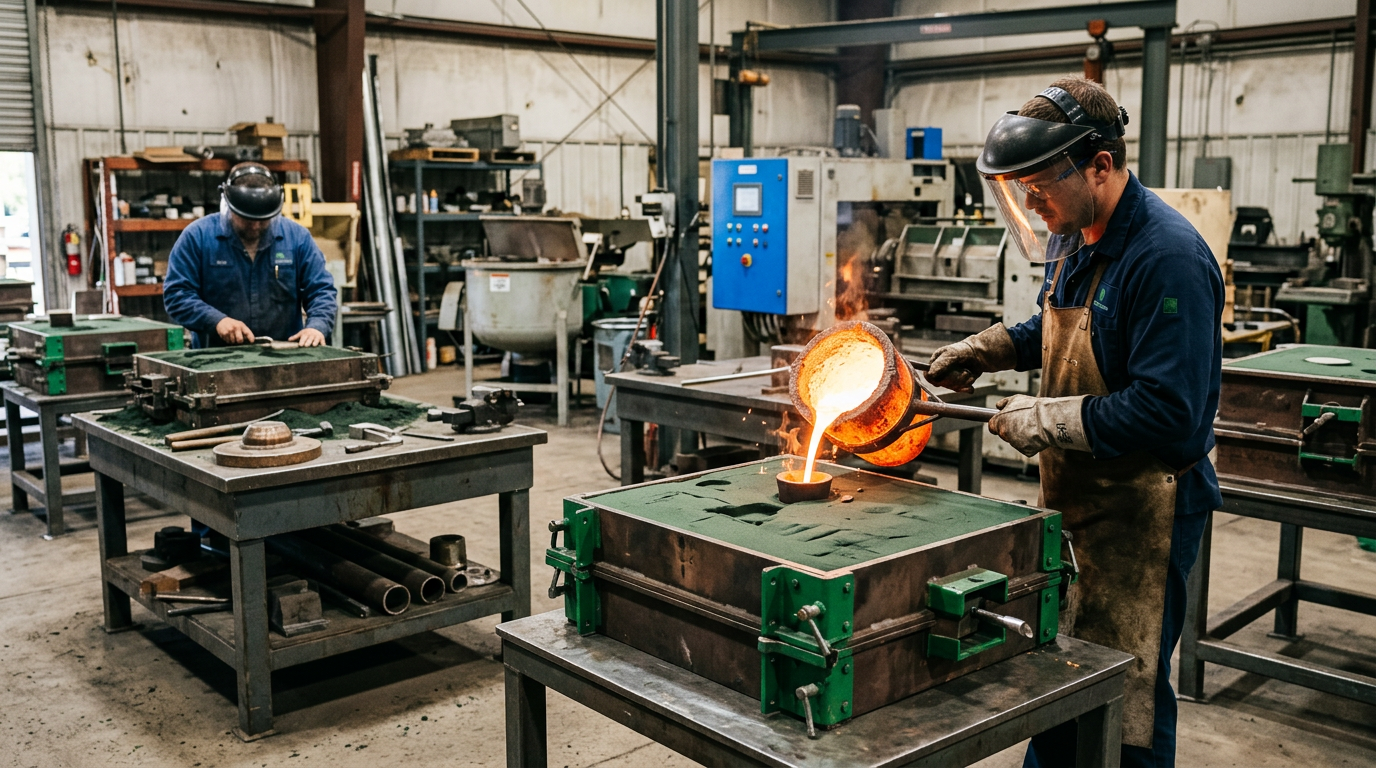
2. Understanding Sand Casting Process Types
Sand casting encompasses several binder methods, each with distinct advantages for different applications. Understanding these process variations helps you select the right approach for your specific requirements around tolerance, surface finish, cost, and lead time.
Green Sand Casting
Uses a mixture of sand, clay, and moisture. The "green" refers to the wet state of the binder system, not the color. Molds are created by compacting the mixture around a pattern.
- Tooling: $1,000 to $3,000
- Lead time: 2 to 6 weeks
- Tolerance: ±0.025 inches typical
- Surface finish: 125 to 250 microinches
- Best for: Cost-sensitive, high-volume production
No-Bake Sand Casting
Uses resin binders that cure chemically at room temperature without heat application. Offers improved dimensional accuracy and surface finish compared to green sand, with reasonable lead times.
- Tooling: $2,000 to $4,000
- Lead time: 3 to 8 weeks
- Tolerance: ±0.015 to ±0.020 inches
- Surface finish: 63 to 125 microinches
- Best for: Tighter tolerances, better finish, medium volume
Resin-Bonded Sand Casting
Uses high-strength phenolic or other specialty resin binders for superior surface finish and dimensional accuracy. Often combined with vacuum assistance to eliminate porosity and enable heat treatment.
- Tooling: $3,000 to $5,000+
- Lead time: 4 to 10 weeks
- Tolerance: ±0.010 inches or better
- Surface finish: 32 to 63 microinches
- Best for: Complex parts, tight tolerances, minimal machining required
Pro tip
For most production volumes under 5,000 parts annually, green sand offers the best balance of cost and capability. If you need tighter tolerances or superior surface finish, no-bake is worth the modest premium. Reserve resin-bonded and vacuum-assisted processes for applications requiring pressure-tight castings or where secondary machining costs dominate.
3. Materials & Castability
Sand casting accommodates a diverse range of metals and alloys. Each material offers different mechanical properties, castability characteristics, cost implications, and post-cast processing requirements. Selecting the right material is critical to part performance and manufacturing success.
| Material Family | Common Alloys | Castability | Typical Applications |
|---|---|---|---|
| Gray Iron | Class 30, 40, 50 | Excellent | Engine blocks, manifolds, brake drums, structural parts |
| Ductile Iron | 60-40-18, 80-55-06 | Excellent | Rotating shafts, suspension components, gears, crankshafts |
| Steel | 1018, 1045, 4140 | Good | High-strength parts, valves, brackets, heavy-duty components |
| Aluminum | A356, A357, A206 | Excellent | Lightweight housings, engine components, structural parts |
| Copper Alloys | Bronze, brass, gunmetal | Excellent | Bushings, bearings, decorative parts, marine components |
| Specialty Alloys | Nickel alloys, stainless | Challenging | High-temperature applications, extreme corrosion environments |
Pro tip
Gray iron and aluminum are the most economical choices for sand casting due to excellent castability and widespread availability. Ductile iron provides superior mechanical properties for applications requiring impact resistance or fatigue strength. Steel casting works but requires extra care in mold design due to higher pouring temperatures. Copper alloys are excellent for corrosion resistance but cost more. Consult your foundry early on material selection to optimize for both performance and castability.
4. Design Considerations and Tooling
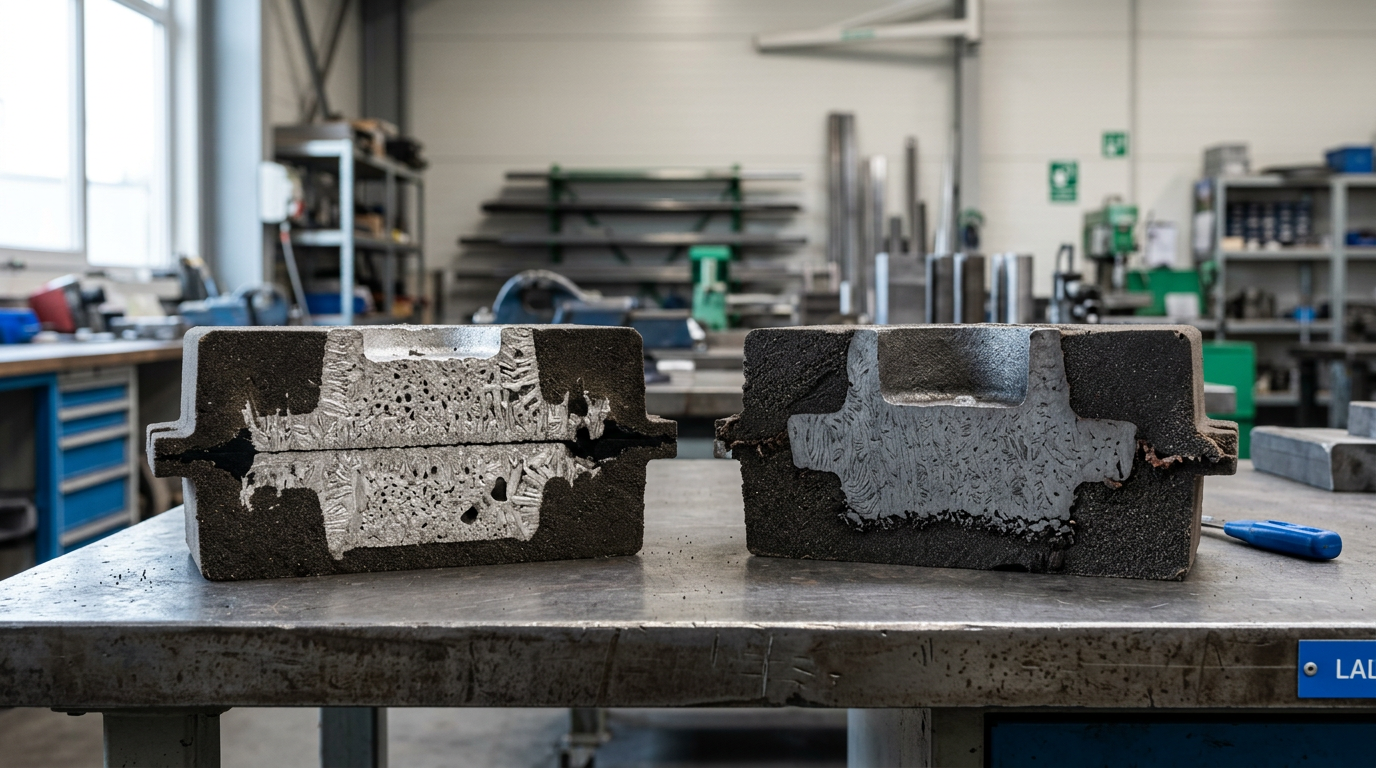
Proper pattern design and tooling is critical to successful sand casting. Understanding draft angles, wall thickness uniformity, fillets, and core placement minimizes casting defects and reduces tooling costs. Early collaboration with your foundry during design prevents expensive modifications.
Include Proper Draft Angles
Patterns require 1 to 3 degrees of draft perpendicular to the parting line to allow safe removal from the sand mold without damaging cavity walls. Insufficient draft causes mold damage, pattern sticking, and scrap. This costs nothing to include in design but prevents expensive rework.
Maintain Uniform Wall Thickness
Abrupt wall thickness changes create stress concentration and porosity. Design gradual transitions between different sections using fillets and blends. Minimum wall thickness is typically 0.125 to 0.25 inches depending on material and casting size. Consult your foundry for specific guidance.
Use Adequate Fillets and Radii
Fillets minimize stress concentration, improve moldability, and reduce defects. Use the largest radius practical, with minimum 0.125 inches for most applications. Sharp corners create stress points and are difficult to cast cleanly. Generous fillets improve both casting quality and part performance.
Plan for Cores and Feeding
Complex internal passages require cores. Work with your foundry during design to determine optimal core placement and support. Also plan gate and riser locations to ensure proper metal feeding and prevent shrinkage porosity. Early communication prevents expensive design changes during tooling.
| Tooling Type | Cost Range | Best For |
|---|---|---|
| Pattern only (Green Sand) | $1,000 to $3,000 | Prototype and short-run production, 100 to 5,000 parts |
| Pattern with cores (No-Bake) | $2,000 to $4,000 | Medium volume with tighter tolerances, 1,000 to 10,000 parts |
| Resin-bonded pattern system | $3,000 to $5,000+ | High precision, complex parts, 5,000+ parts with minimal machining |
Watch out
Patterns that seem unusually cheap often indicate shortcuts in materials, machining accuracy, or surface preparation. A poorly made pattern will produce defective castings throughout production. Invest in quality pattern development upfront. Also avoid over-specifying tight tolerances on features where they are not critical. Realistic tolerancing on sand castings reduces costs and improves on-time delivery.
5. How to Evaluate a Sand Casting Foundry
Selecting a capable foundry is crucial to casting quality and project success. Use this comprehensive evaluation framework to confidently select a sand casting supplier that meets your technical requirements, quality standards, and business needs:
Technical Expertise
Verify engineering support, design review capabilities, and foundry experience with your materials, part sizes, and specifications.
Equipment & Capacity
Confirm furnace capacity, molding equipment, core-making capability, and finishing equipment including machining and shot blast for your production needs.
Quality Certifications
ISO 9001 is essential. Industry-specific certifications like IATF 16949 for automotive or AS9100 for aerospace verify capability. Ask about inspection equipment and quality controls.
Track Record
Request customer references and review delivery performance, quality history, and responsiveness to issues.
Communication
How quickly do they respond to inquiries? Do you have a dedicated account manager? How do they handle changes?
Price Competitiveness
Compare quotes from 3 to 5 foundries. The lowest price may indicate reduced quality or capacity constraints. Prioritize value over cost.
Schedule a facility visit before committing to major tooling investment. A plant tour reveals capacity, equipment condition, worker expertise, and quality culture far better than any website or brochure ever could. Observe mold-making, pouring operations, and finishing to assess foundry capability.
6. Writing an Effective RFQ
A well-structured RFQ gets you faster responses, better quotes, and more accurate pricing and lead times. Include all critical information so foundries can provide comprehensive cost estimates without multiple follow-up questions:
3D CAD Model
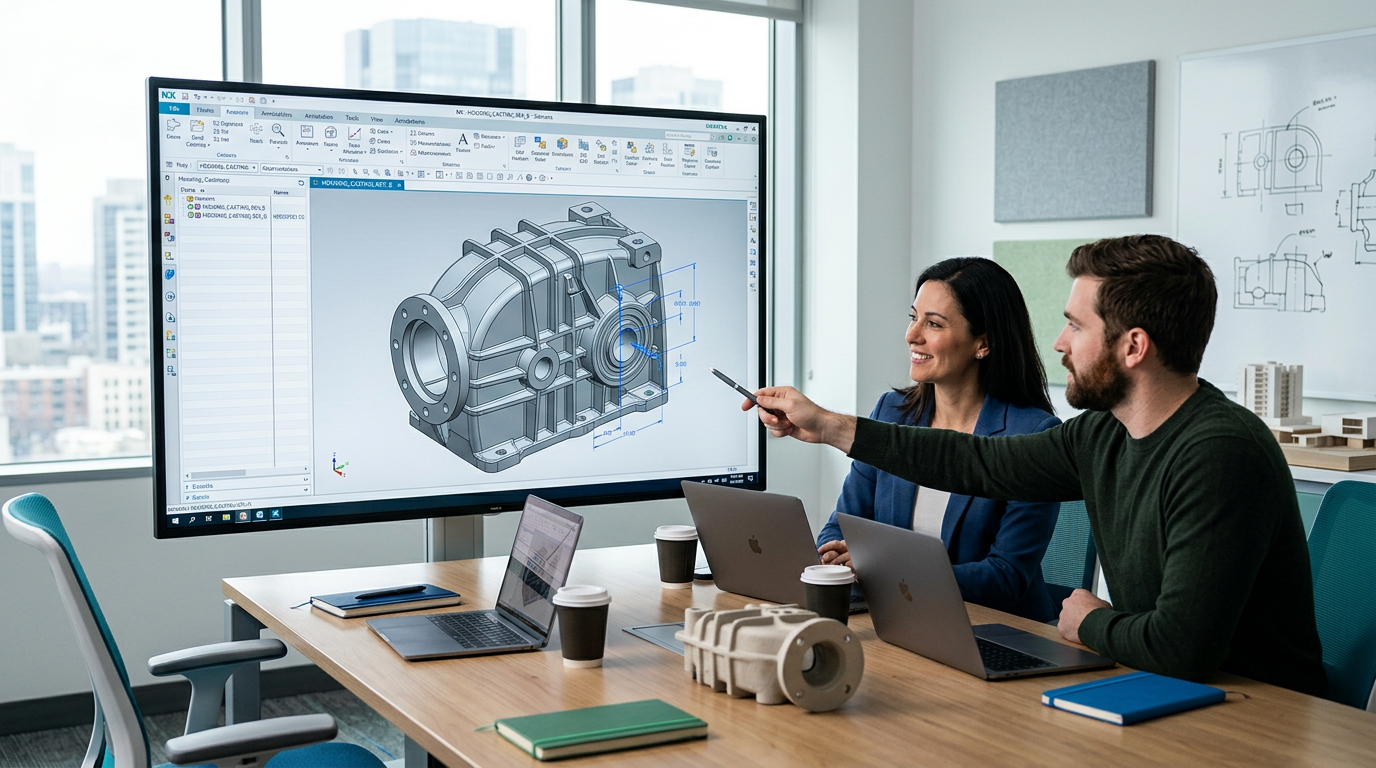
STEP or IGES format with all critical dimensions and features clearly defined
2D Drawing with GD&T
Geometric dimensioning and tolerancing, surface finish callouts, and material specification
Material Requirements
Material grade and alloy, desired mechanical properties, and any special material certifications
Production Volume
Initial quantity, expected annual volume, and planned release schedule over 3 to 5 years
Secondary Operations
Machining, grinding, shot blast, painting, assembly, testing requirements
Quality Standards
Certifications, inspection level, material testing, and documentation expectations
Pro tip
Send your RFQ to 3 to 5 qualified foundries. Fewer than 3 does not provide sufficient comparison. More than 5 creates noise and dilutes individual attention. Request quotes broken down by tooling cost, per-piece cost, and secondary operations so you can compare apples to apples.
7. Common Mistakes Buyers Make
After years of working with manufacturing buyers, we see the same sourcing mistakes repeated. Learn from these common pitfalls and avoid the costly consequences:
Overlooking draft angles and design for castability
Many buyers design parts without considering sand casting constraints. Insufficient draft causes pattern sticking and mold damage. Sudden wall changes create porosity. Work with your foundry during design to optimize for castability and avoid expensive rework and scrap.
Over-specifying tolerances on all features
Sand casting has inherent tolerance limits. Expecting ±0.010 inches on all dimensions drives up costs significantly. Specify tight tolerances only on critical features. Discuss tolerance allocation with your foundry to optimize cost and feasibility.
Skipping design review and DFM analysis
A foundry design review catches issues before tooling fabrication. They identify draft problems, gating concerns, wall thickness issues, and thermal gradient challenges. A thorough review prevents $5,000 to $20,000 pattern modifications or casting scrap.
Accepting unrealistic lead time promises
Pattern creation and tooling fabrication take time. Rushing the process leads to shortcuts, design errors, and quality issues. Plan for 8 to 12 weeks minimum for new patterns. Unrealistic schedules result in missed deliveries and higher costs due to expedite charges.
Single-sourcing without backup capacity
Relying on one foundry creates supply chain vulnerability. For critical production parts, develop a qualified second source or ensure your pattern can be transferred to another foundry if the primary supplier fails. Protect your business from supply disruption.