
1. When to Use Permanent Mold Casting (and When Not To)
Permanent mold casting sits in the sweet spot between sand casting and high-pressure die casting, offering distinct advantages for medium-volume production of aluminum parts. Understanding when permanent mold casting excels will help you make informed sourcing decisions and avoid costly mistakes.
Medium-Volume Production
Permanent mold casting is ideal for 500 to 25,000 units annually. The tooling investment is lower than die casting but the reusable molds spread costs across many parts, making per-unit prices competitive for this volume range.
Quality and Surface Finish
Permanent mold casting produces superior surface finishes and dimensional accuracy compared to sand casting, with minimal porosity, especially when using low pressure methods. Parts often require less secondary finishing.
Lower Pressure Process
Permanent mold casting uses gravity or low pressure (5-15 PSI) instead of high-pressure die casting (4,000-10,000 PSI). Lower pressure means less thermal stress on tooling, longer mold life, and lower die replacement costs over time.
Heat Treatability
Permanent mold castings, especially those made with low pressure methods, can be heat treated to T6 specification for increased strength. Gas porosity is minimal, enabling full T6 heat treatment without risk of part failure.
When to consider other processes
If you need fewer than 500 parts, sand casting or aluminum machining may be more economical. For very large parts or volumes exceeding 25,000 annual units, high-pressure die casting or other methods may offer better economics. For very small parts requiring extreme precision, CNC machining may be preferred over casting.
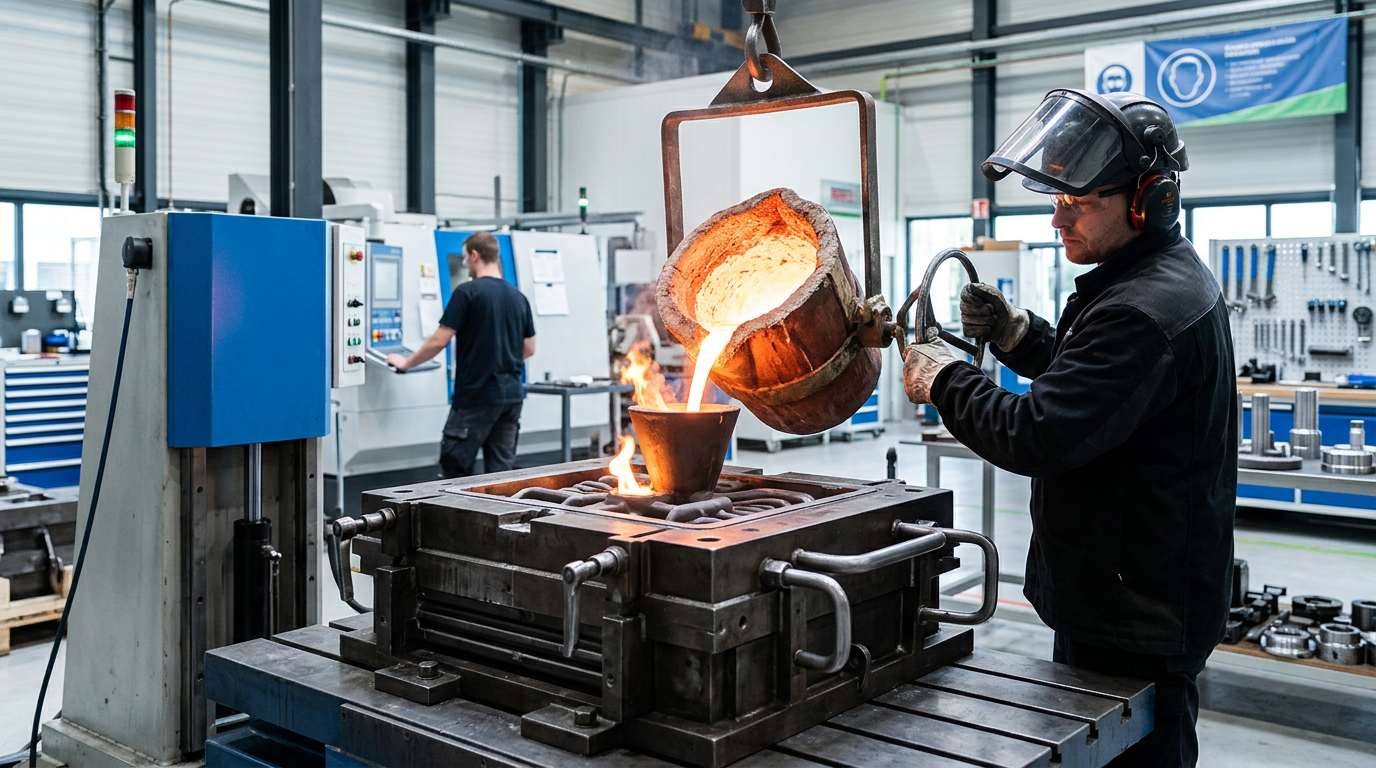
2. Understanding Permanent Mold Casting Methods
Permanent mold casting offers three primary pouring methods. Each method has distinct advantages and cost implications depending on part requirements and quality standards. Understanding these methods helps you select the right process for your application.
Gravity Pour
Molten aluminum is poured directly into the mold cavity using only gravity force. This is the simplest and most economical method, requiring minimal equipment and lowest tooling costs. Fill rates are slower, and defects like gas porosity are more likely than pressure-assisted methods.
- Methods: Direct pour or ladle pouring
- Cycle time: 30 to 120 seconds depending on part size
- Tolerance: plus or minus 0.003 inches typical
- Tooling cost: Lowest, starting around $10K
- Best for: Simple to moderate geometry parts
Tilt Pour
The mold tilts during pouring to control metal flow rate and reduce turbulence. This method reduces entrapped gases and produces better surface finish than gravity pour alone. Ideal for parts requiring moderate complexity and superior quality compared to simple gravity pour.
- Methods: Hydraulic tilt mechanism controls fill
- Cycle time: 40 to 90 seconds per casting
- Tolerance: plus or minus 0.0025 inches typical
- Tooling cost: Moderate, $20K to $50K range
- Best for: Complex parts with good surface quality
Pro tip
For applications requiring tensile strength properties, pressure-tight castings, or heat treatability to T6 specification, low pressure casting is essential. The slightly higher cost is justified by superior mechanical properties and minimal porosity that enables full heat treatment without risk of blistering.
3. Choosing the Right Aluminum Alloy
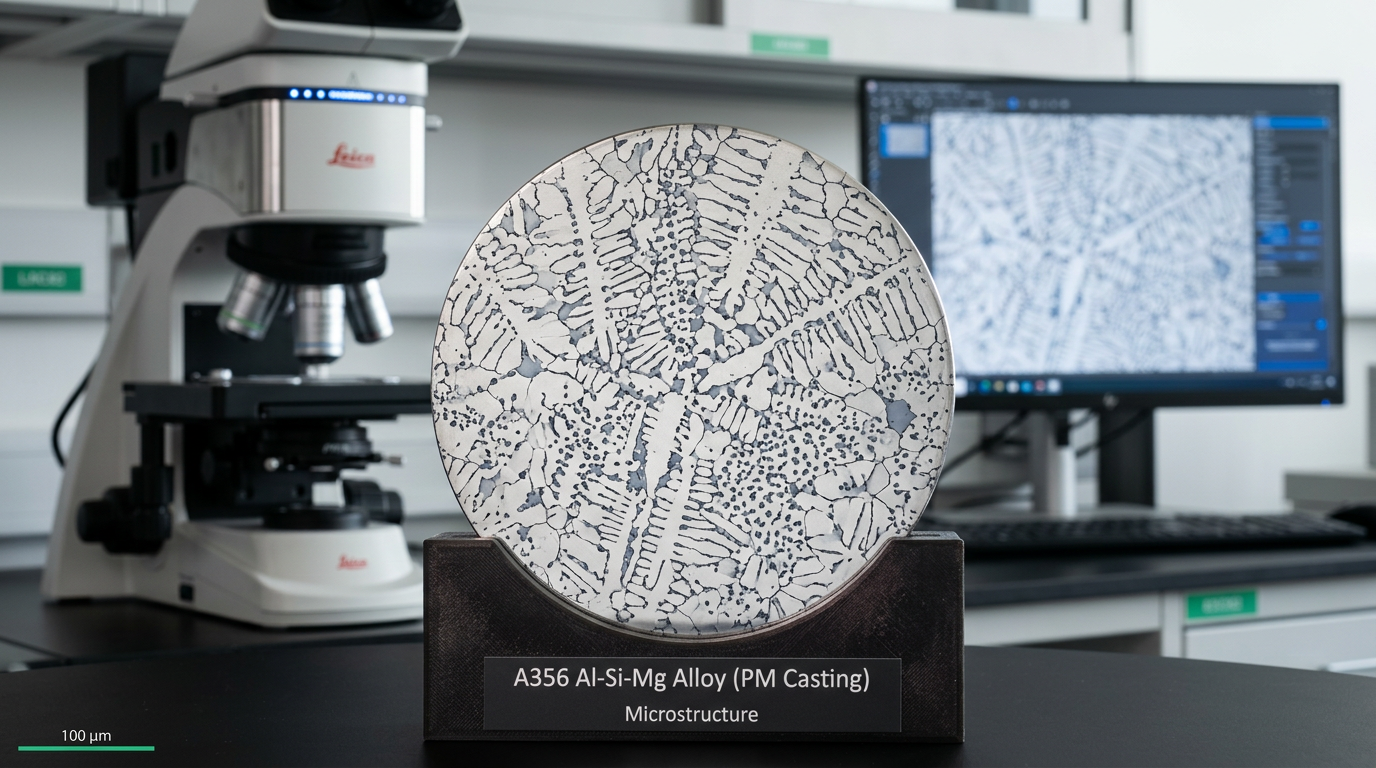
Aluminum alloy selection dramatically affects part performance, tooling life, casting quality, and cost. Permanent mold casting uses different alloys than high-pressure die casting. Here is a guide to common permanent mold casting alloys:
| Alloy | Strength (T6) | Castability | Best Applications |
|---|---|---|---|
| A356 | 35 ksi | Excellent | General purpose, automotive engine blocks, suspension components |
| A357 | 38 ksi | Excellent | Higher strength requirements, aerospace applications, structural parts |
| C355 | 32 ksi | Good | Complex geometries requiring heavy machining and excellent machinability |
| 535.0 | 26 ksi | Good | Pressure-tight applications, decorative and consumer products |
| 771.0 | 30 ksi | Good | Moderate strength needs, welding applications, structural components |
Pro tip
A356 and A357 are the default choices for most permanent mold casting applications due to excellent castability and good strength properties after T6 heat treatment. A357 costs slightly more but offers superior strength for demanding applications. Select alloys based on required tensile strength, not price alone. Working with your permanent mold supplier on alloy selection can optimize both performance and cost.
4. Understanding Permanent Mold Casting Tooling Costs
Tooling represents the largest upfront investment in any permanent mold casting project. Unlike high-pressure die casting, permanent mold tooling uses different materials (steel, ductile iron, or gray iron) and simpler design approaches. Understanding tooling cost drivers helps you budget accurately and evaluate supplier quotes.
Part complexity and core requirements
Simple gravity pour molds for basic geometry cost less than complex tilt pour or low pressure molds with multiple cores and slides. Each core box increases tooling cost. Undercuts, internal cavities, and thin walls add complexity and cost.
Mold material selection
Ductile iron molds cost less but wear faster. Gray iron offers moderate cost and life. Steel molds cost more but last longest and handle higher pressures. Material choice depends on production volume, casting temperature, and alloy being cast.
Casting method selection
Gravity pour molds are simplest and cheapest to build. Tilt pour molds require hydraulic systems. Low pressure molds require vacuum or pressure chambers. Each step up in method complexity increases initial tooling investment.
Part size and mold configuration
Larger parts require larger mold cavities and more material. Multi-cavity molds that produce multiple parts per cycle increase tooling cost but reduce per-unit production cost. Single-cavity molds are cheapest to build but slower per-piece.
| Tooling Type | Cost Range | Best For |
|---|---|---|
| Gravity pour mold, single cavity | $10,000 to $25,000 | Design validation, prototypes, low volume initial production |
| Tilt pour mold, single cavity | $20,000 to $50,000 | Medium-volume production, 500 to 10,000 annual units |
| Low pressure mold, single cavity | $30,000 to $75,000 | High-strength requirements, pressure-tight, heat-treatable parts |
Watch out
Permanent mold tooling quotes that seem unusually low often indicate shortcuts in material selection, insufficient core design, or inadequate heat treatment analysis. A poorly designed permanent mold will experience premature wear, casting defects, and production problems. Invest in proper mold engineering upfront to avoid costly rework and delays.
5. How to Evaluate a Permanent Mold Casting Manufacturer
Use this comprehensive evaluation framework to confidently select a permanent mold casting supplier that meets your technical requirements, quality standards, and business needs:
Casting Methods Available
Do they offer gravity, tilt pour, and low pressure casting? Verify they have the equipment for your required method and part specifications.
Mold Material Options
What mold materials do they offer (ductile iron, gray iron, steel)? Verify they select appropriate materials for your production volume and casting method.
Quality Certs
ISO 9001 is essential. IATF 16949 required for automotive. What inspection equipment (CMM, spectrometer, pressure testing)?
Secondary Ops
Can they handle CNC machining, heat treatment, anodizing, painting, and assembly in-house to simplify your supply chain?
Engineering Support
Do they offer design-for-manufacturability review? Casting simulation? Can they suggest design changes to reduce cost?
Communication
How quickly do they respond to inquiries? Do you have a dedicated project manager? How do they handle engineering changes?
Schedule a facility visit before committing to major tooling investment. A plant tour reveals capacity, equipment condition, worker expertise, quality culture, and organizational capability far better than any website or brochure ever could.
6. Writing an Effective RFQ
A well-structured RFQ gets you faster responses, better quotes, and more accurate pricing. Include all critical information so suppliers can provide comprehensive cost estimates and timeline projections without multiple follow-up questions:
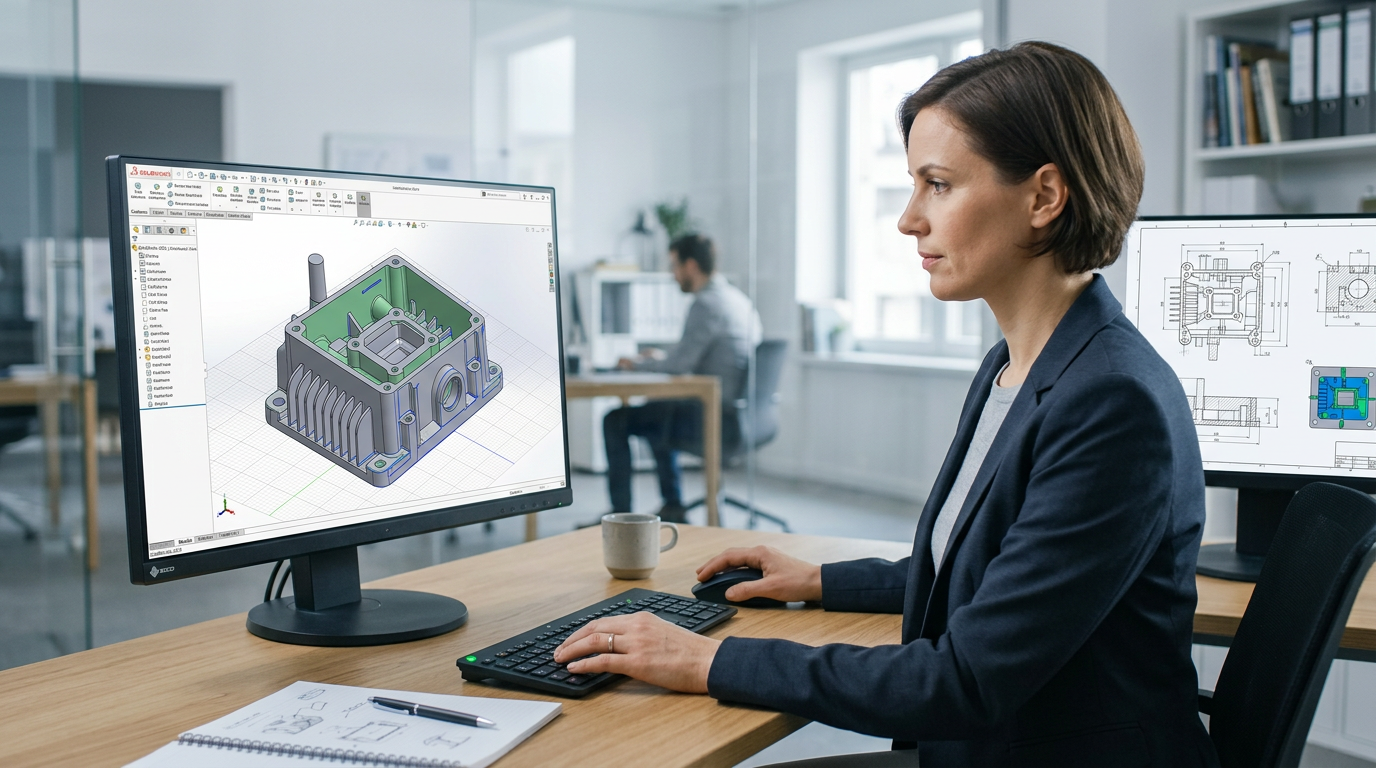
3D CAD File
STEP or IGES format with all critical dimensions and features clearly defined
2D Drawing with GD&T
Geometric dimensioning and tolerancing, surface finish callouts, and alloy specification
Material Requirements
Alloy grade (A356, A357, etc.), temper condition (T6), and any special material certs
Annual Volume
Expected annual quantity and planned release schedule over 3 to 5 years
Secondary Operations
CNC machining, heat treatment (T6), anodizing, painting, assembly, testing requirements
Quality Standards
Required certifications, inspection level, material testing, and reporting expectations
Pro tip
Send your RFQ to 3 to 5 qualified permanent mold casting suppliers. Fewer than 3 suppliers does not provide sufficient pricing comparison. More than 5 creates noise and dilutes individual supplier attention. Request quotes broken down by tooling cost, per-piece cost, and secondary operations so you can compare apples to apples across different suppliers.
7. Common Mistakes Permanent Mold Casting Buyers Make
After years of working with manufacturing buyers, we see the same sourcing mistakes repeated. Learn from these common pitfalls and avoid the costly consequences:
Choosing gravity pour when tilt pour is needed
Gravity pour saves tooling cost but produces higher porosity and more surface defects. If your application requires dimensional accuracy, low porosity, or heat treatability to T6, specify tilt pour or low pressure in your RFQ rather than learning the hard way during production ramp.
Underestimating the value of design-for-manufacturability review
Launching tooling without DFM is expensive insurance to skip. A thorough review catches draft angle deficiencies, core pullback problems, wall thickness issues, and heat flow concerns before they become $5,000 to $20,000 mold modifications or scrap.
Selecting alloy based on price alone
A356 is cheaper but A357 offers superior strength for demanding applications. C355 machines better for complex geometry parts. Select alloys based on required mechanical properties and castability for your specific application, not price alone.
Accepting vague mold ownership and maintenance terms
Clarify tooling ownership, maintenance responsibility, inspection frequency, and disposition rights before paying for the mold. Get everything in writing. Some suppliers claim mold ownership and refuse to release it if you switch manufacturers.
Single-sourcing without backup supply
Relying on one permanent mold casting supplier creates significant supply chain vulnerability. For critical production parts, develop a qualified second source or ensure your tooling can be transferred to another manufacturer if the primary supplier fails or experiences capacity constraints.