
1. When to Use Die Casting (and When Not To)
Die casting is one of the most efficient processes for producing complex metal parts at high volumes. But it is not the right fit for every project. Understanding where die casting excels will save you time, money, and frustration when sourcing.
High Volume Production
Ideal when you need 1,000 or more identical metal parts per year. Cycle times as fast as 15 seconds per shot make die casting one of the most cost-effective processes at scale.
Complex Geometry
Die casting handles thin walls, tight tolerances, and intricate details that would be expensive to machine. Consolidate multiple assembled components into a single cast part.
Surface Finish Quality
Die casting produces smooth as-cast surfaces suitable for plating, painting, or powder coating with minimal prep. Excellent for consumer-facing and decorative parts.
Non-Ferrous Metals Only
Die casting works with aluminum, zinc, magnesium, copper, and brass alloys. If you need steel, iron, or titanium parts, consider forging, sand casting, or investment casting instead.
When to consider other processes
If you need fewer than 500 parts, sand casting or machining may be more economical. For very large parts, die casting machines have size limits. For extreme wall thickness variations, investment casting provides more flexibility.
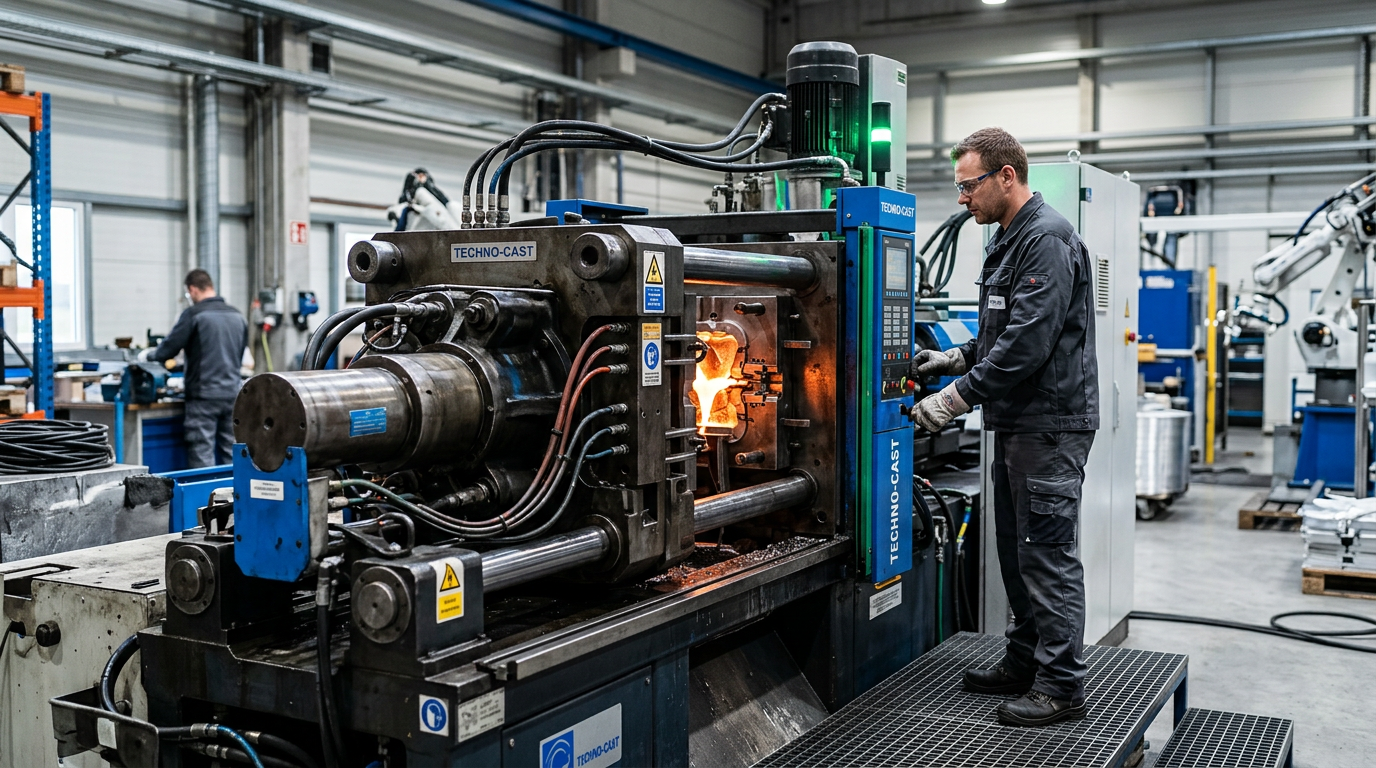
2. Hot Chamber vs Cold Chamber: Which Do You Need?
Die casting machines come in two main types, and the one you need depends entirely on the metal you are casting.
Hot Chamber
The injection mechanism stays submerged in molten metal. A hydraulic piston forces metal directly from the furnace into the die.
- Metals: Zinc, magnesium, lead
- Cycle time: 15 to 30 seconds
- Tolerance: to plus/minus 0.001"
- Tool life: 500K to 1M+ shots
- Best for: Connectors, hardware, small parts
Cold Chamber
Metal is melted in a separate furnace and ladled into the injection sleeve for each shot. Necessary for higher melting point metals.
- Metals: Aluminum, copper, brass
- Cycle time: 30 to 120 seconds
- Tolerance: to plus/minus 0.002"
- Tool life: 100K to 200K shots
- Best for: Housings, structural, engine parts
Pro tip
Make sure your die caster has the right machine type for your alloy. A shop with only cold chamber machines cannot efficiently produce zinc parts, and hot chamber machines cannot handle aluminum.
3. Choosing the Right Die Casting Alloy
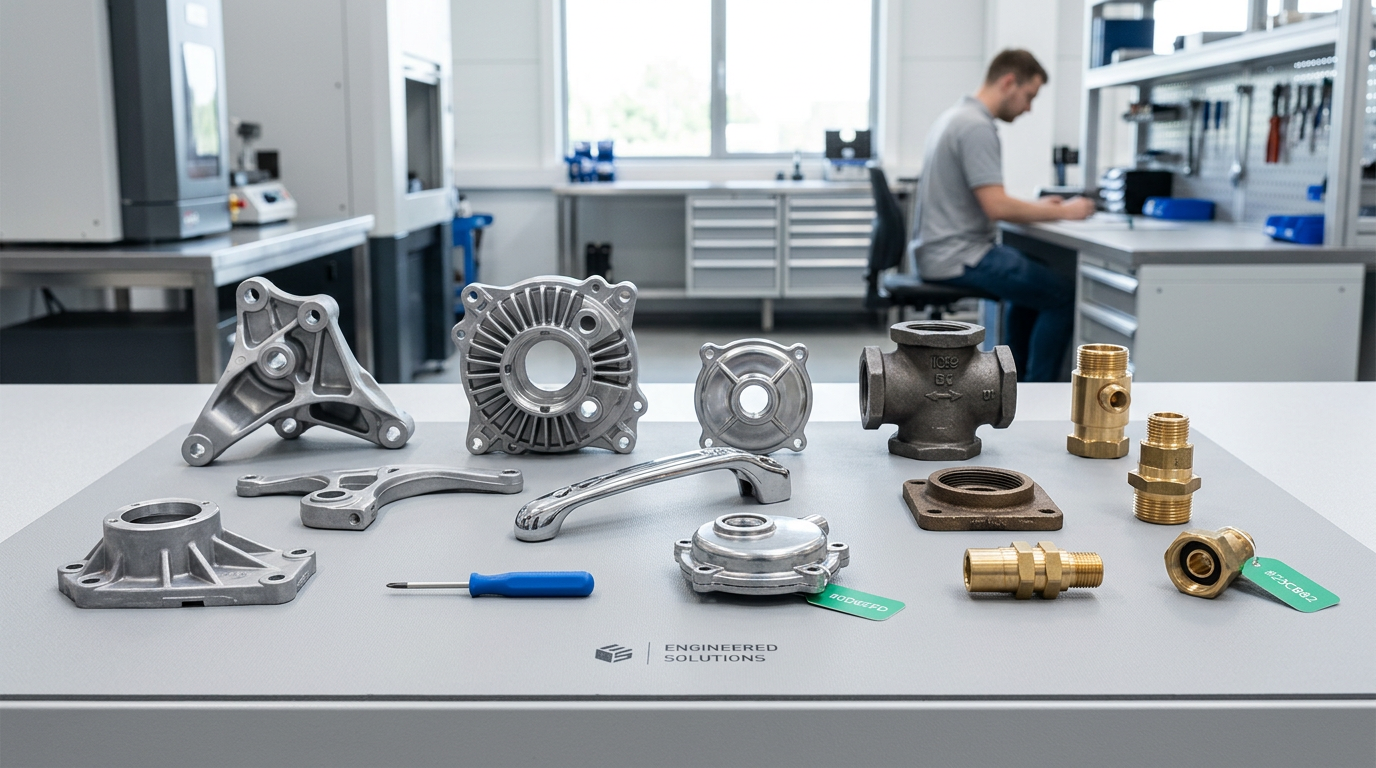
The alloy you choose affects part performance, cost, tooling life, and which manufacturers can produce your part. Here is a quick guide to the most common alloys:
| Alloy | Strength | Castability | Best Applications |
|---|---|---|---|
| A380 (Aluminum) | 47 ksi | Excellent | General purpose, most common aluminum alloy |
| A383 / ADC12 | 45 ksi | Excellent | Thin walls, complex geometry, electronics |
| A360 | 46 ksi | Good | Corrosion resistance, pressure tightness |
| Zamak 3 (Zinc) | 41 ksi | Excellent | Hardware, connectors, decorative parts |
| Zamak 5 (Zinc) | 48 ksi | Excellent | Load-bearing parts, mechanical components |
| AZ91D (Magnesium) | 34 ksi | Good | Lightweight: laptops, cameras, automotive |
Pro tip
If you are transitioning a part from machining to die casting, your existing material may not have a direct equivalent. A good die casting engineer can recommend the closest alloy match and advise on design adjustments needed for the new process.
4. Understanding Die Casting Tooling Costs
Tooling is the largest upfront investment in any die casting project. Understanding what drives cost helps you budget accurately and evaluate quotes.
Part complexity
More complex geometries require intricate dies with slides, cores, and actions, all of which add machining time and cost.
Number of cavities
Multi-cavity dies produce multiple parts per shot but cost proportionally more to build.
Part size and material
Larger parts need larger dies and machines. Aluminum dies experience more thermal stress than zinc, sometimes requiring premium H13 tool steels.
Tolerance requirements
Tighter tolerances demand more precise die machining and often longer development cycles.
| Tooling Type | Cost Range | Best For |
|---|---|---|
| Prototype die | $3,000 to $15,000 | Design validation, 100 to 5,000 parts |
| Production die, single cavity | $15,000 to $75,000 | Low to medium volume production |
| Production die, multi-cavity | $50,000 to $150,000+ | High-volume production, lowest per-part cost |
Watch out
Be cautious of tooling quotes that seem unusually low. Cutting corners on tool steel quality, cooling line design, or ejector layout leads to production problems, higher scrap rates, and shorter die life. A well-built die pays for itself many times over.
5. How to Evaluate a Die Casting Manufacturer
Use this evaluation framework to make a confident decision when choosing a die casting supplier:
Equipment and Capacity
What is their machine tonnage range? How many machines? Current capacity utilization? Can they scale with your growth?
Quality Certifications
ISO 9001 minimum. IATF 16949 for automotive. AS9100 for aerospace. What inspection equipment (CMM, spectrometer, X-ray)?
In-House Tooling
Do they design and build dies in-house or outsource? Do they offer DFM review? Can they run mold flow simulation?
Secondary Operations
Can they handle CNC machining, surface finishing (powder coat, paint, plate), assembly, and testing in-house?
References and Track Record
Can they provide references from your industry? What are their on-time delivery and quality rejection rates?
Communication
How quickly do they respond? Dedicated project managers? How do they handle engineering changes and production issues?
If possible, visit the facility before committing to a major tooling investment. A plant tour tells you more about a manufacturer's capabilities, culture, and quality commitment than any brochure or website can.
6. Writing an Effective Die Casting RFQ
A well-written RFQ gets you better quotes, faster responses, and more accurate pricing. Here is what to include:
3D CAD File
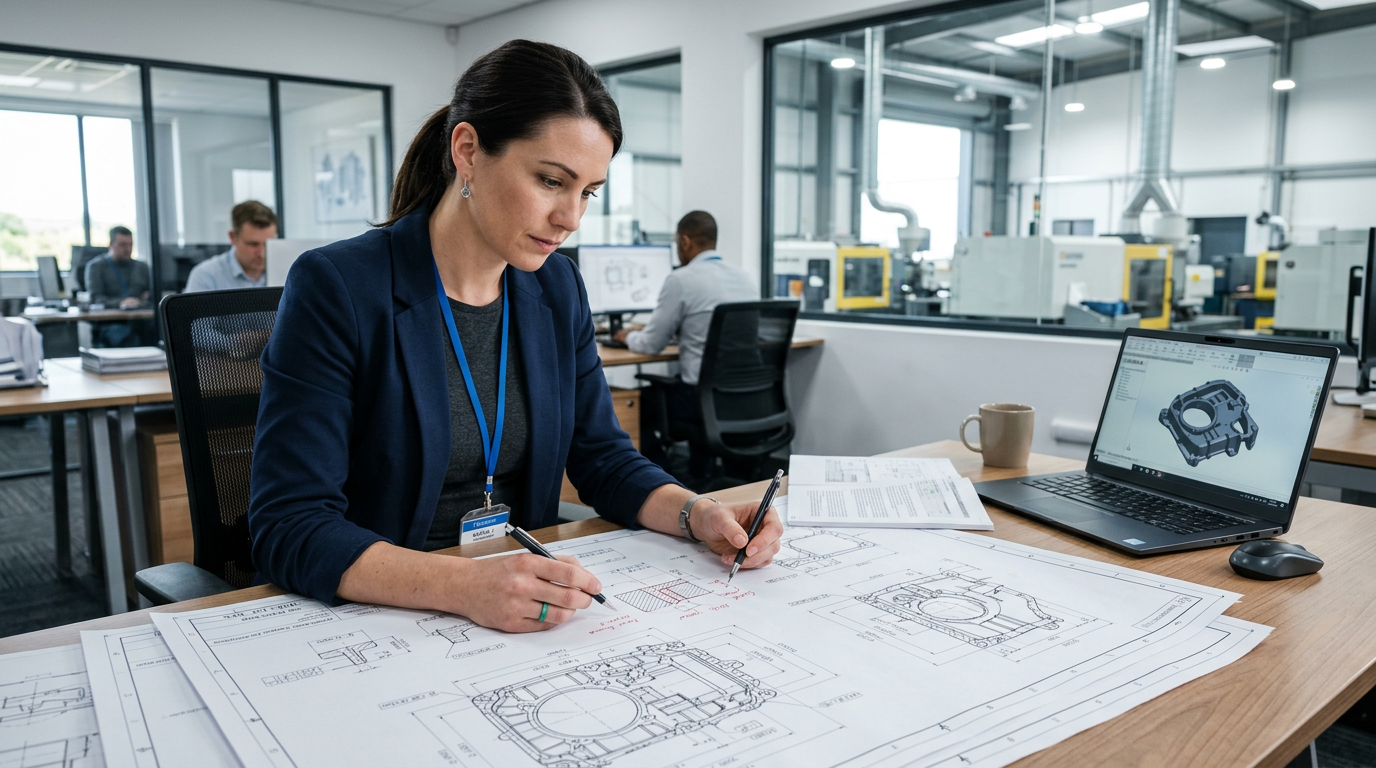
STEP or IGES format with all critical dimensions called out
2D Drawing with GD&T
Tolerances, surface finish requirements, and material callout
Material Specification
Alloy grade and any special requirements
Annual Volume
Expected order quantities per release
Secondary Operations
Machining, finishing, assembly, testing needs
Quality Requirements
Certifications, inspection level, and reporting needs
Pro tip
Send your RFQ to 3 to 5 qualified die casters. Fewer than 3 does not give enough pricing comparison. More than 5 creates noise and dilutes each supplier's attention. Browse our die casting manufacturer directory to find qualified suppliers.
7. Common Mistakes Buyers Make
After working with hundreds of manufacturing buyers, we see the same sourcing mistakes come up repeatedly. Avoid these and you will save significant time and money:
Choosing on price alone
The lowest-cost die caster is rarely the lowest total cost supplier. Factor in quality, delivery reliability, communication, and the cost of managing problems when a cheap supplier creates scrap or misses deadlines.
Skipping DFM review
Launching tooling without a thorough design-for-manufacturability review is expensive insurance to skip. A good DFM review catches draft angle issues, undercut problems, and gate location concerns before they become tooling modifications costing $5,000 to $20,000 each.
Not defining quality expectations upfront
Vague quality requirements lead to disagreements after tooling is built. Specify acceptable cosmetic standards, dimensional inspection requirements, and material testing expectations in your RFQ.
Ignoring tooling ownership
Clarify who owns the tooling, who is responsible for maintenance, and what happens to your die if you switch suppliers. Get tooling ownership terms in writing before you pay.
Single-sourcing without a backup
Relying on a single die casting supplier with no backup creates significant supply chain risk. For critical parts, qualify a second source or ensure your tooling is portable to another manufacturer.